

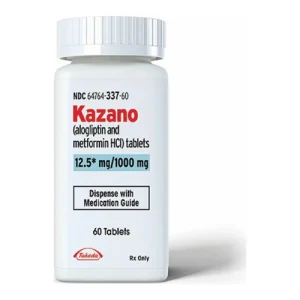
TM Owner Takeda
Kazano 12.5mg/1000mg Tablet
Global Shipping : Reliable Global Distribution Network
Express Delivery : Priority Shipping for Every Order
Secure Payments : Trusted Payment Protection System
 Disclaimer

Secure Handling
24/7 Worldwide Support

Global Access
Worldwide Access to Health

Cold-Chain Expert
Excellence in Cold-Chain

Trusted Supply
Certified Medical Supply
Indications & Clinical Uses
- Kazano 12.5 mg/1000 mg film-coated tablets combine alogliptin, a DPP-4 inhibitor that increases the body's own incretin hormones so more insulin is released after meals, with metformin hydrochloride, a biguanide that reduces glucose production by the liver and improves insulin sensitivity.
- Kazano is approved by the FDA and currently marketed in the United States (NDA 203414, Takeda) as an addition to diet and exercise to improve blood sugar control in adults with type 2 diabetes mellitus.
- It is not for type 1 diabetes and must not be used to treat diabetic ketoacidosis.
- Two strengths exist, 12.5 mg/500 mg and 12.5 mg/1000 mg, and the tablets are taken twice daily with food; the maximum daily dose is 25 mg alogliptin with 2000 mg metformin.
- Kazano contains the same alogliptin as Nesina and is a different product from Oseni (alogliptin with pioglitazone).
Side Effects
- The most frequent side effects reported in at least 4% of patients were upper respiratory tract infection (8%), nasopharyngitis or common cold symptoms (7%), diarrhoea (6%), high blood pressure (6%), headache (5%), back pain (4%) and urinary tract infection (4%).
- Nausea, stomach upset and a metallic taste are common early with metformin and usually settle.
- Kazano carries a BOXED WARNING for LACTIC ACIDOSIS: post-marketing cases of metformin-associated lactic acidosis have caused death, hypothermia, low blood pressure and resistant slow heart rhythms, with symptoms including feeling generally unwell, muscle aches, breathing difficulty, sleepiness and abdominal pain.
- Stop Kazano and seek emergency care immediately if these occur - haemodialysis is often needed.
- Also report severe persistent abdominal pain (pancreatitis), blistering skin (bullous pemphigoid), severe joint pain, or signs of heart failure such as breathlessness and swelling.
Precautions & Warnings
- Kazano is contraindicated if your eGFR is below 30 mL/min/1.73 m2, in metabolic acidosis including diabetic ketoacidosis, and in serious hypersensitivity to alogliptin or metformin.
- It is not recommended when eGFR is 30 to 59, and kidney function must be assessed before starting and at least yearly, more often in older people.
- Risk factors for lactic acidosis include kidney or liver impairment, heart failure, age 65 or over, surgery, low oxygen states, dehydration and heavy alcohol use.
- Kazano must be stopped before iodinated contrast imaging in patients with eGFR 30 to 60, with kidney function re-checked 48 hours afterwards.
- Watch for low blood sugar (hypoglycaemia) if you also use insulin or a sulfonylurea.
- Vitamin B12 levels fall in about 7% of users and should be measured yearly.
- Fatal liver failure has been reported rarely; report jaundice or dark urine.
- Do not split the tablets.
Avoid Interactions
- The risk of lactic acidosis and metformin toxicity is increased by carbonic anhydrase inhibitors such as topiramate and acetazolamide, by cationic drugs that compete for kidney clearance including ranolazine, vandetanib, dolutegravir and cimetidine, and by excessive alcohol, which promotes lactate build-up - avoid binge drinking entirely.
- Iodinated contrast media used in CT scans and angiography can cause acute kidney injury and require Kazano to be paused.
- Insulin and sulfonylureas such as gliclazide or glimepiride raise the chance of low blood sugar, so their dose may need lowering.
- Blood sugar control may be worsened by corticosteroids, diuretics and other medicines that raise glucose.
- Take the tablets with food to limit stomach upset, and tell your healthcare provider about every prescription medicine, herbal product and supplement, and about any planned scan using contrast dye.
References
Frequently Asked Questions
Kazano (alogliptin and metformin) treats type 2 diabetes in adults, alongside diet and exercise, to improve blood sugar control. Alogliptin boosts your own insulin release after meals and metformin lowers glucose made by the liver. It is not used for type 1 diabetes.
Take Kazano tablets by mouth twice a day with meals, which reduces stomach upset from metformin. Swallow them whole and do not split them. The maximum daily dose is 25 mg alogliptin with 2000 mg metformin, usually one tablet in the morning and one in the evening.
The most common side effects of Kazano are upper respiratory infection (8%), cold symptoms (7%), diarrhoea (6%), raised blood pressure (6%) and headache (5%). Early nausea and a metallic taste from metformin usually settle. Report severe stomach pain, skin blistering or severe joint pain.
Kazano carries a boxed warning for lactic acidosis caused by metformin, which has led to deaths, low body temperature, low blood pressure and slow heart rhythms. Stop Kazano and get emergency help for unusual muscle aches, breathing difficulty, drowsiness, severe tiredness or stomach pain.
Avoid heavy or binge drinking with Kazano, because alcohol raises the risk of lactic acidosis. Tell your provider before any scan using contrast dye, as metformin must be paused. Take care with topiramate, acetazolamide, cimetidine, dolutegravir, insulin and sulfonylureas.
Kidney function (eGFR) must be checked before starting Kazano and at least once a year, more often if you are older. Kazano is contraindicated below an eGFR of 30. Vitamin B12 falls in about 7% of users, so yearly B12 testing is advised alongside HbA1c monitoring.

Trusted & Reliable – Your Partner in Global Distribution.
We provide comprehensive lines of pharmaceutical products to support all your healthcare distribution needs.


