

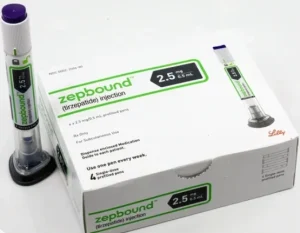
TM Owner Eli Lilly
Zepbound 2.5mg/0.5ml Vial
Global Shipping : Reliable Global Distribution Network
Express Delivery : Priority Shipping for Every Order
Secure Payments : Trusted Payment Protection System
 Disclaimer

Secure Handling
24/7 Worldwide Support

Global Access
Worldwide Access to Health

Cold-Chain Expert
Excellence in Cold-Chain

Trusted Supply
Certified Medical Supply
Indications & Clinical Uses
- Zepbound 2.5mg (tirzepatide) is a once-weekly medicine for subcutaneous injection.
- In the US it is approved, together with a reduced-calorie diet and increased physical activity, to reduce excess body weight and maintain weight reduction long term in adults with obesity, or with overweight and at least one weight-related condition, and to treat moderate to severe obstructive sleep apnoea in adults with obesity.
- The 2.5 mg dose is the starting dose, given once weekly for 4 weeks before it is increased; it is not a maintenance dose (maintenance is 5, 10 or 15 mg weekly).
- The sheet product is the 2.5 mg/0.5 mL single-dose vial, which is not the same as the multi-dose vials or KwikPens (10 mg to 60 mg per 2.4 mL, four doses per container).
- After training it can be self-injected.
- This is a weight-management product, not a diabetes treatment.
Side Effects
- Boxed warning: in rats, tirzepatide causes dose- and treatment-duration-dependent thyroid C-cell tumours, and it is unknown whether Zepbound causes thyroid C-cell tumours, including medullary thyroid carcinoma (MTC), in humans.
- The most common side effects in weight-reduction trials were nausea (25% to 28%), diarrhoea (19% to 23%), constipation (11% to 17%), vomiting (8% to 13%), abdominal pain and indigestion (9% to 10%), injection site reactions (6% to 8%), tiredness (5% to 7%) and hypersensitivity reactions (5%), with belching, hair loss and reflux affecting 4% to 5%.
- Serious problems include severe stomach and bowel reactions, dehydration leading to acute kidney injury, gallbladder disease, pancreatitis, serious allergic reactions and, in people with type 2 diabetes, low blood sugar (hypoglycaemia).
- Seek urgent help for persistent severe abdominal pain or swelling of the face or throat, and rotate injection sites.
Precautions & Warnings
- Zepbound is contraindicated in anyone with a personal or family history of medullary thyroid carcinoma or Multiple Endocrine Neoplasia syndrome type 2 (MEN 2), and in serious hypersensitivity to tirzepatide or its ingredients.
- It is not recommended in severe gastroparesis.
- Kidney function is monitored if vomiting or diarrhoea cause dehydration.
- Stop and seek advice if pancreatitis is suspected, and report gallbladder symptoms.
- People with diabetic retinopathy are monitored for progression.
- Because Zepbound delays gastric emptying, tell your providers you use it before surgery or deep sedation, as aspiration has been reported.
- Stop Zepbound when pregnancy is recognised, as weight loss offers no benefit in pregnancy; a pregnancy exposure registry exists.
- Tirzepatide is undetectable or very low in breast milk, but infant data are limited.
- Use a new syringe and needle for each vial injection.
- Refrigerate at 2°C to 8°C and do not freeze.
Avoid Interactions
- Medicines that increase risk: insulin and insulin secretagogues such as sulfonylureas raise the risk of low blood sugar (10.3% with a sulfonylurea versus 2.1% without in type 2 diabetes), so doses of these may need reducing.
- Medicines that may work less well: oral hormonal contraceptives, because delayed gastric emptying reduces absorption (ethinyl estradiol peak level fell 59%); switch to a non-oral method or add a barrier method for 4 weeks after starting Zepbound and after each dose increase.
- Other oral medicines may also be absorbed differently, so narrow therapeutic index drugs such as warfarin and drugs whose effect depends on a threshold level are monitored.
- Tell your healthcare provider about all medicines and supplements you use.
References
Frequently Asked Questions
Zepbound (tirzepatide) is a once-weekly injection that helps adults with obesity, or overweight with a weight-related condition, lose excess weight and keep it off, alongside diet and exercise. It also treats moderate to severe obstructive sleep apnoea in adults with obesity. It is not a diabetes treatment.
Inject Zepbound (tirzepatide) under the skin of the abdomen, thigh or upper arm once a week, on any day, with or without food. Treatment starts at 2.5 mg weekly for 4 weeks, then the dose is increased. Use a new syringe and needle for each vial injection and rotate sites.
The most common Zepbound side effects are nausea, diarrhoea, constipation and vomiting, affecting roughly 1 in 10 to 1 in 4 people. Injection site reactions and tiredness are also common. Seek urgent help for severe persistent stomach pain, signs of dehydration, gallbladder pain or a serious allergic reaction.
Avoid relying on birth control pills alone with Zepbound (tirzepatide): use a non-oral or barrier method for 4 weeks after starting and after each dose increase. Insulin and sulfonylureas raise low blood sugar risk. Tell providers you use it before surgery or sedation.
If you miss a Zepbound (tirzepatide) dose, take it within 4 days. If more than 4 days have passed, skip it and take the next dose on your usual day. You can change your injection day, provided at least 3 days separate the doses.
Yes. Zepbound has a boxed warning about thyroid C-cell tumours: tirzepatide caused them in rats, and it is unknown whether it does in humans. You must not use Zepbound if you or a family member has had medullary thyroid carcinoma or MEN 2.

Trusted & Reliable – Your Partner in Global Distribution.
We provide comprehensive lines of pharmaceutical products to support all your healthcare distribution needs.


