

TM Owner MSD
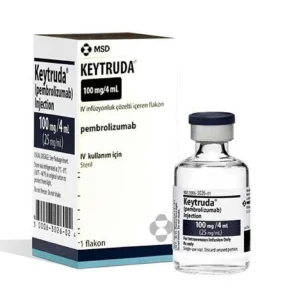
Keytruda 100mg/4ml Vial
Global Shipping : Reliable Global Distribution Network
Express Delivery : Priority Shipping for Every Order
Secure Payments : Trusted Payment Protection System
 Disclaimer

Secure Handling
24/7 Worldwide Support

Global Access
Worldwide Access to Health

Cold-Chain Expert
Excellence in Cold-Chain

Trusted Supply
Certified Medical Supply
Indications & Clinical Uses
- Keytruda 100 mg/4 mL single-dose vial contains pembrolizumab, an anti-PD-1 monoclonal antibody that helps the immune system recognise and attack cancer cells.
- It is given only in hospital or a specialist clinic as a 30-minute intravenous infusion, 200 mg every three weeks or 400 mg every six weeks in adults, and 2 mg/kg every three weeks up to 200 mg in eligible children.
- Among women's cancers it is approved for locally advanced cervical cancer with chemoradiotherapy, for persistent, recurrent or metastatic cervical cancer with chemotherapy with or without bevacizumab, and alone after progression on chemotherapy; for advanced or recurrent endometrial carcinoma with carboplatin and paclitaxel, with lenvatinib in mismatch-repair-proficient disease, or alone if MSI-H or dMMR; and with paclitaxel, with or without bevacizumab, for platinum-resistant ovarian, fallopian tube or primary peritoneal cancer.
- Many other tumour types are also approved.
Side Effects
- Side effects reported in at least 20% of people given Keytruda alone include tiredness, muscle and bone pain, rash, diarrhoea, fever, cough, reduced appetite, itching, breathlessness, constipation, pain, abdominal pain, nausea and an underactive thyroid; combinations with chemotherapy add hair loss, vomiting, mouth soreness, nerve tingling and weight loss.
- Keytruda has no boxed warning, but immune-mediated reactions can occur in any organ and may be severe or fatal: pneumonitis in 3.4%, colitis in 1.7%, hepatitis in 0.7%, adrenal insufficiency in 0.8% and hypophysitis in 0.6%, along with thyroid disorders, kidney inflammation, type 1 diabetes and serious skin reactions.
- Seek urgent help for a new or worsening cough or breathlessness, diarrhoea or black stools, severe abdominal pain, yellowing of the eyes or skin, severe tiredness or dizziness, or a blistering rash.
- These reactions can begin months after the last dose.
Precautions & Warnings
- Keytruda is a specialist hospital medicine and must be diluted and infused intravenously over 30 minutes through a 0.2 to 5 micron filter; it must never be given as an intravenous push or bolus and must never be confused with Keytruda Qlex, the subcutaneous pembrolizumab and berahyaluronidase alfa product, which has completely different strengths, a different dose and a different route, and is not interchangeable with this vial.
- Thyroid function, liver enzymes, kidney function and blood glucose are checked before and during treatment, and severe immune-mediated reactions are treated with corticosteroids and may mean stopping permanently.
- Fatal and other serious complications have occurred in people who have an allogeneic stem cell transplant before or after PD-1 blockade, and solid organ transplant rejection has been reported.
- Pembrolizumab can harm an unborn baby, so effective contraception is needed during treatment and for four months afterwards, and breastfeeding is not advised.
- Store vials at 2°C to 8°C.
Avoid Interactions
- Keytruda has no formal drug-interaction studies and no dedicated interactions section in its label, but several combinations matter.
- Things that increase harm: combining pembrolizumab with a thalidomide analogue such as lenalidomide or pomalidomide plus dexamethasone in multiple myeloma is not recommended because deaths increased; combinations with lenvatinib, axitinib or chemotherapy add their own toxicities such as high blood pressure, hand-foot reaction, liver injury and nerve damage.
- Things that may reduce benefit: systemic corticosteroids or other immunosuppressants started before treatment may blunt the immune response, although steroids are the correct treatment once an immune-mediated reaction develops.
- Live vaccines are best avoided.
- At pharmacy level, dilute only in 0.9% sodium chloride or 5% dextrose, do not shake or freeze, and do not mix Keytruda with other medicines in the same infusion line.
- Tell your team about every medicine, herbal product and supplement.
References
Frequently Asked Questions
Keytruda (pembrolizumab) is an anti-PD-1 immunotherapy used for many cancers. In women's cancers it treats cervical cancer alongside chemoradiotherapy or chemotherapy, advanced or recurrent endometrial carcinoma with carboplatin and paclitaxel or with lenvatinib, and platinum-resistant ovarian, fallopian tube or primary peritoneal cancer with paclitaxel. Melanoma and lung cancer are among many other approved uses.
Keytruda (pembrolizumab) is given as a 30-minute drip into a vein in hospital, either 200 mg every three weeks or 400 mg every six weeks in adults. Eligible children receive 2 mg/kg every three weeks, up to 200 mg. It is never given as a quick injection or push.
Tiredness, muscle and bone pain, rash, diarrhoea, fever, cough, poor appetite, itching and an underactive thyroid affect at least 20% of people on Keytruda (pembrolizumab). Immune-mediated reactions can hit any organ: pneumonitis in 3.4% and colitis in 1.7%. Report new breathlessness, persistent diarrhoea or yellow eyes urgently.
Avoid live vaccines, and avoid combining Keytruda (pembrolizumab) with a thalidomide analogue plus dexamethasone for multiple myeloma, as deaths increased. Tell your team before taking steroids or other immune-suppressing medicines. Do not breastfeed during treatment or for four months after the last dose.
No. Keytruda (pembrolizumab) 100 mg/4 mL is a vial diluted for a 30-minute drip into a vein. Keytruda Qlex is pembrolizumab with berahyaluronidase alfa, injected under the skin over one to two minutes. The strengths, doses and routes differ, and the two must never be substituted for each other.
The Keytruda (pembrolizumab) vial is diluted and run into a vein over 30 minutes through a 0.2 to 5 micron filter. Blood tests for thyroid, liver, kidney and glucose are checked before doses. Staff watch for reactions, and severe immune-related effects are treated with corticosteroids.

Trusted & Reliable – Your Partner in Global Distribution.
We provide comprehensive lines of pharmaceutical products to support all your healthcare distribution needs.


