

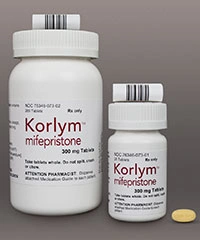
TM Owner Corcept Therapeutics
Korlym 300mg Tablet
Global Shipping : Reliable Global Distribution Network
Express Delivery : Priority Shipping for Every Order
Secure Payments : Trusted Payment Protection System
 Disclaimer

Secure Handling
24/7 Worldwide Support

Global Access
Worldwide Access to Health

Cold-Chain Expert
Excellence in Cold-Chain

Trusted Supply
Certified Medical Supply
Indications & Clinical Uses
- Korlym 300 mg tablets contain mifepristone, a cortisol (glucocorticoid) receptor blocker, and are approved in the United States to control high blood sugar caused by excess cortisol in adults with endogenous Cushing's syndrome who also have type 2 diabetes or glucose intolerance, and in whom surgery has failed or is not an option.
- It is not a treatment for type 2 diabetes on its own.
- Korlym carries a boxed warning: mifepristone has potent antiprogestational effects and will result in the termination of pregnancy, so pregnancy must be excluded before treatment starts.
- Korlym 300 mg is a different product from Mifeprex 200 mg, the mifepristone tablet used for medical termination of pregnancy; the strength, the indication and the supply arrangements are not the same.
- Dosing starts at 300 mg once daily under specialist supervision.
Side Effects
- Korlym's boxed warning states that mifepristone will result in the termination of pregnancy; a negative pregnancy test is required before starting and pregnancy must be prevented throughout treatment.
- The most common side effects, each affecting at least 1 in 5 people, are nausea, tiredness, headache, low blood potassium, joint pain, vomiting, swelling of the limbs, raised blood pressure, dizziness, reduced appetite and thickening of the womb lining in women.
- Low potassium occurred in 44% of patients and can cause muscle weakness, cramps and palpitations.
- Because Korlym blocks the effects of cortisol, adrenal insufficiency can develop: seek urgent help for severe weakness, nausea and vomiting, very low blood pressure, confusion or low blood sugar, because treatment must be stopped and steroid treatment given.
- Mifepristone prolongs the QT interval as the dose rises.
- Report vaginal bleeding promptly.
Precautions & Warnings
- Pregnancy must be excluded with a negative test before Korlym is started and prevented throughout treatment.
- Because mifepristone makes hormonal contraception unreliable, a non-hormonal method such as a barrier method is required, and pregnancy must be excluded again after any interruption of four weeks or more.
- Korlym is contraindicated in pregnancy, in anyone who needs systemic corticosteroids for a life-threatening condition, in women with unexplained vaginal bleeding or cancer of the womb lining, and with simvastatin, lovastatin or CYP3A substrates that have a narrow safety margin.
- Potassium is checked before treatment, one to two weeks after starting or after a dose increase, and periodically afterwards.
- The daily dose must not exceed 600 mg in kidney impairment or in mild to moderate liver impairment, and Korlym is avoided in severe liver disease.
- Take each tablet whole with a meal.
Avoid Interactions
- Korlym is broken down by CYP3A, so strong inhibitors such as ketoconazole, itraconazole, clarithromycin, ritonavir and nefazodone raise mifepristone levels; the dose must not exceed 900 mg daily when such a medicine cannot be avoided, and grapefruit juice should be avoided.
- Korlym also raises levels of medicines cleared by CYP3A, including ciclosporin, tacrolimus, sirolimus, fentanyl and some benzodiazepines, so the lowest possible doses are used, while simvastatin and lovastatin are contraindicated.
- It inhibits CYP2C8 and CYP2C9, increasing exposure to warfarin, anti-inflammatory painkillers and repaglinide, and it adds to the risk from medicines that prolong the QT interval.
- Hormonal contraceptives cannot be relied on.
- CYP3A inducers such as rifampicin, carbamazepine, phenytoin and St John's wort reduce Korlym's effect.
- Tell your provider about every medicine and supplement.
References
Frequently Asked Questions
Korlym (mifepristone) 300 mg controls high blood sugar caused by excess cortisol in adults with endogenous Cushing's syndrome who also have type 2 diabetes or glucose intolerance, when surgery has failed or is not possible. It is not used to treat type 2 diabetes on its own.
Korlym is taken once daily with a meal, starting at 300 mg, which is one tablet. Swallow it whole. Your specialist raises the dose in 300 mg steps no sooner than every two to four weeks, up to 1200 mg or 20 mg per kilogram of body weight daily, whichever is lower.
Common Korlym (mifepristone) side effects are nausea, tiredness, headache, low potassium, joint pain, vomiting, swelling, raised blood pressure and thickening of the womb lining. Low potassium affected 44% of patients. Get urgent help for severe weakness, vomiting, confusion or very low blood pressure, which can mean adrenal insufficiency.
Never take Korlym if you are or could be pregnant: its boxed warning states that mifepristone will terminate pregnancy. Simvastatin and lovastatin are contraindicated. Avoid grapefruit juice and strong CYP3A inhibitors such as ketoconazole, and do not rely on hormonal contraception, which Korlym makes unreliable.
Potassium is checked before Korlym is started, one to two weeks after starting or after any dose increase, and regularly afterwards, because low potassium affects many patients. Blood sugar and blood pressure are followed, and women may need scans if vaginal bleeding or womb lining thickening occurs.
No. Korlym is a 300 mg mifepristone tablet taken daily, long term, for Cushing's syndrome. Mifeprex is a 200 mg mifepristone tablet used as a single dose for medical termination of pregnancy. The strengths, indications and supply programmes differ, so the two must never be substituted.

Trusted & Reliable – Your Partner in Global Distribution.
We provide comprehensive lines of pharmaceutical products to support all your healthcare distribution needs.


