

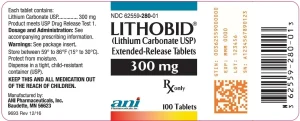
TM Owner ANI Pharmaceuticals
Lithobid 300mg Extended-release tablet
Global Shipping : Reliable Global Distribution Network
Express Delivery : Priority Shipping for Every Order
Secure Payments : Trusted Payment Protection System
 Disclaimer

Secure Handling
24/7 Worldwide Support

Global Access
Worldwide Access to Health

Cold-Chain Expert
Excellence in Cold-Chain

Trusted Supply
Certified Medical Supply
Indications & Clinical Uses
- Lithobid 300 mg tablets contain lithium carbonate in an extended-release form and are used to treat acute manic and mixed episodes of bipolar I disorder, and as maintenance treatment to reduce how often episodes return and how severe they are.
- The US label covers adults and children aged 7 years and over.
- Lithium is a mood stabiliser rather than a sedative, and it can take one to three weeks before the full effect is seen.
- The tablets must be swallowed whole and never chewed, crushed or split, because breaking them releases the whole dose at once.
- Extended-release lithium and immediate-release lithium tablets, capsules or syrup are not interchangeable dose for dose: switching between them changes how lithium is absorbed, so the dose must be rechecked and serum lithium levels remeasured whenever the formulation or brand changes.
Side Effects
- Common early side effects of Lithobid include a fine trembling of the hands, passing large amounts of urine, mild thirst, nausea, diarrhoea, vomiting, drowsiness, muscle weakness and a general dulled feeling; many of these settle as treatment continues.
- Long-term use can reduce the kidney's ability to concentrate urine and can lower thyroid function, causing tiredness and weight gain.
- Lithobid carries a BOXED WARNING: lithium toxicity is closely related to serum lithium levels and can occur at doses close to therapeutic levels, so facilities for prompt and accurate serum lithium measurement must be available before treatment starts.
- Stop the tablets and get urgent medical help if you develop coarse tremor, slurred speech, unsteadiness or clumsiness, persistent vomiting or diarrhoea, confusion, marked drowsiness, blurred vision, muscle twitching, seizures or fainting, because these can be signs of lithium poisoning.
Precautions & Warnings
- Serum lithium levels must be measured regularly, drawn 12 hours after the previous dose; usual targets are 1.0 to 1.5 mEq/L during acute mania and 0.6 to 1.2 mEq/L for maintenance, with toxicity possible above 1.5 mEq/L.
- Kidney function, thyroid function, calcium and an ECG are checked before and during treatment.
- Keep salt and fluid intake steady and drink extra fluid in hot weather, during heavy exercise, fever, vomiting or diarrhoea, because dehydration and sodium loss raise lithium levels quickly.
- Lithium can unmask Brugada syndrome, so report fainting or palpitations.
- Lithium crosses the placenta and can cause fetal heart defects, so pregnancy must be discussed before use, and it passes into breast milk.
- Tell your healthcare provider before any surgery, low-salt diet or new medicine, and avoid driving if you feel drowsy or unsteady.
Avoid Interactions
- Medicines that raise lithium levels and can cause toxicity include NSAIDs such as ibuprofen, naproxen and diclofenac, ACE inhibitors and angiotensin receptor blockers, thiazide and loop diuretics, and metronidazole; dehydration, a low-salt diet, fever, vomiting, diarrhoea and heavy sweating act in the same way.
- Combining lithium with antidepressants, triptans, tramadol or other serotonergic medicines can cause serotonin syndrome, and with antipsychotics it can increase confusion and movement problems.
- Medicines and substances that lower lithium levels and can reduce its effect include theophylline, large amounts of caffeine, sodium-containing products, acetazolamide and SGLT2 inhibitors.
- Do not start or stop any of these without a lithium level check.
- Tell your healthcare provider about all prescription medicines, painkillers bought over the counter, herbal remedies and supplements.
References
Frequently Asked Questions
Lithobid 300 mg (lithium carbonate extended-release) treats acute manic and mixed episodes of bipolar I disorder and is used long term to reduce how often episodes return. It is approved for adults and children aged 7 and over. The full mood-stabilising effect usually takes one to three weeks.
Swallow Lithobid tablets whole with water - never chew, crush or split them, because that releases all the lithium at once. The extended-release tablets are usually taken twice daily, about 12 hours apart. Keep your salt and fluid intake steady and take the doses at the same times each day.
Common Lithobid side effects are fine hand tremor, passing more urine, thirst, nausea, diarrhoea, drowsiness and muscle weakness. Lithium carries a boxed warning: toxicity is closely related to serum levels and can occur at doses close to therapeutic ones. Get urgent help for coarse tremor, slurred speech, vomiting, confusion or unsteadiness.
Avoid dehydration, low-salt diets and sudden changes in fluid or salt intake while taking Lithobid, because these raise lithium levels. Avoid NSAIDs such as ibuprofen and naproxen unless your healthcare provider agrees, and tell them before starting an ACE inhibitor or a diuretic. Limit alcohol and take care in hot weather.
Lithobid needs regular serum lithium levels, drawn 12 hours after the previous dose. Targets are about 1.0 to 1.5 mEq/L in acute mania and 0.6 to 1.2 mEq/L for maintenance. Kidney function, thyroid function and calcium are also checked before starting and during long-term treatment.
Lithobid extended-release and immediate-release lithium are not interchangeable dose for dose. Switching changes how lithium is absorbed, so your healthcare provider must recheck the dose and repeat serum lithium levels after any change of brand or formulation. Never swap products yourself or take both together.

Trusted & Reliable – Your Partner in Global Distribution.
We provide comprehensive lines of pharmaceutical products to support all your healthcare distribution needs.


