

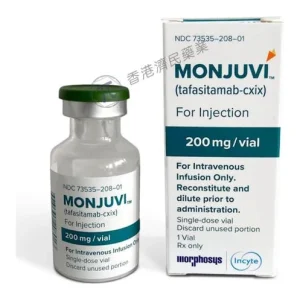
TM Owner Incyte Corporation
Monjuvi 200mg Vial
Global Shipping : Reliable Global Distribution Network
Express Delivery : Priority Shipping for Every Order
Secure Payments : Trusted Payment Protection System
 Disclaimer

Secure Handling
24/7 Worldwide Support

Global Access
Worldwide Access to Health

Cold-Chain Expert
Excellence in Cold-Chain

Trusted Supply
Certified Medical Supply
Indications & Clinical Uses
- Monjuvi 200 mg (tafasitamab-cxix) is a CD19-directed monoclonal antibody given by intravenous infusion; outside the US it is marketed as Minjuvi, which holds a conditional EU marketing authorisation granted in August 2021 and remains under additional monitoring.
- In combination with lenalidomide, it is approved for adult patients with relapsed or refractory diffuse large B-cell lymphoma (DLBCL) who are not eligible for autologous stem cell transplant, under accelerated/conditional approval based on response rate; continued approval may depend on confirmatory trial results.
- Monjuvi with lenalidomide and rituximab is also approved for adult patients with relapsed or refractory follicular lymphoma who have received at least one prior systemic therapy.
- Monjuvi is hospital- or infusion-centre-administered only; it is not self-injected or oral, and the infusion schedule and lenalidomide dosing are managed by a haematology-oncology specialist.
Side Effects
- The current Monjuvi prescribing information does not carry a boxed warning.
- The most common side effects (occurring in 20% or more of patients) in DLBCL include low white blood cell counts, respiratory tract infections, fatigue, anaemia, diarrhoea, low platelet counts, cough, fever, swelling of the legs or feet, and reduced appetite; in follicular lymphoma, respiratory infections, diarrhoea, rash, fatigue, constipation, musculoskeletal pain and cough are most frequent.
- Serious reactions to watch for and report urgently include signs of infusion-related reaction during the drip (fever, chills, breathing difficulty), fever or signs of infection from low white cell counts, and unusual bruising or bleeding from low platelets.
- You will be monitored closely during and after each infusion, and blood counts are checked regularly throughout treatment.
Precautions & Warnings
- Monjuvi can cause infusion-related reactions, so you will be monitored closely, especially during the first infusion, and the infusion may be slowed, interrupted or stopped if reactions occur.
- It can cause significant myelosuppression (low white cells, platelets and red cells), requiring regular blood count checks and possible dose adjustment of Monjuvi or lenalidomide.
- Serious and sometimes fatal infections, including opportunistic infections, have occurred during and after treatment, so report fever or infection symptoms promptly.
- Because Monjuvi may cause fetal harm and is combined with lenalidomide, which is contraindicated in pregnancy, effective contraception is required during treatment and for 3 months after the last dose, and breastfeeding should not resume until 3 months after the final dose.
- There is no evidence of specific hepatic or renal dose adjustment requirements in the label; discuss vaccination timing with your care team before and during treatment.
Avoid Interactions
- No formal drug-drug interaction studies have been conducted with Monjuvi (tafasitamab-cxix) itself, and population pharmacokinetic analysis found no clinically meaningful interaction with lenalidomide, with or without rituximab.
- However, because Monjuvi is always given together with lenalidomide, all of lenalidomide's precautions apply, including avoiding pregnancy, strict contraception requirements, and caution with other medicines that increase bleeding or infection risk.
- Live vaccines should generally be avoided during immunosuppressive combination treatment; discuss vaccination timing with your care team.
- Tell your healthcare provider and pharmacist about all prescription and over-the-counter medicines, supplements and other cancer treatments you are taking, since myelosuppressive or immunosuppressive drugs used together with Monjuvi can increase the risk of infection or low blood counts.
References
Frequently Asked Questions
Monjuvi (tafasitamab-cxix) is given with lenalidomide to adults with relapsed or refractory diffuse large B-cell lymphoma who cannot have a stem cell transplant. It is also used with lenalidomide and rituximab for relapsed or refractory follicular lymphoma. It targets the CD19 protein on lymphoma cells.
Monjuvi is given as an intravenous infusion in a hospital or infusion centre, following a cycle-based schedule alongside oral lenalidomide capsules. The first infusion is given slowly and monitored closely; later infusions usually run faster. Your oncology team manages the exact schedule.
Common effects include low white blood cell and platelet counts, respiratory infections, fatigue, diarrhoea, fever and swelling. Serious risks include infusion reactions and fatal infections from low white cell counts. Report fever, breathing trouble during infusion, or unusual bleeding immediately.
Because Monjuvi is combined with lenalidomide, pregnancy must be avoided using effective contraception during treatment and for 3 months afterward, as the combination can harm a fetus. Avoid live vaccines unless your care team approves, and tell them about all other medicines.
You are monitored closely during each infusion for signs of an infusion-related reaction, such as fever, chills or breathing difficulty, especially with the first dose. Blood counts are checked regularly throughout treatment to watch for low white cells, platelets or red cells.
No. Monjuvi combined with lenalidomide can cause serious fetal harm, so effective contraception is required during treatment and for 3 months after the last dose. Breastfeeding should not resume until at least 3 months after finishing treatment; discuss family planning with your oncologist.

Trusted & Reliable – Your Partner in Global Distribution.
We provide comprehensive lines of pharmaceutical products to support all your healthcare distribution needs.


