

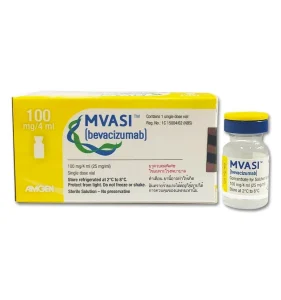
TM Owner Amgen
Mvasi 100mg Injection
Global Shipping : Reliable Global Distribution Network
Express Delivery : Priority Shipping for Every Order
Secure Payments : Trusted Payment Protection System
 Disclaimer

Secure Handling
24/7 Worldwide Support

Global Access
Worldwide Access to Health

Cold-Chain Expert
Excellence in Cold-Chain

Trusted Supply
Certified Medical Supply
Indications & Clinical Uses
- Mvasi (bevacizumab-awwb) 100 mg is a biosimilar to the reference product Avastin (bevacizumab), manufactured by Amgen; it contains bevacizumab, a vascular endothelial growth factor (VEGF) inhibitor monoclonal antibody.
- It is approved, in combination with other chemotherapy regimens, for metastatic colorectal cancer, unresectable, locally advanced, recurrent or metastatic non-squamous non-small cell lung cancer, recurrent glioblastoma in adults, metastatic renal cell carcinoma with interferon alfa, persistent, recurrent or metastatic cervical cancer, and epithelial ovarian, fallopian tube or primary peritoneal cancer at various disease stages.
- As a biosimilar, Mvasi is approved based on demonstrated similarity to the reference bevacizumab product rather than as a stand-alone new drug, and it is intended for the same indications and populations as the reference product.
- It is a hospital- or infusion-clinic-administered medicine, given only by intravenous infusion, never self-injected.
Side Effects
- The most common side effects of Mvasi, each affecting more than 1 in 10 people, are nosebleeds, headache, high blood pressure, inflammation of the nose lining, protein in the urine, altered taste, dry skin, other bleeding, excess tearing, back pain and skin peeling.
- More serious reactions to watch for and report urgently include signs of gastrointestinal perforation such as severe stomach pain, fever or vomiting; unusual or severe bleeding, including coughing up blood; symptoms of a blood clot such as leg swelling, chest pain or sudden breathlessness; a sudden severe headache, confusion or seizures, which can signal a rare brain condition (posterior reversible encephalopathy syndrome); and signs of heart failure such as worsening shortness of breath or swelling.
- Mvasi can also delay wound healing, so treatment is usually paused for 28 days before and after planned surgery.
Precautions & Warnings
- Mvasi is given only by intravenous infusion, with the first dose given over 90 minutes and later doses given more quickly if well tolerated; it must never be given as a rapid intravenous push or bolus.
- It should not be started, or should be stopped, in anyone with a recent history of coughing up blood, a recent gastrointestinal perforation or fistula, or a serious wound-healing complication.
- Blood pressure, urine protein and signs of bleeding or blood clots are monitored regularly throughout treatment, and Mvasi is withheld for at least 28 days before and after major elective surgery because of impaired wound healing.
- Mvasi can cause fetal harm, so effective contraception is required during treatment and for at least 6 months after the last dose in people who can become pregnant, and it should be avoided in pregnancy; it may also cause ovarian failure in premenopausal women.
- Anyone with poorly controlled high blood pressure or active bleeding should not receive Mvasi.
Avoid Interactions
- No clinically meaningful pharmacokinetic interaction has been found between Mvasi (bevacizumab-awwb) and irinotecan and its active metabolite, interferon alfa, carboplatin or paclitaxel when used in combination regimens.
- Because Mvasi can increase the risk of bleeding and delayed wound healing, its effects may be increased by other medicines that affect blood clotting, such as anticoagulants or antiplatelet drugs, and elective surgery should be planned around Mvasi dosing.
- Live vaccines are not specifically restricted on the label, but any planned vaccination should be discussed with the treating oncologist given the underlying chemotherapy regimen and immune status.
- Tell the care team about all other medicines, chemotherapy agents and supplements being used, since Mvasi is typically given alongside other cytotoxic drugs whose toxicities can overlap with those of bevacizumab.
- Mvasi must not be mixed or diluted with dextrose solutions; only 0.9% sodium chloride is used for dilution.
References
Frequently Asked Questions
Mvasi (bevacizumab-awwb) is a biosimilar cancer medicine used, combined with chemotherapy, to treat several cancers, including metastatic colorectal, non-squamous lung, cervical and ovarian cancer, plus recurrent glioblastoma and metastatic kidney cancer. It works by blocking a protein, VEGF, that tumours need to grow blood vessels.
Mvasi is given by a healthcare professional as an intravenous infusion in a clinic or hospital, never as a self-injection. The first infusion takes 90 minutes; later ones can be shortened to 60 or 30 minutes if well tolerated, usually every 2 to 3 weeks.
The most common Mvasi side effects, each affecting over 1 in 10 people, include nosebleeds, headache, high blood pressure and protein in the urine. Seek urgent help for severe stomach pain, coughing up blood, sudden leg swelling, chest pain, or a severe headache with confusion.
Avoid Mvasi in the 28 days before and after planned surgery, since it can delay wound healing. Tell your care team about all other medicines, especially blood thinners, and avoid becoming pregnant during treatment and for 6 months after the last dose.
Mvasi is a biosimilar to the reference product Avastin - it contains the same active ingredient, bevacizumab, and is approved for the same uses based on demonstrated similarity, but it is manufactured and marketed separately by Amgen under its own brand name.
Yes. Mvasi may cause fetal harm and can cause ovarian failure in premenopausal women, sometimes affecting fertility. Effective contraception is needed during treatment and for at least 6 months afterward, and pregnancy should be avoided while receiving Mvasi.

Trusted & Reliable – Your Partner in Global Distribution.
We provide comprehensive lines of pharmaceutical products to support all your healthcare distribution needs.


