

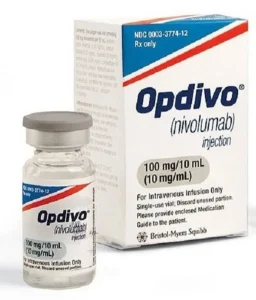
TM Owner Bristol Myers Squibb
Opdivo 100mg Injection
Global Shipping : Reliable Global Distribution Network
Express Delivery : Priority Shipping for Every Order
Secure Payments : Trusted Payment Protection System
 Disclaimer

Secure Handling
24/7 Worldwide Support

Global Access
Worldwide Access to Health

Cold-Chain Expert
Excellence in Cold-Chain

Trusted Supply
Certified Medical Supply
Indications & Clinical Uses
- Opdivo 100 mg is a solution for infusion containing nivolumab, a PD-1 immune checkpoint-inhibitor monoclonal antibody used to treat many advanced cancers in adults and, for some indications, children aged 12 years and older.
- Approved uses include unresectable or metastatic melanoma (alone or with ipilimumab, and as adjuvant therapy), non-small cell lung cancer, malignant pleural mesothelioma, renal cell carcinoma, classical Hodgkin lymphoma, squamous cell carcinoma of the head and neck, urothelial (bladder) carcinoma, microsatellite instability-high or mismatch repair-deficient colorectal cancer, hepatocellular carcinoma, and oesophageal and gastric cancers, with exact eligibility varying by tumour stage and prior treatment.
- It is given only in a hospital or specialist oncology setting by intravenous infusion, alone or combined with other anticancer medicines such as ipilimumab or chemotherapy.
Side Effects
- The most common side effects of Opdivo, affecting more than 1 in 10 people, are fatigue, rash, musculoskeletal pain, itching, diarrhoea and nausea; these increase in frequency and severity when Opdivo is combined with ipilimumab or chemotherapy.
- Opdivo can cause immune-mediated adverse reactions that may be severe or fatal and can affect almost any organ, including the lungs (pneumonitis), bowel (colitis), liver (hepatitis), kidneys (nephritis), hormone glands (thyroid, adrenal, pituitary disorders and diabetes), skin, nervous system, eyes and heart.
- There is no boxed warning on the current Opdivo label, but these immune-related reactions are highlighted prominently in the warnings section.
- Report new or worsening cough, breathlessness, diarrhoea, abdominal pain, yellowing of the skin or eyes, unusual fatigue, vision changes or dark urine to a doctor immediately, as early treatment with corticosteroids improves outcomes.
Precautions & Warnings
- Opdivo is given only by intravenous infusion over 30 minutes in a hospital or clinic; it is never self-administered.
- Before starting, and periodically during treatment, liver, kidney and thyroid function are monitored, and patients are assessed for signs of immune-related organ inflammation at every visit.
- Opdivo can cause fetal harm, so females of reproductive potential should use effective contraception during treatment and for at least 5 months after the last dose; breast-feeding is not recommended during this period.
- Complications, including graft-versus-host disease, have been reported when Opdivo is used before or after an allogeneic stem cell transplant, so prior or planned transplant should be discussed with the treating team.
- Live vaccines should be avoided during treatment.
- Patients with pre-existing autoimmune disease or organ transplant should be carefully evaluated before starting Opdivo, as it can worsen these conditions or trigger organ rejection.
Avoid Interactions
- Tell the oncology team about every other medicine, herbal product and supplement being used before and during Opdivo treatment.
- Systemic corticosteroids or other immunosuppressants used before starting Opdivo for reasons other than treating a side effect may reduce its anti-tumour effect, so their use is generally avoided beforehand unless clinically necessary.
- Once an immune-mediated reaction occurs, corticosteroids and other immunosuppressants are used deliberately to control it.
- Live attenuated vaccines should be avoided while on Opdivo because the combination of checkpoint inhibition and live vaccine is not established as safe.
- There are no specific food or grapefruit interactions, as Opdivo is a protein-based antibody rather than a small molecule metabolised by liver enzymes.
- Opdivo must not be mixed or co-infused with other medicines in the same intravenous line.
References
Frequently Asked Questions
Opdivo (nivolumab) is an immunotherapy that treats several advanced cancers, including melanoma, lung cancer, kidney cancer, Hodgkin lymphoma, and bladder, liver and gastrointestinal cancers. It works by helping the immune system attack tumour cells. It is used in adults and, for some cancers, children 12 and older.
Opdivo is given as an intravenous infusion over 30 minutes in a hospital or cancer clinic, usually every 2, 3 or 4 weeks depending on the cancer being treated. It is sometimes combined with ipilimumab or chemotherapy. You cannot inject it yourself.
Common Opdivo side effects include fatigue, rash, joint or muscle pain, itching, diarrhoea and nausea. More seriously, it can cause immune-mediated inflammation of the lungs, bowel, liver, kidneys or hormone glands. Report new cough, diarrhoea, abdominal pain or yellowing skin to your doctor right away.
Avoid live vaccines while being treated with Opdivo, and tell your care team about every other medicine you take. Starting steroids or other immune-suppressing drugs for unrelated reasons before treatment may reduce how well Opdivo works, so discuss any new medicine with your oncology team first.
Each Opdivo infusion takes about 30 minutes and is given through a vein in a hospital or clinic. Nurses monitor you during and after the infusion for reactions. Blood tests checking liver, kidney and thyroid function are done regularly throughout treatment to catch immune-related problems early.
Opdivo can harm an unborn baby, so effective contraception is needed during treatment and for at least 5 months after the last dose. Breast-feeding is not recommended during this time. Discuss family planning with your oncology team before starting treatment.

Trusted & Reliable – Your Partner in Global Distribution.
We provide comprehensive lines of pharmaceutical products to support all your healthcare distribution needs.


