

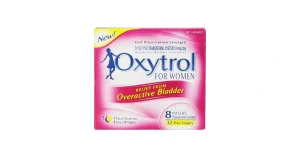
TM Owner AbbVie, Inc.
Oxytrol 3.9mg/day Transdermal Patch
Global Shipping : Reliable Global Distribution Network
Express Delivery : Priority Shipping for Every Order
Secure Payments : Trusted Payment Protection System
 Disclaimer

Secure Handling
24/7 Worldwide Support

Global Access
Worldwide Access to Health

Cold-Chain Expert
Excellence in Cold-Chain

Trusted Supply
Certified Medical Supply
Indications & Clinical Uses
- Oxytrol (oxybutynin transdermal system) delivers oxybutynin, an anticholinergic (antimuscarinic) muscle relaxant, continuously through the skin at a nominal 3.9 mg per day.
- The current US prescription Oxytrol label is approved only for overactive bladder in adult men, with symptoms of urge urinary incontinence, urgency and frequency; a separate, identically dosed product called Oxytrol for Women is sold over the counter without a prescription for women aged 18 and over with the same symptoms - the two are not interchangeable in labelling even though the patch strength is the same, so it is important to check which product and population a given pack is intended for.
- Oxytrol works by relaxing the bladder muscle to reduce involuntary contractions.
- It is applied as a skin patch rather than taken by mouth, avoiding some of the stomach-related side effects of oral oxybutynin.
Side Effects
- The most common effects, seen in more than 5% of users and more often than with a placebo patch, are reactions at the application site - itching, redness or irritation of the skin under and around the patch - and dry mouth, though dry mouth is generally less frequent than with oral oxybutynin tablets.
- Central nervous system effects such as drowsiness, dizziness, confusion, memory problems or, rarely, hallucinations have been reported, particularly in older adults.
- Oxytrol can cause urinary retention or worsen constipation and other bowel problems in susceptible people.
- Seek urgent medical attention for signs of a serious allergic reaction (angioedema) such as swelling of the face, lips, tongue or throat, or difficulty breathing, and stop use and tell your healthcare provider if the skin under the patch becomes severely irritated or blistered.
Precautions & Warnings
- Oxytrol should not be used by people with urinary retention, gastric retention, or uncontrolled narrow-angle glaucoma, or those with known serious hypersensitivity to oxybutynin.
- Use it cautiously if you have bladder outflow obstruction, reduced gut motility or other gastrointestinal obstructive disorders, since the anticholinergic effect can worsen retention.
- Oxybutynin should generally be avoided in myasthenia gravis, as it can worsen muscle weakness.
- Because drowsiness and blurred vision can occur, avoid driving or operating machinery until you know how the patch affects you.
- Apply each patch to a different site on the abdomen, hip, or buttock, rotating locations to reduce skin irritation, and change it twice weekly (every 3 to 4 days).
- There is no boxed warning on the current Oxytrol label.
- Discuss use in pregnancy or breastfeeding with your healthcare provider, as data are limited.
Avoid Interactions
- Tell your healthcare provider about all other medicines you take, especially other anticholinergic (antimuscarinic) drugs - including some antihistamines, antidepressants, and medicines for other bladder or gut conditions - since combining them with Oxytrol can increase dry mouth, constipation, blurred vision, and confusion.
- Formal studies of interactions with strong CYP3A4 inhibitors, such as certain antifungal or macrolide antibiotics, have not been done, so caution and closer monitoring are reasonable if these are prescribed together.
- Alcohol may increase drowsiness when combined with oxybutynin.
- Do not apply heat pads, heating blankets, or direct sunlight over the patch, as this can increase drug absorption and side effects.
- Do not cut the patch, and dispose of used and unused patches carefully, since they still contain active medicine that could affect children or pets.
References
Frequently Asked Questions
Oxytrol (oxybutynin) is a skin patch used to treat overactive bladder - urgency, frequency and urge incontinence. The prescription Oxytrol patch is approved for adult men; a separate over-the-counter version, Oxytrol for Women, is sold for women 18 and older with the same symptoms.
Apply one Oxytrol patch to clean, dry skin on the abdomen, hip, or buttock, and change it every 3 to 4 days (twice weekly). Rotate the site each time to avoid irritation. The medicine is absorbed continuously through the skin, so you do not need to take a tablet by mouth.
The most common effects are itching, redness or irritation where the patch is applied, and dry mouth. Some people get drowsiness, dizziness or confusion. Get urgent help for facial or throat swelling, breathing difficulty, or severe skin blistering under the patch.
Avoid other anticholinergic medicines, such as certain antihistamines or antidepressants, without checking with your provider, since combining them raises dry mouth, constipation and confusion. Avoid heat, heating pads or direct sun on the patch, as this increases drug absorption, and avoid driving until you know how it affects you.
If you forget, apply a new patch as soon as you remember and continue your normal twice-weekly schedule from that day at a new site. Do not apply two patches at once to make up for a missed change, and do not wear one patch longer than the labelled 3 to 4 days.
They contain the same dose of oxybutynin, but the prescription Oxytrol patch is labelled for men only, while Oxytrol for Women is a separate over-the-counter product for women 18 and older. Check that the pack you have matches your prescription and your sex before use.

Trusted & Reliable – Your Partner in Global Distribution.
We provide comprehensive lines of pharmaceutical products to support all your healthcare distribution needs.


