

TM Owner Organon
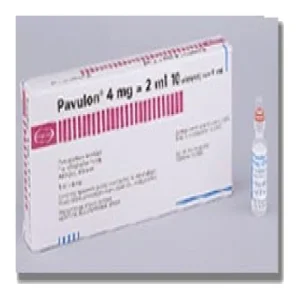
Pavulon 2mg/mL Injection
Global Shipping : Reliable Global Distribution Network
Express Delivery : Priority Shipping for Every Order
Secure Payments : Trusted Payment Protection System
 Disclaimer

Secure Handling
24/7 Worldwide Support

Global Access
Worldwide Access to Health

Cold-Chain Expert
Excellence in Cold-Chain

Trusted Supply
Certified Medical Supply
Indications & Clinical Uses
- Pavulon 2mg/mL (pancuronium bromide) is a non-depolarising neuromuscular blocking agent (a paralysing drug) used only as an adjunct to general anaesthesia in adults and children, to relax skeletal muscle so a breathing tube can be placed (tracheal intubation) and to keep muscles relaxed during surgery or while a patient is on a mechanical ventilator in an intensive care unit.
- Pavulon must be given only in a hospital, operating theatre or intensive care setting, by an anaesthetist, intensivist or other clinician specifically trained in its use, and only where staff and equipment for tracheal intubation, artificial ventilation, oxygen therapy and reversal of the block are immediately available.
- This drug paralyses the muscles used for breathing, including the diaphragm; the patient's breathing must always be taken over and fully supported by a ventilator for as long as the drug is active, and it must never be given without this support in place.
- This formulation contains benzyl alcohol and must not be used in neonates or premature infants.
Side Effects
- Pavulon's expected and intended effect is complete or near-complete paralysis of skeletal muscle, including the muscles that control breathing, which is why it is used only with full ventilator support in place; prolonged muscle weakness can persist after the drug is stopped, particularly in critically ill patients given it for many days.
- It commonly increases heart rate, blood pressure and cardiac output.
- Severe, potentially fatal anaphylactic and anaphylactoid reactions - with flushing, low blood pressure, rapid heart rate and bronchospasm - have been reported, sometimes with cross-reaction to other neuromuscular blocking drugs; emergency treatment must be immediately available whenever Pavulon is given.
- A transient skin rash can occur.
- The formulation's benzyl alcohol preservative has caused a fatal "gasping syndrome" in neonates, which is why this product is never used in newborns.
- Because Pavulon paralyses without sedating or relieving pain, it is always given together with adequate anaesthesia, sedation and pain relief so the patient is never left paralysed while conscious.
Precautions & Warnings
- Pavulon is contraindicated in patients with a known hypersensitivity to pancuronium bromide, and this formulation is contraindicated in neonates and premature infants because of its benzyl alcohol content.
- It is given only by, or under the direct supervision of, clinicians experienced in the use of neuromuscular blocking drugs and airway management, never by anyone working alone without full resuscitation and ventilation equipment on hand.
- Use with caution in people with myasthenia gravis or other neuromuscular disease, significant kidney or liver impairment (which can prolong its effect), or severe cardiovascular disease, since it tends to raise heart rate and blood pressure.
- Body temperature, fluid and electrolyte balance are monitored during use, as imbalances (for example low potassium or magnesium) can alter response to the drug.
- Full recovery of muscle strength and breathing must be confirmed - and reversed with an appropriate reversal agent if needed - before the breathing tube is removed.
- There is no home use, self-administration, storage or driving guidance applicable to patients, since Pavulon is used only in a supervised hospital setting while the patient is anaesthetised or sedated and ventilated.
Avoid Interactions
- The treating team reviews all of a patient's medicines and supplements before Pavulon is given, since many drugs alter its effect.
- Volatile inhaled anaesthetics, particularly isoflurane and enflurane, and prior use of succinylcholine can markedly enhance and prolong the block, requiring a lower Pavulon dose.
- Certain antibiotics, including aminoglycosides and tetracyclines, and some other drugs such as magnesium salts, can also intensify or prolong paralysis.
- Chronic use of anticonvulsants such as phenytoin or carbamazepine may reduce the block and shorten its duration.
- Combining Pavulon with a tricyclic antidepressant during halothane anaesthesia has been linked to severe, potentially life-threatening heart rhythm disturbances.
- Because these interactions can be serious, Pavulon dosing and monitoring are always individualised by the anaesthesia or critical care team; it is never combined with other medicines outside a supervised clinical setting.
References
Frequently Asked Questions
Pavulon (pancuronium) is a paralysing drug used only in hospital during general anaesthesia, to relax muscles for inserting a breathing tube and for surgery, or to keep a ventilated patient still in intensive care. It is never given outside a hospital.
Pavulon is injected into a vein by an anaesthetist or intensive care clinician, only where full ventilator support, oxygen and airway equipment are immediately available. It must never be given to a patient whose breathing is not being fully supported.
Pavulon paralyses the breathing muscles, so the patient must be on a ventilator the whole time it is active. It can also raise heart rate and blood pressure, and rarely causes severe, life-threatening allergic reactions, so emergency treatment is always kept ready.
No. Pavulon contains benzyl alcohol, which has caused a fatal 'gasping syndrome' in newborns, so it must never be used in neonates or premature infants. It is intended for older children and adults in a hospital setting.
No, Pavulon is always given together with anaesthesia, sedation and pain relief, so a patient is never left paralysed while awake. Pavulon relaxes muscles but does not relieve pain or cause sleep on its own.
The care team continuously monitors breathing, heart rate, blood pressure and muscle strength while Pavulon is active. Before the breathing tube is removed, staff confirm the paralysis has fully worn off or has been reversed with an appropriate reversal medicine.

Trusted & Reliable – Your Partner in Global Distribution.
We provide comprehensive lines of pharmaceutical products to support all your healthcare distribution needs.


