

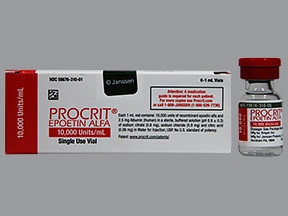
TM Owner Janssen
Procrit 10000 Units/mL Injection
Global Shipping : Reliable Global Distribution Network
Express Delivery : Priority Shipping for Every Order
Secure Payments : Trusted Payment Protection System
 Disclaimer

Secure Handling
24/7 Worldwide Support

Global Access
Worldwide Access to Health

Cold-Chain Expert
Excellence in Cold-Chain

Trusted Supply
Certified Medical Supply
Indications & Clinical Uses
- Procrit 10,000 Units/mL injection contains epoetin alfa, a recombinant form of human erythropoietin and an erythropoiesis-stimulating agent (ESA), given by intravenous or subcutaneous injection in adults.
- In the US it is approved to treat anaemia from chronic kidney disease, whether or not the patient is on dialysis; anaemia caused by zidovudine treatment in HIV infection; anaemia from myelosuppressive chemotherapy in patients with non-myeloid cancers where chemotherapy is planned to continue for at least two more months; and to reduce the need for blood transfusion around elective, non-cardiac, non-vascular surgery.
- Epoetin alfa is also marketed as Eprex or Erypo in other markets; biosimilar epoetin products are available separately under different brand names.
- Procrit is prescribed and dose-adjusted by a healthcare provider experienced in these conditions, with the lowest dose used to avoid red blood cell transfusion.
Side Effects
- Procrit carries a boxed warning: erythropoiesis-stimulating agents like epoetin alfa increase the risk of death, heart attack, stroke, blood clots (including clots in the dialysis vascular access) and tumour progression or recurrence in some patients with cancer, particularly when used to reach a higher haemoglobin than needed.
- Commonly reported reactions include high blood pressure, joint and muscle pain, fever, headache and dizziness in kidney disease; nausea, vomiting, mouth sores and cough in cancer patients; and nausea, vomiting, itching, headache and deep vein thrombosis around surgery.
- Seek urgent medical help for chest pain, sudden weakness or numbness, difficulty speaking, sudden shortness of breath, or swelling and pain in a leg, which can signal a serious cardiovascular or clotting event.
- Report any signs of a severe allergic reaction immediately.
Precautions & Warnings
- Procrit should be used at the lowest dose that avoids the need for red blood cell transfusion, with regular haemoglobin monitoring; blood pressure must be adequately controlled before and during treatment, as uncontrolled hypertension is a contraindication.
- Procrit is contraindicated in patients who have developed pure red cell aplasia after erythropoietin therapy and in those with serious hypersensitivity to the product.
- Multi-dose vials contain benzyl alcohol and must not be given to neonates, infants, or pregnant or breastfeeding women; single-dose vials are used instead in these groups.
- In cancer patients, epoetin alfa should be used only for chemotherapy-induced anaemia and discontinued once chemotherapy ends, because of the tumour-progression risk.
- Patients with chronic kidney disease need iron status assessed before and during treatment, as most patients eventually require supplemental iron for an adequate response.
Avoid Interactions
- There are no major pharmacokinetic drug-drug interaction studies establishing specific interacting medicines for epoetin alfa, but its effects and risks are altered by other factors your healthcare provider must know about: iron, vitamin B12 or folate deficiency can blunt the response, so these are checked before and during treatment.
- Concomitant use of other drugs that raise blood pressure or promote clotting, and other erythropoiesis-stimulating agents, should be avoided or closely monitored because of the added cardiovascular and thrombotic risk described in the boxed warning.
- Tell your healthcare provider about all medicines and supplements you take, including iron supplements and anticoagulants.
- Procrit must not be shaken vigorously, mixed with other drug solutions, or diluted, as this can damage the protein and reduce its effect.
References
Frequently Asked Questions
Procrit (epoetin alfa) treats anaemia from chronic kidney disease, from zidovudine in HIV, and from cancer chemotherapy, and reduces the need for blood transfusion around some types of surgery. It works by stimulating your bone marrow to make more red blood cells.
A healthcare provider gives Procrit by injection under the skin or into a vein, with the dose based on your bodyweight and haemoglobin level. You do not take it by mouth, and your dose is adjusted over time using regular blood test results.
Procrit carries a boxed warning: it can increase the risk of death, heart attack, stroke, blood clots and, in some cancers, tumour growth or recurrence. Get urgent medical help for chest pain, sudden weakness, slurred speech or painful leg swelling.
Avoid Procrit if your blood pressure is uncontrolled, and tell your provider about all medicines and supplements you take, especially iron, B12 or folate products, since deficiencies in these can blunt its effect. Never shake, dilute or mix Procrit with other drugs.
Your haemoglobin is checked regularly to find the lowest effective Procrit dose, and iron, vitamin B12 and folate levels are monitored, since low levels reduce its effect. Blood pressure is checked at each visit too, because uncontrolled hypertension raises the risk of serious side effects.
Procrit is the original branded epoetin alfa; biosimilar epoetin products are approved separately under different brand names after showing equivalent safety, quality and effect to Procrit. Your healthcare provider or pharmacy usually decides which specific epoetin alfa product you actually receive.

Trusted & Reliable – Your Partner in Global Distribution.
We provide comprehensive lines of pharmaceutical products to support all your healthcare distribution needs.


