

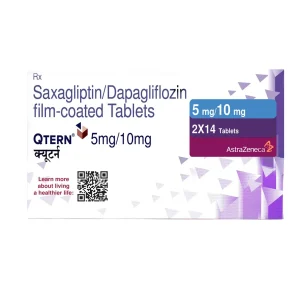
TM Owner AstraZeneca
Qtern 5mg + 10mg Tablet
Global Shipping : Reliable Global Distribution Network
Express Delivery : Priority Shipping for Every Order
Secure Payments : Trusted Payment Protection System
 Disclaimer

Secure Handling
24/7 Worldwide Support

Global Access
Worldwide Access to Health

Cold-Chain Expert
Excellence in Cold-Chain

Trusted Supply
Certified Medical Supply
Indications & Clinical Uses
- Qtern 5 mg/10 mg tablets combine saxagliptin (a DPP-4 inhibitor) 5 mg with dapagliflozin (an SGLT2 inhibitor) 10 mg in a single film-coated tablet.
- As of 2026 the Qtern brand is no longer commercially marketed in the United States -- this is a manufacturer discontinuation, not a formal FDA withdrawal of approval, and the first generic dapagliflozin/saxagliptin tablets reached the US market in 2026; Qtern remains authorised and marketed in the European Union under an authorisation held by AstraZeneca AB.
- Where available, Qtern is indicated as an adjunct to diet and exercise to improve blood glucose control in adults with type 2 diabetes who are not adequately controlled on metformin, or on one of its two components alone, or as a convenient single tablet for patients already stable on saxagliptin and dapagliflozin taken separately.
- It is not approved for type 1 diabetes and must not be used in patients with moderate to severe kidney impairment.
Side Effects
- The most common reactions, each affecting 5% or more of patients, are urinary tract infection, upper respiratory tract infection and raised blood lipids (dyslipidaemia); genital yeast infections, headache, back pain and diarrhoea are also common.
- Qtern's current label carries no boxed warning.
- Seek urgent medical attention for symptoms of diabetic ketoacidosis (nausea, vomiting, abdominal pain, tiredness, unusual difficulty breathing) even if blood sugar seems only mildly raised, since dapagliflozin can cause ketoacidosis with near-normal glucose levels.
- Also report promptly any severe pain, swelling or redness of the genital or perineal area (a rare but serious infection called Fournier's gangrene), signs of dehydration or low blood pressure (dizziness on standing), or unexplained joint pain.
- Report low blood sugar symptoms if you also take insulin or a sulfonylurea.
Precautions & Warnings
- Kidney function should be checked before starting Qtern and monitored during treatment, and the medicine is contraindicated once eGFR falls below 45 mL/min/1.73m2 or in dialysis.
- Because of the ketoacidosis risk, stop Qtern temporarily before major surgery or during acute serious illness, and check ketones if you feel unwell even with normal-looking blood sugar.
- Saxagliptin has been linked to an increased rate of heart failure hospitalisation in some studies, so report new or worsening shortness of breath, swelling of the legs, or sudden weight gain.
- Qtern is not recommended in pregnancy, particularly the second and third trimesters, as SGLT2 inhibitors can affect fetal kidney development, and is not recommended while breastfeeding.
- Genital hygiene and prompt reporting of urinary or genital infection symptoms are advised, and Qtern should not be used in type 1 diabetes or diabetic ketoacidosis.
Avoid Interactions
- Combining Qtern with insulin or a sulfonylurea increases the risk of low blood sugar, and a lower dose of the other medicine may be needed -- tell your prescriber about all diabetes treatments you use.
- Diuretics ('water tablets') can add to the volume depletion and low blood pressure risk of dapagliflozin, particularly in older adults.
- Strong CYP3A4/5 inhibitors such as ketoconazole or ritonavir raise saxagliptin levels and should generally be avoided; rifampicin and other strong inducers can reduce its effect.
- Lithium levels may fall during treatment.
- Avoid alcohol in excess, as it can worsen dehydration and mask hypoglycaemia symptoms.
- Tell your healthcare provider and pharmacist about every prescription and over-the-counter medicine, herbal product and supplement you take, and before starting any new medicine.
References
Frequently Asked Questions
Qtern combines saxagliptin and dapagliflozin to improve blood sugar control in adults with type 2 diabetes, alongside diet and exercise. It is used when metformin or a single component alone is not enough. Note: the Qtern brand is discontinued in the US as of 2026 but stays available in the EU.
Qtern is a single tablet taken by mouth once daily, with or without food, usually in the morning. It combines 5 mg saxagliptin with dapagliflozin. Swallow the tablet whole. If a dose is missed, take it as soon as remembered unless it is almost time for the next one.
Common Qtern side effects include urinary and upper respiratory infections, genital yeast infections, raised cholesterol, headache and diarrhoea. Seek urgent care for nausea, vomiting or breathing difficulty (possible ketoacidosis even with normal-looking sugars), or severe genital or perineal pain and swelling.
Avoid excess alcohol, which raises dehydration and low-blood-sugar risk, and tell your prescriber before combining Qtern with insulin, sulfonylureas or strong CYP3A4 inhibitors like ketoconazole. Stop Qtern before planned surgery or serious illness, and avoid it entirely in type 1 diabetes.
The Qtern brand was discontinued commercially in the United States around 2023-2026, and generic dapagliflozin/saxagliptin tablets have since become available there; this reflects a manufacturer marketing decision, not a confirmed FDA safety withdrawal. Qtern itself remains authorised and actively marketed in the European Union.
Qtern is not recommended during pregnancy, especially later trimesters, because dapagliflozin may affect the baby's kidney development, and it is not advised while breastfeeding. In older adults it can increase dehydration and low blood pressure risk, and kidney function needs closer monitoring.

Trusted & Reliable – Your Partner in Global Distribution.
We provide comprehensive lines of pharmaceutical products to support all your healthcare distribution needs.


