

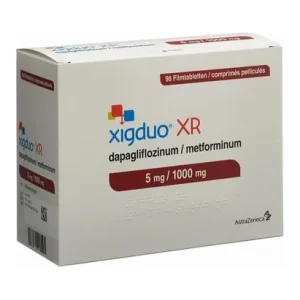
TM Owner AstraZeneca
Qternmet XR 5mg/5mg/1000mg (dapagliflozin/saxagliptin/metformin HCl ER) Tablet
Global Shipping : Reliable Global Distribution Network
Express Delivery : Priority Shipping for Every Order
Secure Payments : Trusted Payment Protection System
 Disclaimer

Secure Handling
24/7 Worldwide Support

Global Access
Worldwide Access to Health

Cold-Chain Expert
Excellence in Cold-Chain

Trusted Supply
Certified Medical Supply
Indications & Clinical Uses
- Qternmet XR extended-release tablets combine dapagliflozin (an SGLT2 inhibitor), saxagliptin (a DPP-4 inhibitor) and metformin hydrochloride in one tablet; the approved strengths pair 2.5 mg or 5 mg dapagliflozin and 2.5 mg or 5 mg saxagliptin with 1000 mg metformin, so the 5 mg/10 mg/1000 mg combination on this sheet is not an approved strength (see corrections).
- Qternmet XR was approved by the FDA on 2 May 2019 and, as of 2026, is listed as commercially discontinued in the United States; no EU authorisation was found for this triple combination.
- Where available, it was indicated as an adjunct to diet and exercise to improve glycaemic control in adults with type 2 diabetes already treated with dapagliflozin, saxagliptin and/or metformin, or inadequately controlled on metformin alone.
- It is not for type 1 diabetes or diabetic ketoacidosis, and tablets must be swallowed whole, never crushed, cut or chewed.
Side Effects
- Qternmet XR carries a boxed warning for metformin-associated lactic acidosis, a rare but serious and potentially fatal build-up of lactic acid; risk is higher with kidney or liver impairment, heart failure, dehydration, excess alcohol use, or after recent iodinated-contrast imaging or surgery.
- Warning signs include unusual tiredness, muscle pain, difficulty breathing, stomach pain, and feeling unusually cold -- stop the medicine and get emergency care immediately if these occur.
- The most common reactions (5% or more) are urinary and upper respiratory tract infections and raised cholesterol; metformin also commonly causes diarrhoea, nausea, flatulence and stomach upset, especially when starting.
- Report symptoms of ketoacidosis (nausea, vomiting, breathlessness) even with normal-looking blood sugar, and any severe genital or perineal pain or swelling.
Precautions & Warnings
- Kidney function must be checked before starting and periodically during treatment; Qternmet XR is contraindicated once eGFR falls below 45 mL/min/1.73m2, in dialysis, or in metabolic acidosis/diabetic ketoacidosis.
- Temporarily stop the medicine before surgery or before and after an iodinated-contrast imaging procedure, and hold it during conditions that can affect kidney function or oxygen supply (dehydration, serious infection, shock).
- Avoid excess alcohol, which raises the risk of lactic acidosis and low blood sugar.
- Long-term metformin use can lower vitamin B12 levels, so periodic monitoring is advised.
- It is not recommended in pregnancy or breastfeeding, and is not approved for children or type 1 diabetes.
- Hospital-administered or self-administered: this is an oral tablet taken by the patient at home, not given by a clinician.
Avoid Interactions
- Carbonic anhydrase inhibitors such as topiramate can add to the metabolic and lactic acidosis risk of metformin and should be used cautiously together.
- Iodinated contrast agents used in imaging can temporarily impair kidney function, so Qternmet XR is usually withheld around the time of the procedure.
- Insulin and sulfonylureas increase the risk of hypoglycaemia when combined with Qternmet XR, and doses may need adjusting.
- Alcohol increases the risk of lactic acidosis and should be limited.
- Strong CYP3A4/5 inhibitors (e.g. ketoconazole, ritonavir) raise saxagliptin exposure; strong inducers such as rifampicin reduce it.
- Diuretics can add to dehydration and low blood pressure risk from dapagliflozin.
- Tell your healthcare provider and pharmacist about every medicine, supplement and herbal product you use, and before starting any new one.
References
Frequently Asked Questions
Qternmet XR combined dapagliflozin, saxagliptin and extended-release metformin to improve blood sugar control in adults with type 2 diabetes, alongside diet and exercise. As of 2026 it is listed as commercially discontinued in the United States, and no equivalent EU authorisation was found.
Qternmet XR was an extended-release tablet taken by mouth once daily with the evening meal, swallowed whole and never crushed, split or chewed. It combined dapagliflozin, saxagliptin and 1000 mg metformin in a single tablet for adults with type 2 diabetes.
Qternmet XR carries a boxed warning for metformin-associated lactic acidosis, a rare but life-threatening build-up of acid in the blood. Risk rises with kidney or liver problems, heart failure, dehydration, heavy alcohol use or recent contrast-dye imaging. Seek emergency care for unusual tiredness, muscle pain or breathlessness.
Avoid excess alcohol and tell your healthcare provider before any iodinated-contrast imaging or surgery, since both raise lactic acidosis risk with Qternmet XR. Combining it with insulin or a sulfonylurea can cause low blood sugar, and long-term use may lower vitamin B12 levels.
No. Approved Qternmet XR strengths pair 2.5 mg or 5 mg dapagliflozin and 2.5 mg or 5 mg saxagliptin with 1000 mg metformin; a saxagliptin dose of 10 mg does not exist in this product. The closest approved strength is 5 mg dapagliflozin/5 mg saxagliptin/1000 mg metformin.
Qternmet XR is not recommended in pregnancy or while breastfeeding; dapagliflozin may affect a developing baby's kidneys, and safer alternatives such as insulin are generally preferred for diabetes in pregnancy. It is also not approved for children or for type 1 diabetes.

Trusted & Reliable – Your Partner in Global Distribution.
We provide comprehensive lines of pharmaceutical products to support all your healthcare distribution needs.


