

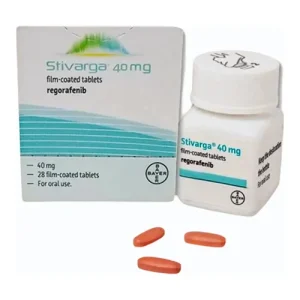
TM Owner Bayer
Regorafenib 40mg Tablet
Global Shipping : Reliable Global Distribution Network
Express Delivery : Priority Shipping for Every Order
Secure Payments : Trusted Payment Protection System
 Disclaimer

Secure Handling
24/7 Worldwide Support

Global Access
Worldwide Access to Health

Cold-Chain Expert
Excellence in Cold-Chain

Trusted Supply
Certified Medical Supply
Indications & Clinical Uses
- This sheet entry is a generic/molecule-name row: 'Regorafenib' is the active substance, and the approved brand under which it is sold is Stivarga (Bayer).
- Stivarga (regorafenib) 40 mg tablets are an oral multikinase inhibitor approved for adults with metastatic colorectal cancer previously treated with standard chemotherapy, targeted anti-VEGF and, if appropriate, anti-EGFR therapy; for locally advanced, unresectable or metastatic gastrointestinal stromal tumours (GIST) previously treated with imatinib and sunitinib; and for hepatocellular carcinoma previously treated with sorafenib.
- The standard dose is 160 mg (four 40 mg tablets) taken once daily for the first 21 days of each 28-day cycle, with a low-fat meal containing fewer than 600 calories and less than 30% fat, since a high-fat meal increases absorption unpredictably.
- Stivarga is a specialist oncology medicine started and monitored by a cancer specialist; it is not interchangeable with other kinase inhibitors used in the same cancers.
Side Effects
- Stivarga carries a boxed warning: severe and sometimes fatal hepatotoxicity (liver injury) has occurred in clinical trials, so liver function tests are checked before starting and regularly during treatment, and the dose is interrupted, then reduced or stopped, if liver injury develops.
- Very common side effects include fatigue, loss of appetite, hand-foot skin reaction (redness, pain, peeling of the palms and soles), diarrhoea, mouth sores, high blood pressure, weight loss, infection, voice changes and rash.
- Seek urgent medical attention for yellowing of the skin or eyes, dark urine, severe abdominal pain, signs of bleeding, severe diarrhoea or dehydration, chest pain, sudden weakness or confusion, or a wound that will not heal, since Stivarga can also cause serious bleeding, high blood pressure, heart problems and impaired wound healing.
Precautions & Warnings
- Liver function is checked before starting Stivarga and at least every two weeks for the first two months, then monthly, because of the boxed hepatotoxicity warning; treatment is stopped permanently for severe liver injury.
- Blood pressure is checked weekly for the first six weeks and regularly afterwards, since Stivarga commonly causes hypertension.
- Stivarga is stopped at least 2 weeks before elective surgery because of impaired wound healing and is not restarted until the wound has adequately healed.
- It can cause severe bleeding and should be stopped permanently for serious bleeds; it is used cautiously in people at high cardiovascular risk because of arterial thromboembolic events reported in trials.
- Effective contraception is required during treatment and for a period after the last dose for both women and men, since Stivarga can harm an unborn baby; it is not used in pregnancy or while breastfeeding.
Avoid Interactions
- Tell your healthcare provider about all medicines and supplements, since Stivarga is broken down by the liver enzyme CYP3A4 and by UGT1A9.
- Strong CYP3A4 inhibitors, such as clarithromycin, itraconazole, ketoconazole and grapefruit or grapefruit juice, raise regorafenib levels and should be avoided; strong CYP3A4 inducers, such as rifampin, phenytoin, carbamazepine and St John's Wort, lower its levels and reduce effectiveness and should also be avoided.
- Stivarga increases exposure to some other drugs metabolised by CYP2C8, such as certain statins, and to warfarin, which may need closer INR monitoring for bleeding.
- It should be taken with a low-fat meal, as a high-fat meal increases drug absorption unpredictably.
- Discuss any planned vaccination with your oncology team, given the effect on wound healing and general immune status.
References
Frequently Asked Questions
Regorafenib, sold under the brand name Stivarga, is an oral cancer medicine for adults with previously treated metastatic colorectal cancer, gastrointestinal stromal tumours (GIST), or hepatocellular carcinoma after sorafenib. 'Regorafenib' is the active ingredient name; Stivarga is the approved brand on the pack.
Stivarga is taken as four 40 mg tablets once daily for 21 days, then 7 days off, in 28-day cycles. Take it with a low-fat meal under 600 calories, since a high-fat meal changes how much drug your body absorbs.
Stivarga (regorafenib) carries a boxed warning for severe, sometimes fatal liver injury (hepatotoxicity). Your liver function is tested before treatment and regularly during it. Report yellowing skin or eyes, dark urine or severe stomach pain straight away, as treatment may need to be interrupted.
Avoid grapefruit and strong CYP3A4 inhibitors like clarithromycin and ketoconazole, which raise regorafenib levels, and strong inducers like rifampin and St John's Wort, which lower them. Tell your care team about all medicines, especially warfarin, since Stivarga can affect bleeding risk.
You will have regular liver function tests, especially in the first two months, and weekly blood pressure checks for the first six weeks, since Stivarga can cause liver injury and high blood pressure. Stivarga is usually stopped about two weeks before planned surgery to allow normal wound healing.
No. Stivarga (regorafenib) can harm an unborn baby, so it is avoided in pregnancy and breastfeeding. Effective contraception is required during treatment and for a period after the last dose for both women and men. Discuss family planning with your oncology team before starting.

Trusted & Reliable – Your Partner in Global Distribution.
We provide comprehensive lines of pharmaceutical products to support all your healthcare distribution needs.


