

TM Owner Organon
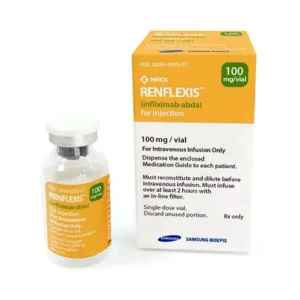
Renflexis 100mg Injection
Global Shipping : Reliable Global Distribution Network
Express Delivery : Priority Shipping for Every Order
Secure Payments : Trusted Payment Protection System
 Disclaimer

Secure Handling
24/7 Worldwide Support

Global Access
Worldwide Access to Health

Cold-Chain Expert
Excellence in Cold-Chain

Trusted Supply
Certified Medical Supply
Indications & Clinical Uses
- Renflexis (infliximab-abda) 100 mg is a biosimilar of the reference biologic Remicade (infliximab), from the same anti-tumour necrosis factor (anti-TNF) drug class.
- It is given by intravenous infusion in a hospital or infusion clinic - patients do not self-administer it.
- Renflexis is approved for moderately to severely active Crohn's disease and ulcerative colitis, rheumatoid arthritis (with methotrexate), ankylosing spondylitis, psoriatic arthritis and chronic plaque psoriasis in adults, and for Crohn's disease and ulcerative colitis in children aged 6 years and older.
- As a biosimilar, Renflexis has been shown to be highly similar to Remicade with no clinically meaningful difference in safety or effectiveness; it may be substituted only according to local pharmacy biosimilar-substitution rules, not automatically.
- Renflexis was developed by Samsung Bioepis (South Korea) and is marketed in the US by Organon.
Side Effects
- Renflexis carries a boxed warning for serious infections - including tuberculosis, bacterial sepsis, invasive fungal infections, and reactivation of hepatitis B, some of which have been fatal - and a boxed warning for lymphoma and other malignancies, including a rare, often fatal hepatosplenic T-cell lymphoma seen mostly in adolescent and young adult males with inflammatory bowel disease treated with infliximab together with azathioprine or 6-mercaptopurine.
- Very common reactions (more than 1 in 10 people) include upper respiratory infections, infusion-related reactions (fever, chills, rash, itching), headache, abdominal pain and nausea.
- Tell your care team immediately about fever, persistent cough, unusual bruising or bleeding, jaundice, or signs of an allergic reaction during or after infusion.
Precautions & Warnings
- Renflexis must not be given at doses above 5 mg/kg to anyone with moderate or severe heart failure, or to anyone with known severe hypersensitivity to infliximab or other murine (mouse) proteins.
- Before starting, you will be screened for latent or active tuberculosis and tested for hepatitis B, since infliximab can reactivate both.
- Live vaccines (such as MMR, yellow fever, or oral typhoid) must not be given while on Renflexis, and a waiting period is recommended before and after treatment.
- Renflexis may increase the risk of new or worsening nerve conditions and of certain skin cancers, so report unusual skin changes.
- It is given only by intravenous infusion, never as an intramuscular or subcutaneous injection.
- Liver enzymes are checked periodically.
- Tell your healthcare provider if you are pregnant, planning pregnancy, or breastfeeding, since infliximab crosses the placenta.
Avoid Interactions
- Do not receive live vaccines (such as MMR, varicella, yellow fever, or oral typhoid) while being treated with Renflexis, and tell your healthcare provider about any recent or planned vaccinations.
- Combining Renflexis with other biologic disease-modifying drugs such as anakinra, abatacept, or other TNF blockers increases the risk of serious infection and is generally avoided.
- Using Renflexis together with azathioprine or 6-mercaptopurine, particularly in young men with inflammatory bowel disease, raises the risk of a rare lymphoma and should be discussed carefully with your specialist.
- Tell your healthcare provider and infusion team about all prescription medicines, over-the-counter products, and supplements you take before each infusion.
References
Frequently Asked Questions
Renflexis (infliximab-abda) is a biosimilar anti-TNF biologic used to treat moderate to severe Crohn's disease, ulcerative colitis, rheumatoid arthritis, ankylosing spondylitis, psoriatic arthritis and plaque psoriasis in adults, and Crohn's disease or ulcerative colitis in children aged 6 and over. It works the same way as the reference biologic Remicade.
Renflexis is given as an intravenous infusion in a hospital or infusion clinic, never at home. After starting doses at weeks 0, 2 and 6, most people receive an infusion every 8 weeks, though your rheumatologist or gastroenterologist may adjust the interval or dose based on your response.
Renflexis carries a boxed warning for serious infections, including tuberculosis and hepatitis B reactivation, and for lymphoma and other cancers, including a rare, sometimes fatal lymphoma in young people with inflammatory bowel disease taking azathioprine alongside it. Common effects include infections, infusion reactions, headache and nausea. Report fever or bruising urgently.
Avoid live vaccines, such as MMR or yellow fever, while on Renflexis, since it suppresses immune response. Tell your healthcare provider about other biologic or immune-suppressing medicines, as combining these raises infection risk. You'll be screened for tuberculosis and hepatitis B before starting, so mention any past infections or recent travel.
Each Renflexis infusion is given slowly into a vein over at least two hours, through a specific filter, while nursing staff monitor you for reactions such as fever, rash, flushing or breathing changes. You'll usually be observed for a period after the infusion ends. Tell staff immediately about any itching, dizziness or chest tightness.
Renflexis is a biosimilar of Remicade (infliximab) - regulators confirmed it works the same way with no meaningful difference in safety or effect. It is not automatically substituted for Remicade without your prescriber's agreement. Tell your healthcare provider if you are pregnant or breastfeeding, as infliximab crosses the placenta.

Trusted & Reliable – Your Partner in Global Distribution.
We provide comprehensive lines of pharmaceutical products to support all your healthcare distribution needs.


