

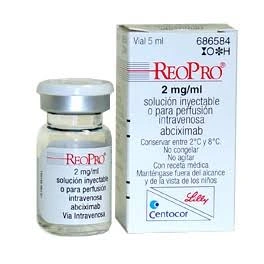
TM Owner Janssen Biotech, Inc.
ReoPro 2mg/mL Injection
Global Shipping : Reliable Global Distribution Network
Express Delivery : Priority Shipping for Every Order
Secure Payments : Trusted Payment Protection System
 Disclaimer

Secure Handling
24/7 Worldwide Support

Global Access
Worldwide Access to Health

Cold-Chain Expert
Excellence in Cold-Chain

Trusted Supply
Certified Medical Supply
Indications & Clinical Uses
- ReoPro (abciximab) has been discontinued from commercial supply worldwide since 2020, following a manufacturer decision by Janssen (the current license holder) rather than a safety-based withdrawal; the US FDA's Purple Book lists the product as discontinued, and healthcare providers have been advised to use alternative glycoprotein IIb/IIIa inhibitors where ReoPro was previously used.
- Historically, ReoPro 2 mg/mL solution was a glycoprotein IIb/IIIa receptor antagonist (antiplatelet agent) used as an adjunct to percutaneous coronary intervention (PCI, coronary angioplasty/stenting) to prevent ischaemic cardiac complications, and in unstable angina not responding to standard treatment when PCI was planned within 24 hours.
- It was given only intravenously by a cardiology team in a hospital catheterisation laboratory - patients never self-administered it.
- This content describes the last approved US prescribing information for reference; ReoPro should not be expected from current supply.
Side Effects
- In clinical use, ReoPro was most associated with bleeding: back pain (up to 18% of patients), low blood pressure (around 14%), nausea, chest pain, vomiting and headache were commonly reported, alongside bleeding at the arterial catheter access site.
- Serious reactions requiring urgent attention included major or intracranial bleeding, a sudden drop in platelet count (thrombocytopenia), and allergic reactions including, rarely, anaphylaxis.
- ReoPro's US label did not carry a boxed warning, though bleeding risk was highlighted prominently in the Warnings section.
- Because it was given only in a monitored hospital setting, side effects were managed directly by the treating team; patients were watched closely for bruising, bleeding from access sites, and falling blood pressure during and after the infusion.
Precautions & Warnings
- ReoPro was contraindicated in active internal bleeding, recent (within 6 weeks) major surgery or trauma, recent stroke, known bleeding disorders, severe uncontrolled high blood pressure, thrombocytopenia (platelet count below 100,000/microlitre), and known intracranial disease such as a tumour, aneurysm or arteriovenous malformation.
- It was given only by intravenous bolus followed by infusion, under close monitoring of platelet counts and clotting status, alongside carefully weight-adjusted heparin dosing, and only in centres with full resuscitation and cardiac surgical support available.
- Femoral or radial arterial access sites required strict protocols for insertion, monitoring, and removal to reduce bleeding risk.
- ReoPro is no longer commercially available, so these precautions reflect historical prescribing information rather than a product currently in active clinical use.
Avoid Interactions
- ReoPro's bleeding risk was increased when combined with other antiplatelet agents (dipyridamole, ticlopidine), anticoagulants (heparin, warfarin), thrombolytic drugs, and non-steroidal anti-inflammatory drugs (NSAIDs).
- Dextran infusions were contraindicated in combination with ReoPro due to added bleeding risk, and repeat administration after a prior dose of a different glycoprotein IIb/IIIa inhibitor was approached with particular caution because of cumulative bleeding and immune effects.
- Because ReoPro was always given by a hospital team, patients did not need to manage these interactions themselves, but the treating clinicians reviewed all other blood-thinning, antiplatelet and anti-inflammatory medicines, including aspirin and clopidogrel, before and during treatment.
- As ReoPro is no longer supplied, these interaction warnings are provided for historical and reference purposes only.
References
Frequently Asked Questions
ReoPro (abciximab) has been discontinued worldwide since 2020, so it is no longer supplied. When available, it was a glycoprotein IIb/IIIa inhibitor antiplatelet medicine given during angioplasty (PCI) to prevent blood clots and heart complications, and in unstable angina before urgent PCI. It was not classed as an anticoagulant.
ReoPro was given only by intravenous bolus and infusion, by a cardiology team in a hospital catheterisation laboratory during or around a coronary procedure. It was never self-injected at home, and there was no oral or subcutaneous form. It is no longer commercially available anywhere.
Bleeding was the main risk with ReoPro, especially at the arterial access site, along with back pain, low blood pressure, nausea and headache. Serious reactions included major bleeding, bleeding in the brain, and a sudden drop in platelet count. ReoPro's US label carried no boxed warning, though bleeding was emphasised in its warnings.
Other antiplatelet drugs (dipyridamole, ticlopidine), anticoagulants such as heparin or warfarin, thrombolytics and NSAIDs all increased bleeding risk when combined with ReoPro. Dextran was contraindicated with it. Because it was hospital-administered, the treating team reviewed all other blood-thinning medicines before and during each infusion rather than the patient managing this alone.
No. ReoPro was withdrawn from commercial supply worldwide from 2020 onward, a decision made by manufacturer Janssen rather than a safety-driven withdrawal by regulators. The FDA's Purple Book lists it as discontinued. Healthcare providers now generally use other glycoprotein IIb/IIIa inhibitors, such as eptifibatide or tirofiban, in its place.
ReoPro was manufactured by Janssen Biotech, Inc. (Horsham, Pennsylvania, USA); it was previously co-marketed in the US with Eli Lilly and Company, which is why older references may list Lilly instead. By the time of its 2020 discontinuation, Janssen held the license and managed its withdrawal from supply.

Trusted & Reliable – Your Partner in Global Distribution.
We provide comprehensive lines of pharmaceutical products to support all your healthcare distribution needs.


