

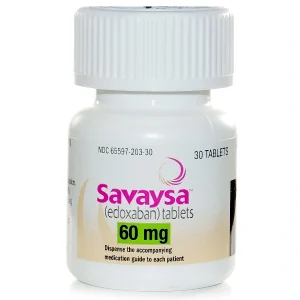
TM Owner Daiichi Sankyo
Savaysa 60mg Tablet
Global Shipping : Reliable Global Distribution Network
Express Delivery : Priority Shipping for Every Order
Secure Payments : Trusted Payment Protection System
 Disclaimer

Secure Handling
24/7 Worldwide Support

Global Access
Worldwide Access to Health

Cold-Chain Expert
Excellence in Cold-Chain

Trusted Supply
Certified Medical Supply
Indications & Clinical Uses
- Savaysa 60 mg (edoxaban; Daiichi Sankyo) is a factor Xa inhibitor oral anticoagulant ('blood thinner') approved in adults to reduce the risk of stroke and blood clots travelling to other organs in non-valvular atrial fibrillation, and to treat deep vein thrombosis (DVT) and pulmonary embolism (PE) after 5 to 10 days of initial treatment with an injectable anticoagulant.
- The label specifically states Savaysa should not be used in atrial fibrillation patients with a creatinine clearance above 95 mL/min, because it was less effective than warfarin at preventing stroke in that group in clinical trials - kidney function is checked before starting and periodically thereafter.
- Savaysa is taken once daily by mouth, with or without food, and the 60 mg dose is reduced to 30 mg in people with moderate kidney impairment, low body weight, or taking certain P-glycoprotein inhibitor medicines.
Side Effects
- Bleeding is the main risk with Savaysa; bruising, nosebleeds and blood in urine or stool are common, and any bleeding can potentially become serious.
- Anaemia can develop from bleeding.
- Rash and abnormal liver test results have also been reported.
- Savaysa carries a boxed warning covering three points: it should not be used in atrial fibrillation patients with creatinine clearance above 95 mL/min because of reduced effectiveness versus warfarin; stopping any oral anticoagulant without starting an adequate alternative raises the risk of stroke or clot; and patients having spinal or epidural procedures while on Savaysa are at risk of spinal or epidural blood clots (haematoma) that can cause long-term or permanent paralysis.
- Seek emergency care for unusual bruising, black or bloody stools, coughing or vomiting blood, or sudden weakness or numbness.
Precautions & Warnings
- Savaysa is not recommended for patients with mechanical heart valves or moderate-to-severe mitral stenosis (valvular disease), or for those with triple-positive antiphospholipid syndrome, since it has not been shown to work safely in these groups and other options are preferred.
- Because there is limited experience reversing edoxaban's effect, tell every healthcare provider, including dentists, that you take Savaysa before any procedure, and follow instructions carefully around stopping it before surgery.
- Renal and, where relevant, hepatic function should be assessed before starting and monitored periodically, since dose depends on kidney function.
- Use in pregnancy and breastfeeding is not recommended; discuss contraception with your care team.
- Never stop Savaysa suddenly without medical advice, and never double a missed dose.
Avoid Interactions
- Combining Savaysa with other anticoagulants, antiplatelet drugs (such as aspirin or clopidogrel), or long-term NSAIDs increases bleeding risk and should be avoided unless specifically directed.
- Strong P-glycoprotein inhibitors (such as ciclosporin, dronedarone, erythromycin or ketoconazole) can raise edoxaban levels and require the lower 30 mg dose in atrial fibrillation.
- Rifampin and other strong P-glycoprotein inducers can lower edoxaban levels and reduce its effectiveness - avoid this combination.
- SSRIs and SNRIs used together with Savaysa may further increase bleeding risk.
- Tell your healthcare provider about every prescription medicine, over-the-counter drug, herbal remedy and supplement you take, and mention any planned spinal injections or epidural procedures before your Savaysa dose.
References
Frequently Asked Questions
Savaysa (edoxaban) is a blood-thinning tablet that lowers the risk of stroke in non-valvular atrial fibrillation and treats blood clots (DVT and pulmonary embolism) after initial injectable anticoagulant treatment. It isn't used if your kidney function is above 95 mL/min, where it works less well than warfarin.
Take Savaysa once daily by mouth, with or without food, at about the same time each day. The usual dose is 60 mg, reduced to 30 mg if you have moderate kidney impairment, low body weight, or take certain interacting medicines. Never stop it suddenly without medical advice.
Bleeding is the main risk with Savaysa - bruising, nosebleeds, or blood in urine or stool. Savaysa has a boxed warning about reduced effectiveness at high kidney function, clot risk if stopped abruptly, and spinal/epidural bleeding during spinal procedures. Get emergency help for black stools or vomiting blood.
Avoid other blood thinners, aspirin, regular NSAIDs, and combining with strong P-glycoprotein inducers like rifampin, which reduce Savaysa's effect. Tell every doctor and dentist you take Savaysa before any procedure. Savaysa isn't recommended with mechanical heart valves or in pregnancy.
Take your missed Savaysa dose as soon as you remember that same day, then continue your normal daily schedule. Never take two doses together to make up for one you missed, and never stop Savaysa without talking to your care team first, since stopping abruptly raises clot risk.
No. Savaysa is not recommended for people with mechanical heart valves or moderate-to-severe mitral stenosis, because its safety and effectiveness haven't been established in these situations. Your care team will choose a different anticoagulant if this applies to you.

Trusted & Reliable – Your Partner in Global Distribution.
We provide comprehensive lines of pharmaceutical products to support all your healthcare distribution needs.


