

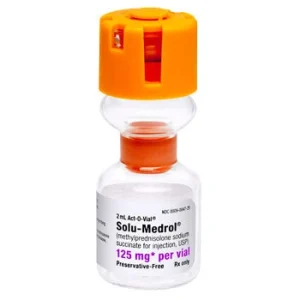
TM Owner Pfizer
Solu-Medrol 125mg Injection
Global Shipping : Reliable Global Distribution Network
Express Delivery : Priority Shipping for Every Order
Secure Payments : Trusted Payment Protection System
 Disclaimer

Secure Handling
24/7 Worldwide Support

Global Access
Worldwide Access to Health

Cold-Chain Expert
Excellence in Cold-Chain

Trusted Supply
Certified Medical Supply
Indications & Clinical Uses
- Solu-Medrol 125mg is the injectable form of methylprednisolone sodium succinate, a potent synthetic glucocorticoid marketed by Pfizer (labeled by its Pharmacia & Upjohn division).
- Given as an intravenous or intramuscular injection by a healthcare provider when oral steroid therapy is not feasible or a rapid effect is needed, it is approved for severe allergic reactions and status asthmaticus, dermatologic diseases such as pemphigus and Stevens-Johnson syndrome, hematologic disorders such as autoimmune haemolytic anaemia, acute exacerbations of multiple sclerosis, cerebral oedema associated with brain tumours or surgery, rheumatic disorders including systemic lupus erythematosus and rheumatoid arthritis, respiratory conditions such as sarcoidosis, gastrointestinal, renal and ophthalmic inflammatory disease, and certain cancers as adjunctive therapy.
- High-dose, short pulse regimens are used for acute MS relapse under specialist supervision.
- Solu-Medrol is given only by or under the supervision of a healthcare professional in a hospital or clinic setting, not for home self-injection.
Side Effects
- Common reactions after methylprednisolone sodium succinate injection include fluid retention, raised blood pressure, mood or sleep disturbance, increased appetite, flushing, and a metallic taste or brief perineal burning if the injection is given too quickly.
- With high-dose or repeated use, more serious effects can occur, including hyperglycaemia, Cushingoid features, osteoporosis and fractures, myopathy, psychiatric disturbances including psychosis, peptic ulcer with possible perforation, pancreatitis, and increased susceptibility to infection with suppressed signs of infection.
- Rare but serious cardiac events, including arrhythmias, bradycardia, cardiac arrest and, very rarely, myocardial rupture after recent heart attack, have been reported, mainly with rapid high-dose administration.
- As with other injectable corticosteroids, the label carries a prominent warning that serious, sometimes fatal, neurologic events, including stroke and paraplegia, have followed epidural corticosteroid injection; Solu-Medrol is not approved for and must never be given by the epidural or intrathecal route.
- Seek urgent help for chest pain, severe abdominal pain, black stools, sudden weakness, or signs of infection.
Precautions & Warnings
- Solu-Medrol is contraindicated in patients with systemic fungal infections and known hypersensitivity to methylprednisolone or any component; intrathecal and epidural administration are not approved and must never be used because of the risk of serious neurologic events, and intramuscular use is contraindicated in idiopathic thrombocytopenic purpura.
- Formulations preserved with benzyl alcohol must not be used in neonates or premature infants because of the risk of a fatal 'gasping syndrome'; the 40mg strength is also contraindicated in patients with known hypersensitivity to cow's milk protein.
- Rapid intravenous administration of high doses has been associated with cardiovascular collapse, so high-dose infusions are given slowly over at least 30 minutes.
- Use with caution in diabetes, hypertension, heart failure, recent myocardial infarction, peptic ulcer disease, osteoporosis, glaucoma, seizure disorders, myasthenia gravis and active or latent infections including tuberculosis.
- Live vaccines should be avoided during high-dose therapy.
- Use in pregnancy or breastfeeding only if benefit outweighs risk, and taper the dose gradually rather than stopping abruptly after prolonged treatment.
Avoid Interactions
- Tell your healthcare provider about all medicines and supplements you use.
- Drugs that increase methylprednisolone's effect or toxicity include CYP3A4 inhibitors such as ketoconazole, itraconazole, clarithromycin and ritonavir; combining Solu-Medrol with NSAIDs or aspirin raises the risk of gastrointestinal ulceration and bleeding; and use with potassium-depleting diuretics or amphotericin B can cause severe hypokalaemia, which can be dangerous with digoxin.
- Anticholinesterase drugs used for myasthenia gravis combined with corticosteroids can cause severe generalised weakness.
- Corticosteroids can reduce or unpredictably alter warfarin's effect, needing closer clotting monitoring, and can blunt the response to vaccines, so live vaccines should be avoided during high-dose therapy.
- CYP3A4 inducers such as rifampin, phenytoin, carbamazepine and phenobarbital can reduce methylprednisolone's effect.
- In diabetes, corticosteroids raise blood glucose and may need adjustment of antidiabetic medicines.
- Solu-Medrol should not be mixed with other medicines in the same syringe or infusion unless compatibility is confirmed.
References
Frequently Asked Questions
Solu-Medrol (methylprednisolone sodium succinate) is an injectable corticosteroid used for severe allergic reactions, asthma flares, autoimmune and skin diseases, acute multiple sclerosis relapses, and swelling around brain tumours or after surgery, when oral steroids are not suitable.
A healthcare provider gives Solu-Medrol by slow intravenous or intramuscular injection, usually in a hospital or clinic; it is not for home self-injection. High doses for MS relapse are infused over at least 30 minutes, since fast injection can affect the heart.
Common effects include fluid retention, raised blood pressure, mood changes, higher blood sugar and flushing. Higher doses can cause muscle weakness, stomach ulcers, infections and, rarely, heart rhythm problems. Get urgent help for chest pain, severe stomach pain, black stools or sudden weakness.
Avoid live vaccines during high-dose Solu-Medrol treatment, and tell your provider about NSAIDs, warfarin, diuretics, and drugs such as ketoconazole or rifampin that change methylprednisolone levels. People with myasthenia gravis should flag anticholinesterase medicines, which can worsen weakness.
Your care team monitors blood pressure, heart rhythm, blood sugar and electrolytes during Solu-Medrol treatment, especially with high-dose pulses. Longer courses may need bone density and eye checks, since methylprednisolone can suppress the body's own adrenal hormone output over time.
Yes: Solu-Medrol is for intravenous or intramuscular use only, never epidural or intrathecal injection, which has caused serious, sometimes fatal, neurologic events such as stroke. Formulations containing benzyl alcohol must not be given to newborns. Use in pregnancy only if benefits outweigh risks.

Trusted & Reliable – Your Partner in Global Distribution.
We provide comprehensive lines of pharmaceutical products to support all your healthcare distribution needs.


