

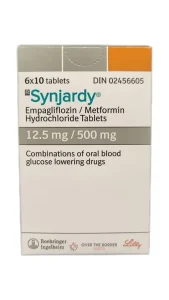
TM Owner Boehringer Ingelheim
Synjardy 12.5mg + 500mg Tablet
Global Shipping : Reliable Global Distribution Network
Express Delivery : Priority Shipping for Every Order
Secure Payments : Trusted Payment Protection System
 Disclaimer

Secure Handling
24/7 Worldwide Support

Global Access
Worldwide Access to Health

Cold-Chain Expert
Excellence in Cold-Chain

Trusted Supply
Certified Medical Supply
Indications & Clinical Uses
- Synjardy 12.5mg/500mg tablets combine empagliflozin, an SGLT2 inhibitor, with metformin, a biguanide, and are approved as an adjunct to diet and exercise to improve blood sugar control in adults with type 2 diabetes, and in some countries in children aged 10 years and older, when metformin or empagliflozin alone is not enough, or when a patient is already taking both medicines separately.
- The empagliflozin component also lowers the risk of cardiovascular death and heart failure hospitalisation in adults with type 2 diabetes and established heart disease.
- Synjardy is not for type 1 diabetes.
- It is a self-administered oral tablet, taken twice daily with meals.
Side Effects
- The most common effects are urinary tract infections (about 1 in 10 people), genital yeast infections (about 1 in 20), and increased urination from the empagliflozin component, plus diarrhoea, nausea, flatulence and a metallic taste from metformin.
- Synjardy carries a boxed warning for metformin-associated lactic acidosis, a rare but potentially fatal build-up of lactic acid, with higher risk in kidney impairment, age 65 and over, dehydration, excess alcohol use, liver disease, or after contrast dye or surgery.
- Seek urgent help for unusual muscle pain, trouble breathing, stomach pain, feeling unusually cold, or severe tiredness.
Precautions & Warnings
- Synjardy is contraindicated in severe kidney impairment (eGFR below 30) and in metabolic acidosis, including diabetic ketoacidosis.
- It should be stopped before iodinated contrast imaging or surgery, and can rarely cause ketoacidosis with near-normal glucose.
- Watch for genital and urinary infections, including rare necrotising infection of the genital area (Fournier's gangrene), and for signs of lower-limb infection linked to the SGLT2 class.
- Long-term metformin use can lower vitamin B12.
- Not recommended in pregnancy or breastfeeding; insulin is usually substituted.
- Monitor kidney function periodically and avoid heavy alcohol use.
Avoid Interactions
- Carbonic anhydrase inhibitors such as topiramate increase lactic acidosis risk with the metformin component.
- Drugs that reduce metformin's kidney clearance, including dolutegravir, ranolazine and cimetidine, raise metformin levels.
- Insulin and sulfonylureas increase the risk of low blood sugar (hypoglycaemia) when combined with Synjardy.
- Diuretics can add to volume depletion and low blood pressure risk from empagliflozin.
- Alcohol increases the risk of both lactic acidosis and hypoglycaemia.
- Tell your healthcare provider about all medicines and supplements, and about any planned contrast-dye imaging.
References
Frequently Asked Questions
Synjardy combines empagliflozin and metformin, two medicines that lower blood sugar in type 2 diabetes in adults, and in some countries children aged 10 and over, when diet, exercise and metformin alone aren't enough. The empagliflozin component also lowers the risk of heart failure hospital admission and cardiovascular death in adults with heart disease.
Take Synjardy tablets by mouth twice daily with meals, swallowing them whole with water. Doses range from 5mg/500mg up to 12.5mg/1000mg of empagliflozin/metformin. Do not crush or chew the tablets. Take them at the same times each day and drink enough fluids, since empagliflozin increases urination.
The most common effects are urinary tract infections, genital yeast infections and increased urination from empagliflozin, plus nausea, diarrhoea and stomach upset from metformin. Rarely, metformin causes lactic acidosis, a boxed-warning risk that can be fatal - get urgent help for unusual muscle pain, breathing trouble, feeling cold, or severe tiredness.
Avoid heavy alcohol use, since it raises the risk of lactic acidosis and low blood sugar with Synjardy. Tell your healthcare provider before any scan using injected contrast dye or before surgery, as metformin may need pausing. Combining Synjardy with sulfonylureas or insulin raises the risk of hypoglycaemia.
If you miss a dose, take it with your next meal as usual; do not double up. If you forget until the next day, skip the missed tablet and continue your regular twice-daily schedule. Contact your healthcare provider if you miss doses often, as this affects blood sugar control.
Synjardy is not recommended in pregnancy; healthcare providers usually switch patients to insulin to control blood sugar. It isn't recommended while breastfeeding either. Synjardy is approved for adults, and in some countries for children aged 10 and over, alongside diet and exercise.

Trusted & Reliable – Your Partner in Global Distribution.
We provide comprehensive lines of pharmaceutical products to support all your healthcare distribution needs.


