

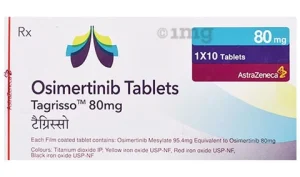
TM Owner AstraZeneca
Tagrisso 80mg Tablet
Global Shipping : Reliable Global Distribution Network
Express Delivery : Priority Shipping for Every Order
Secure Payments : Trusted Payment Protection System
 Disclaimer

Secure Handling
24/7 Worldwide Support

Global Access
Worldwide Access to Health

Cold-Chain Expert
Excellence in Cold-Chain

Trusted Supply
Certified Medical Supply
Indications & Clinical Uses
- Tagrisso 80mg tablets contain osimertinib, a third-generation EGFR tyrosine kinase inhibitor made by AstraZeneca.
- It is approved for adults with non-small cell lung cancer (NSCLC) whose tumour has an EGFR exon 19 deletion or exon 21 L858R mutation, confirmed by an FDA-approved test, used as adjuvant therapy after tumour resection, for unresectable Stage III disease following chemoradiation, and as first-line treatment for metastatic disease, alone or with pemetrexed and platinum chemotherapy.
- It is also approved for metastatic NSCLC with an EGFR T790M mutation that has progressed on an earlier EGFR inhibitor.
- Osimertinib blocks both the original activating mutation and the resistance mutation T790M.
- It is a once-daily oral tablet taken at home, not administered by a healthcare provider, though it is often prescribed alongside intravenous chemotherapy in some regimens.
Side Effects
- The most common side effects of Tagrisso, occurring in over 20% of patients on monotherapy, are diarrhoea, rash, dry skin, nail changes and mouth sores (stomatitis); low blood counts (leukopenia, anaemia, thrombocytopenia) are also very common, more so when combined with chemotherapy.
- There is no boxed warning, but several effects need urgent reporting: new or worsening cough, shortness of breath or fever can signal interstitial lung disease or pneumonitis (about 4% of patients, occasionally fatal), which requires stopping the drug permanently if confirmed.
- Heart rhythm changes (QTc prolongation) and reduced heart pumping function are monitored with periodic ECGs and heart scans.
- Report severe skin blistering, eye pain or vision changes, and unexplained bleeding or bruising promptly.
Precautions & Warnings
- Before starting Tagrisso, an EGFR mutation test on tumour tissue or blood confirms eligibility.
- An ECG and electrolyte check are done at baseline because osimertinib can prolong the QTc interval; doses are withheld or adjusted for significant prolongation.
- Heart function (LVEF) is assessed before treatment and periodically during it, since cardiomyopathy has occurred.
- Osimertinib can cause fetal harm, so effective contraception is required during treatment and for 6 weeks (women) or 4 months (men) after the last dose; breastfeeding is not recommended.
- Osimertinib is contraindicated with St John's Wort.
- Withhold treatment for new or worsening breathing symptoms, severe skin reactions, or keratitis-type eye symptoms.
- Caution is advised before driving if fatigue or visual disturbance occurs.
Avoid Interactions
- Osimertinib is metabolised mainly by CYP3A4, so strong CYP3A4 inducers such as rifampin, carbamazepine, phenytoin and St John's Wort can markedly lower its blood levels and should be avoided; if a strong inducer cannot be avoided, the Tagrisso dose is increased under medical supervision.
- Osimertinib itself can raise levels of BCRP and P-glycoprotein substrates, so caution is needed with drugs like rosuvastatin.
- It should not be combined with other QT-prolonging medicines.
- Sensitive CYP3A4 substrates such as simvastatin may need dose adjustment.
- Tell your healthcare provider about every prescription medicine, herbal product (including St John's Wort) and supplement you take before starting Tagrisso and before adding anything new during treatment.
References
Frequently Asked Questions
Tagrisso (osimertinib) treats non-small cell lung cancer with an EGFR gene mutation (exon 19 deletion, L858R, or T790M), confirmed by a specific test. It is used after surgery, after chemoradiation for Stage III disease, or as a first treatment for cancer that has spread, sometimes with chemotherapy.
Tagrisso is one 80mg tablet swallowed whole with water, once a day, with or without food, at home. If you miss a dose and it is more than 12 hours until your next one, take it as soon as you remember; otherwise skip it and continue as scheduled.
Common side effects include diarrhoea, rash, dry skin, nail changes and mouth sores. Get urgent help for new cough, breathlessness or fever, which can signal lung inflammation, and for chest palpitations or fainting, which can signal heart rhythm changes - both are monitored during treatment.
Avoid St John's Wort and other strong CYP3A4 inducers such as rifampin and carbamazepine, which can make Tagrisso less effective. Avoid other medicines that prolong the QT interval unless your healthcare provider approves them. Tell your provider about every medicine and supplement you use.
Before starting, an EGFR mutation test confirms eligibility. You will have an ECG and blood test to check heart rhythm and electrolytes, and periodic heart scans to check pumping function, since Tagrisso can affect both. Report any new breathing symptoms straight away for lung checks.
Tagrisso can harm an unborn baby, so effective contraception is needed during treatment and for 6 weeks after stopping (women) or 4 months (men); breastfeeding is not recommended. Tagrisso is approved for adults only and treatment continues as long as it remains effective and tolerated.

Trusted & Reliable – Your Partner in Global Distribution.
We provide comprehensive lines of pharmaceutical products to support all your healthcare distribution needs.


