

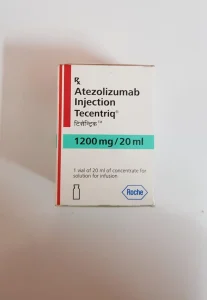
TM Owner Roche
Tecentriq 1200mg/20ml Injection
Global Shipping : Reliable Global Distribution Network
Express Delivery : Priority Shipping for Every Order
Secure Payments : Trusted Payment Protection System
 Disclaimer

Secure Handling
24/7 Worldwide Support

Global Access
Worldwide Access to Health

Cold-Chain Expert
Excellence in Cold-Chain

Trusted Supply
Certified Medical Supply
Indications & Clinical Uses
- Tecentriq 1200 mg/20 mL (60 mg/mL) contains atezolizumab, a PD-L1 checkpoint-inhibitor monoclonal antibody, given as an intravenous infusion in a hospital or oncology clinic.
- In the US it is approved across several adult cancers: non-small cell lung cancer (adjuvant after surgery, and first-line metastatic disease alone or combined with chemotherapy and/or bevacizumab), extensive-stage small-cell lung cancer with chemotherapy followed by maintenance, unresectable or metastatic hepatocellular carcinoma combined with bevacizumab, BRAF V600 mutation-positive unresectable or metastatic melanoma, alveolar soft part sarcoma in adults and some pediatric patients, and adjuvant treatment of muscle-invasive bladder cancer with molecular residual disease after cystectomy.
- The exact combination partner and line of therapy vary by tumor type.
- Atezolizumab is also available as a subcutaneous formulation, Tecentriq Hybreza, for many of the same indications; the two are not interchangeable vial-for-vial.
Side Effects
- Common (20% or more) reactions include tiredness, decreased appetite, nausea, cough and shortness of breath; other frequent effects are rash, fever, diarrhea, joint or back pain, and low blood counts when combined with chemotherapy.
- Tecentriq has no boxed warning, but it can cause serious immune-mediated reactions affecting the lungs (pneumonitis), bowel (colitis), liver (hepatitis), hormone glands (thyroid, adrenal, pituitary, diabetes), skin, kidneys, nerves and heart, which can be severe or fatal and may start weeks to months after the last dose.
- Seek urgent medical attention for new or worsening cough or breathlessness, severe diarrhea or abdominal pain, yellowing skin or eyes, unusual tiredness, muscle weakness, vision changes, chest pain or palpitations.
- Infusion-related reactions can also occur, usually during or shortly after the first or second dose.
Precautions & Warnings
- Before and during treatment your healthcare provider monitors liver enzymes, kidney function, thyroid hormones and blood glucose, and evaluates any new symptom for a possible immune-mediated cause, usually managed by pausing treatment and starting corticosteroids.
- Tecentriq is generally avoided in active autoimmune disease requiring systemic treatment, though exceptions are made case by case; discuss any organ transplant history with your team.
- Effective contraception is required during treatment and for 5 months after the last dose, since atezolizumab can harm a developing fetus; it should not be used in pregnancy or while breastfeeding.
- Tecentriq is for intravenous infusion only, given over 60 minutes for the first dose and 30 minutes for later doses if well tolerated, and is given only under specialist supervision in a hospital or clinic, never self-injected.
Avoid Interactions
- Tell your healthcare provider about every medicine and supplement you take.
- Few classic drug-drug interactions apply to atezolizumab, since it is a monoclonal antibody rather than a small molecule cleared through liver enzymes.
- The main concern is additive effect on the immune system: systemic corticosteroids or other immunosuppressants started before treatment may reduce how well Tecentriq works, so they are used cautiously and mainly to treat side effects once they occur.
- Live vaccines should generally be avoided during treatment.
- When combined with chemotherapy, bevacizumab or targeted agents such as cobimetinib, each partner drug carries its own separate interaction profile that must be reviewed.
- Tecentriq must not be mixed or co-infused with other medicines in the same intravenous line.
References
Frequently Asked Questions
Tecentriq (atezolizumab) is a checkpoint-inhibitor immunotherapy used in adults with certain lung cancers, liver cancer, melanoma, bladder cancer and a rare sarcoma. It works by helping your immune system attack cancer cells. The exact approved use depends on your specific cancer type, stage and prior treatment.
Tecentriq 1200 mg/20 mL is given as an intravenous infusion in a hospital or clinic, usually every 2 to 3 weeks. The first infusion takes about 60 minutes; later ones may take 30 minutes if well tolerated. You cannot take Tecentriq as a tablet or give it yourself at home.
Common Tecentriq side effects include tiredness, low appetite, nausea, cough and breathlessness. More seriously, atezolizumab can cause immune-mediated inflammation of the lungs, bowel, liver, thyroid, skin, kidneys or heart, sometimes months after the last dose. Report new cough, severe diarrhea, yellowing skin or unusual fatigue to your care team right away.
Avoid live vaccines while receiving Tecentriq, since it activates your immune system. Tell your team about any steroid or immunosuppressant use, as these can reduce how well atezolizumab works. Effective contraception is needed during treatment and for 5 months after the last dose; Tecentriq is not used in pregnancy.
Yes. Tecentriq Hybreza (atezolizumab and hyaluronidase-tqjs) is a separate subcutaneous injection given in the thigh over about 7 minutes, approved for most of the same cancers as intravenous Tecentriq. The two formulations are not interchangeable dose-for-dose; your oncology team decides which one and schedule suits you.
Treatment length depends on your cancer type: Tecentriq is usually continued every 2 to 3 weeks until the disease progresses, side effects become unacceptable, or, for some early-stage cancers, a fixed course of about one year is completed. Your oncologist reviews scans and blood tests regularly to decide.

Trusted & Reliable – Your Partner in Global Distribution.
We provide comprehensive lines of pharmaceutical products to support all your healthcare distribution needs.


