

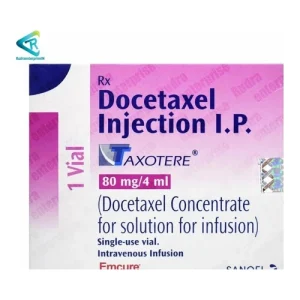
TM Owner Sanofi / Various
TPF Various Vial
Global Shipping : Reliable Global Distribution Network
Express Delivery : Priority Shipping for Every Order
Secure Payments : Trusted Payment Protection System
 Disclaimer

Secure Handling
24/7 Worldwide Support

Global Access
Worldwide Access to Health

Cold-Chain Expert
Excellence in Cold-Chain

Trusted Supply
Certified Medical Supply
Indications & Clinical Uses
- TPF is not an approved trade name or a single licensed product - it is a widely used oncology shorthand for an induction chemotherapy regimen combining three separately approved cytotoxic drugs: docetaxel (a taxane, originator brand Taxotere), cisplatin (a platinum agent) and fluorouracil (5-FU, an antimetabolite).
- Published clinical trials describe TPF given as docetaxel and cisplatin on day 1 with a continuous fluorouracil infusion over the following 2-3 days, repeated every 3 weeks for typically 3 to 4 cycles, most often as induction treatment before chemoradiotherapy or surgery for locally advanced, unresectable squamous cell cancers of the head and neck (oropharynx, hypopharynx and larynx), and in some regimens for gastric or nasopharyngeal cancer.
- Each component drug carries its own separate FDA/EMA-approved prescribing information and boxed warnings; TPF itself has no independent product label, patient leaflet or single manufacturer.
- TPF is prepared and given only in a hospital or specialist oncology day unit, by intravenous infusion.
Side Effects
- Because TPF combines three chemotherapy drugs, its toxicity is greater than any one drug alone.
- In a published phase II study of TPF induction chemotherapy for head and neck cancer, grade 3-4 low blood-cell counts (neutropenia) occurred in most patients (78-89%), and 7% of patients required hospital admission for febrile neutropenia (fever with a very low neutrophil count) - a medical emergency needing urgent same-day medical review.
- Mouth and throat inflammation (mucositis, about 30%), loss of appetite, vomiting and diarrhoea were also reported.
- Hair loss, fatigue and numbness or tingling in the hands or feet (peripheral neuropathy, mainly from docetaxel and cisplatin) are expected.
- Each component drug also carries its own separately labelled serious risks - for example, fluorouracil's US label carries a boxed warning about a rare enzyme deficiency (DPD) that can cause severe or fatal toxicity; ask the oncology team which warnings apply to your specific TPF prescription.
Precautions & Warnings
- TPF is given only in hospital by trained oncology staff, with blood counts, kidney function and hearing checked before and during treatment because of cisplatin's kidney and hearing toxicity and the combined myelosuppression from all three drugs.
- Growth-factor support (G-CSF) and antiemetic (anti-sickness) medicines are commonly given alongside TPF cycles to reduce febrile neutropenia and nausea risk.
- TPF is contraindicated in pregnancy and breastfeeding, and effective contraception is required during and for a period after treatment for both women and men, since all three components can harm a developing baby.
- Dose adjustments are needed for kidney or liver impairment, and treatment may be delayed or reduced for severe mucositis, diarrhoea or low blood counts.
- Because dosing, premedication and exact schedule vary by protocol and institution, the individual product information for docetaxel, cisplatin and fluorouracil should also be reviewed.
Avoid Interactions
- Tell the oncology team about every medicine, herbal product and supplement being taken, since each TPF component has its own interactions.
- Fluorouracil must never be combined with brivudine or sorivudine, which can cause fatal toxicity by blocking the enzyme that breaks it down.
- Cisplatin combined with other kidney-toxic or hearing-toxic drugs (such as aminoglycoside antibiotics) increases the risk of kidney and hearing damage.
- Docetaxel levels can be raised by strong CYP3A4 inhibitors such as ketoconazole.
- Live vaccines should be avoided during TPF treatment because of combined immune suppression.
- Warfarin and other anticoagulants may need closer monitoring.
- Because TPF involves three separately prepared infusions, pharmacy staff follow strict sequencing and compatibility rules - patients should not assume any two chemotherapy drugs can be mixed in the same line.
References
- A Phase II Study of Docetaxel, Cisplatin and 5-Fluorouracil (TPF) In Patients with Locally Advanced Head and Neck Carcinomas
- Chemo-selection with docetaxel, cisplatin and 5-fluorouracil (TPF) regimen followed by radiation therapy or surgery for pharyngeal and laryngeal carcinoma, Japanese Journal of Clinical Oncology
Frequently Asked Questions
TPF is not a brand name; it stands for a combination of docetaxel, cisplatin and fluorouracil (5-FU) given together. It treats locally advanced head and neck cancers, usually as induction treatment before radiotherapy or surgery. It is also used for some gastric and nasopharyngeal cancers, given by a hospital oncology team.
TPF is given by intravenous infusion in hospital: docetaxel and cisplatin on day 1, followed by a continuous fluorouracil infusion over the next 2 to 3 days. A cycle repeats every 3 weeks, usually for 3 to 4 cycles. It is never taken as a tablet or given at home.
TPF commonly causes low blood counts, mouth ulcers (mucositis), nausea, vomiting, diarrhoea, hair loss and numbness in the hands or feet. Around 7% of patients need hospital admission for fever with very low white cells (febrile neutropenia) - a medical emergency needing same-day review.
Never combine fluorouracil, one of the TPF drugs, with brivudine or sorivudine, since this can be fatal. Avoid live vaccines and tell your oncology team about every other medicine, since cisplatin and docetaxel also have their own interactions with kidney-toxic drugs and CYP3A4 inhibitors.
Before and during each TPF cycle your blood counts, kidney function and hearing are checked, because cisplatin can affect the kidneys and ears and all three drugs lower blood counts. Growth-factor injections and anti-sickness medicines are often given alongside TPF to reduce these risks.
Yes. Fluorouracil, one of the three TPF drugs, carries a US FDA boxed warning for people with complete dihydropyrimidine dehydrogenase (DPD) deficiency, who can suffer severe or fatal toxicity. Ask your oncology team whether DPD testing has been done before your fluorouracil-containing TPF cycles begin.

Trusted & Reliable – Your Partner in Global Distribution.
We provide comprehensive lines of pharmaceutical products to support all your healthcare distribution needs.


