

TM Owner Nephcentric
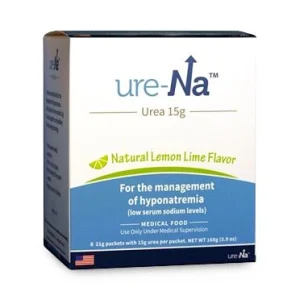
Ure-Na 15g Packet
Global Shipping : Reliable Global Distribution Network
Express Delivery : Priority Shipping for Every Order
Secure Payments : Trusted Payment Protection System
 Disclaimer

Secure Handling
24/7 Worldwide Support

Global Access
Worldwide Access to Health

Cold-Chain Expert
Excellence in Cold-Chain

Trusted Supply
Certified Medical Supply
Indications & Clinical Uses
- Ure-Na (15 g packet) is a flavoured oral urea powder sold in the USA as a medical food, meaning a product for use under a healthcare provider's supervision; it is not an FDA-approved prescription drug, and no approved-drug label exists for it.
- The manufacturer states it is for the dietary management of low blood sodium (hyponatraemia) that is euvolaemic (normal fluid volume) or hypervolaemic (excess fluid), including SIADH (syndrome of inappropriate antidiuretic hormone secretion).
- Urea works as an osmotic agent, helping the body pass excess free water without losing electrolytes.
- Each packet holds 15 g of USP urea to be mixed with a few ounces of water or juice.
- Typical outpatient doses described by the manufacturer are 15 g once or twice daily, but your healthcare provider decides the dose from your blood sodium tests.
Side Effects
- According to the manufacturer and a drug-information summary, the most common problems are an unpleasant taste (about 2% of hospitalised patients could not tolerate it), nausea or mild stomach upset (about 5%) and vomiting (under 1%).
- Serious problems are those of over-correcting fluid and salt balance, such as high blood sodium (hypernatraemia) or fluid and electrolyte imbalance, which can cause confusion, muscle weakness, an abnormal heartbeat or severe dizziness.
- Seek urgent help for confusion, seizures, fast or irregular heartbeat, hives, rash or breathing difficulty.
- No boxed warning applies because Ure-Na is a medical food, not a labelled drug.
- Splitting the dose or using more fluid can help if the taste or stomach upset is a problem.
Precautions & Warnings
- Use Ure-Na only under the supervision of a healthcare provider, with regular blood sodium monitoring.
- The manufacturer states it is not for hypovolaemic (low fluid volume) hyponatraemia, hyponatraemia due to adrenal insufficiency, or hyperammonaemia (high blood ammonia).
- Report mood changes, muscle pain, dizziness, seizures, poor appetite, changes in urination or allergic symptoms.
- Mix a packet with about 3 to 4 ounces of water or juice (6 to 8 ounces if tolerance is poor); it may be taken with food or applesauce but should not be taken with hot liquids.
- The manufacturer does not give information on pregnancy, breastfeeding, driving or storage, so ask your healthcare provider or pharmacist.
- Ure-Na is sodium-free according to the manufacturer.
Avoid Interactions
- The manufacturer and Drugs.com report no known significant drug interactions for urea, and no interaction studies were found, so safe combinations cannot be assumed.
- Because urea changes how the body handles water and sodium, your healthcare provider will interpret blood sodium results in light of everything else you take, including any fluid restriction.
- Do not mix the powder with hot liquids.
- Tell your healthcare provider about all prescription medicines, over-the-counter medicines, herbal products and supplements you use, and do not change how you take Ure-Na without advice.
References
Frequently Asked Questions
Ure-Na is an oral urea powder sold as a medical food for the dietary management of low blood sodium (hyponatraemia) with normal or excess fluid, including SIADH. It is used under a healthcare provider's supervision and is not an FDA-approved drug.
Mix one 15 g Ure-Na urea packet with about 3 to 4 ounces of water or juice and drink it. It can be taken with food or applesauce, but not with hot liquids. Your healthcare provider sets how often you take it, commonly once or twice daily.
Ure-Na (urea) commonly causes an unpleasant taste, and about 5% of people have nausea or mild stomach upset. Vomiting affects under 1%. Too much can raise blood sodium and upset fluid balance, causing confusion, weakness, irregular heartbeat or dizziness. Get urgent help for these.
Ure-Na (urea) is not for low blood sodium caused by low fluid volume (hypovolaemic hyponatraemia), adrenal insufficiency or high blood ammonia (hyperammonaemia). Use it only under healthcare provider supervision. Tell your provider about all other medicines and supplements you take.
Blood sodium must be monitored during Ure-Na treatment because urea helps the body lose excess water and can correct sodium too far. Your healthcare provider uses the results to adjust the dose. Report mood changes, muscle pain, dizziness, seizures or changes in urination promptly.
No. Ure-Na is marketed in the USA as a medical food containing pharmaceutical-grade urea, not as an approved drug. The manufacturer says it is used only under a healthcare provider's supervision. Because there is no drug label, ask your provider or pharmacist about storage, pregnancy and other questions.

Trusted & Reliable – Your Partner in Global Distribution.
We provide comprehensive lines of pharmaceutical products to support all your healthcare distribution needs.


