

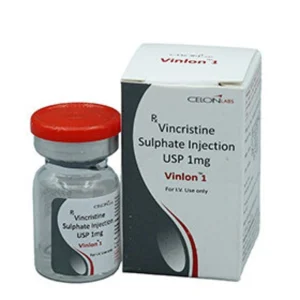
TM Owner Generic
Vincristine 1mg/mL Injection
Global Shipping : Reliable Global Distribution Network
Express Delivery : Priority Shipping for Every Order
Secure Payments : Trusted Payment Protection System
 Disclaimer

Secure Handling
24/7 Worldwide Support

Global Access
Worldwide Access to Health

Cold-Chain Expert
Excellence in Cold-Chain

Trusted Supply
Certified Medical Supply
Indications & Clinical Uses
- Vincristine (vincristine sulfate injection) 1 mg/mL is a generic, preservative-free, conventional (non-liposomal) solution of a vinca alkaloid anticancer (antimitotic) medicine, supplied in single-dose 1 mL and 2 mL vials; this record follows the US label of the Hospira (Pfizer) product, and several manufacturers supply generic vincristine.
- It is indicated for acute leukaemia, and is useful in combination chemotherapy for Hodgkin's disease, non-Hodgkin's lymphomas, rhabdomyosarcoma, neuroblastoma and Wilms' tumour, in adults and children.
- It is given as an intravenous injection, usually once a week, only by experienced healthcare professionals in a hospital or clinic.
- It is for intravenous use only and is fatal if given by any other route.
- Do not confuse it with the brand Vincasar PFS, which has been discontinued, or with any liposomal vincristine product.
Side Effects
- BOXED WARNING: for intravenous use only - fatal if given by other routes; the medicine must only be given by experienced individuals, the needle or catheter must be correctly in the vein before injection, and leakage into surrounding tissue (extravasation) can cause considerable irritation.
- The most common reaction is hair loss (alopecia), and the most troublesome are nerve effects, which are dose-related: numbness or tingling, nerve pain, loss of reflexes, foot drop, ataxia, jaw pain and, at worst, paralysis.
- Digestive effects include constipation, abdominal cramps, nausea, vomiting, mouth ulcers and paralytic ileus, and blood effects include anaemia, low white cell and platelet counts.
- Rarer serious reactions include hepatic veno-occlusive disease (especially in children), SIADH with low sodium, seizures, vision or hearing damage, and allergic reactions.
- Report severe abdominal pain, breathlessness, pain or swelling at the injection site, or new weakness at once.
Precautions & Warnings
- Vincristine is contraindicated in demyelinating Charcot-Marie-Tooth syndrome.
- It must be given into a vein only by experienced clinicians; intrathecal (spinal) administration usually results in death, and the prepared syringe or bag must be labelled 'FOR INTRAVENOUS USE ONLY - FATAL IF GIVEN BY OTHER ROUTES'.
- Check a full blood count before each dose and monitor uric acid during the first 3 to 4 weeks.
- Reduce the dose by 50% if direct serum bilirubin exceeds 3 mg/100 mL.
- A preventive bowel regimen is recommended.
- Vincristine can cause fetal harm, so avoid pregnancy during treatment; it is not known whether it enters breast milk, and azoospermia and amenorrhoea have been reported after combination chemotherapy.
- Avoid eye contact, which can cause severe irritation or corneal ulceration, and avoid radiation therapy involving the liver during treatment.
- Live vaccines are not recommended.
Avoid Interactions
- Medicines that increase toxicity: strong CYP3A inhibitors such as itraconazole (earlier and more severe nerve toxicity; avoid strong inhibitors and monitor closely with moderate ones, including fluconazole); mitomycin-C (acute breathlessness and severe bronchospasm); other neurotoxic medicines; and P-glycoprotein modulators (avoid).
- Give vincristine 12 to 24 hours before L-asparaginase to limit toxicity.
- Medicines and products that reduce effect or cause problems: phenytoin (lower anticonvulsant levels, so seizures may increase; blood levels should be monitored), strong CYP3A inducers such as St John's wort (avoid), and live vaccines (not recommended).
- Pharmacy note: dilute only in 0.9% sodium chloride and do not mix with solutions outside pH 3.5 to 5.5.
- Tell your healthcare provider about all medicines and supplements you use.
References
Frequently Asked Questions
Vincristine (vincristine sulfate injection) is a chemotherapy medicine for acute leukaemia and, in combination with other medicines, for Hodgkin's disease, non-Hodgkin's lymphomas, rhabdomyosarcoma, neuroblastoma and Wilms' tumour. It is used in adults and children, and is given only by experienced healthcare professionals.
Vincristine is given by an experienced healthcare professional as an injection into a vein, usually once a week, diluted in 0.9% sodium chloride. The usual adult dose is 1.4 mg/m2; children's doses are based on body size. It must never be given into the spinal fluid or by any other route.
The most common vincristine side effect is hair loss; the most troublesome are nerve effects such as numbness, tingling, loss of reflexes, foot drop and jaw pain. Constipation, bowel blockage (ileus), nausea and low blood counts also occur. Report severe abdominal pain, breathlessness or pain at the injection site.
Vincristine is fatal if given by any route other than into a vein; spinal (intrathecal) injection usually causes death. Avoid live vaccines and St John's wort, and tell your team about itraconazole or other azole antifungals, phenytoin and mitomycin-C, which change its effects or toxicity.
Your team checks a full blood count before each vincristine dose, uric acid levels in the first 3 to 4 weeks, and nerve function, because nerve toxicity limits the dose. A regimen to prevent constipation is recommended. The dose is halved if direct bilirubin is above 3 mg/100 mL.
Vincristine can cause fetal harm, so avoid pregnancy during treatment; animal studies showed fetal loss and malformations. It is not known whether vincristine passes into breast milk. Azoospermia and absent periods have been reported after combination chemotherapy, and recovery varies; prepubertal patients are less likely to be permanently affected.

Trusted & Reliable – Your Partner in Global Distribution.
We provide comprehensive lines of pharmaceutical products to support all your healthcare distribution needs.


