

TM Owner H2-Pharma (US); Cheplapharm (EU)
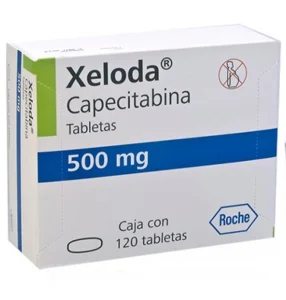
Xeloda 500mg FC Tablet
Global Shipping : Reliable Global Distribution Network
Express Delivery : Priority Shipping for Every Order
Secure Payments : Trusted Payment Protection System
 Disclaimer

Secure Handling
24/7 Worldwide Support

Global Access
Worldwide Access to Health

Cold-Chain Expert
Excellence in Cold-Chain

Trusted Supply
Certified Medical Supply
Indications & Clinical Uses
- Xeloda 500 mg film-coated tablets contain capecitabine, an oral fluoropyrimidine chemotherapy that the body converts to fluorouracil, taken at home under specialist supervision.
- In the United States the label covers adjuvant Stage III colon cancer, perioperative rectal cancer, unresectable or metastatic colorectal cancer, advanced or metastatic breast cancer (alone or with docetaxel), gastric, oesophageal and gastro-oesophageal junction cancer, and adjuvant pancreatic cancer.
- The EU product information covers colon, colorectal, gastric and breast cancers.
- It is an oral tablet only; there is no intravenous Xeloda.
- The 500 mg tablet is one of two strengths (150 mg and 500 mg), so check the strength on your prescription.
- In the US the label holder is H2-Pharma; in the EU it is Cheplapharm.
Side Effects
- Depending on the cancer and regimen, reactions affecting 30% or more of people in the US label include hand-foot syndrome (redness, swelling, peeling or pain of the palms and soles), diarrhoea and nausea; anaemia, vomiting, mouth sores, stomach pain and tiredness are also common.
- The US label carries a boxed warning: serious adverse reactions or death in people with complete dihydropyrimidine dehydrogenase (DPD) deficiency, and bleeding, including death, when taken with vitamin K antagonists such as warfarin.
- Report urgently: severe or persistent diarrhoea (treatment must be interrupted), dehydration, chest pain or palpitations, severe blistering skin or mouth reactions, yellowing of the skin or eyes, fever or infection, and any unusual bleeding.
- Call your care team early rather than waiting for the next appointment.
Precautions & Warnings
- DPD deficiency testing is required before the first dose unless treatment cannot wait; people with complete DPD deficiency must not take it.
- The US label lists only severe hypersensitivity to fluorouracil or capecitabine as a contraindication, while the EU label also contraindicates recent brivudine use (within 4 weeks), severe renal impairment (creatinine clearance below 30 mL/min), severe liver impairment, severe blood-count deficiencies, pregnancy and breastfeeding.
- Warnings cover diarrhoea, dehydration, cardiotoxicity, kidney toxicity, serious skin reactions, bone marrow suppression and raised bilirubin, so blood tests and INR checks are needed.
- Females of reproductive potential need effective contraception during treatment and for 6 months after the last dose; males with female partners for 3 months.
- Swallow tablets with water within 30 minutes after a meal.
Avoid Interactions
- Tell your healthcare provider about every medicine, herbal product and supplement you use.
- Increase effect or toxicity: warfarin and other vitamin K antagonists (capecitabine raised S-warfarin exposure by 57% and INR by 91%, and bleeding, including deaths, has occurred, so INR must be checked often); phenytoin (blood levels can rise); CYP2C9 substrate drugs; leucovorin (folinic acid), which increases fluorouracil toxicity; brivudine, which must not be used within 4 weeks before Xeloda in the EU; and nephrotoxic drugs.
- Avoid allopurinol with Xeloda.
- Food lowers capecitabine absorption by roughly 34% to 60%, which is why the timing after meals matters; do not change how you take it without advice.
- No specific drugs that make Xeloda less effective are listed in the sections reviewed.
References
Frequently Asked Questions
Xeloda (capecitabine) is a chemotherapy tablet used for colon, rectal and colorectal cancer, breast cancer, gastric and oesophageal cancer, and (in the US) adjuvant pancreatic cancer. It is taken by mouth, usually at home, under a cancer specialist, and the dose and length of treatment depend on the cancer type.
Swallow Xeloda (capecitabine) tablets whole with water within 30 minutes after a meal, twice daily. The EU label describes 1250 mg/m² twice daily for 14 days followed by a 7-day rest in 21-day cycles; your dose depends on your cancer and regimen, so follow your specialist's schedule exactly.
Common Xeloda side effects are hand-foot syndrome, diarrhoea, nausea, vomiting, mouth sores and tiredness. The US boxed warning covers severe toxicity or death in complete DPD deficiency and bleeding with warfarin-type drugs. Stop and call your care team for severe diarrhoea, chest pain, severe skin reactions, fever or bleeding.
Avoid warfarin-type blood thinners unless your INR is checked often, because Xeloda (capecitabine) can cause serious bleeding, including deaths. Also avoid allopurinol, and in the EU brivudine within 4 weeks. Tell your provider about phenytoin and leucovorin, and do not take tablets on an empty stomach.
Yes. Xeloda (capecitabine) needs DPD deficiency testing before the first dose unless treatment cannot wait, because complete DPD deficiency can cause severe or fatal toxicity. During treatment you will have blood counts, kidney and liver checks, and INR monitoring if you take warfarin.
No. Xeloda (capecitabine) can harm an unborn baby, and the EU label contraindicates it in pregnancy and breastfeeding. Females who could become pregnant need effective contraception during treatment and for 6 months after the last dose. Males with female partners need contraception for 3 months after the last dose.

Trusted & Reliable – Your Partner in Global Distribution.
We provide comprehensive lines of pharmaceutical products to support all your healthcare distribution needs.


