

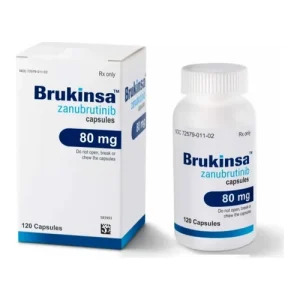
TM Owner BeOne Medicines USA, Inc.
Zanubrutinib 80mg Capsule
Global Shipping : Reliable Global Distribution Network
Express Delivery : Priority Shipping for Every Order
Secure Payments : Trusted Payment Protection System
 Disclaimer

Secure Handling
24/7 Worldwide Support

Global Access
Worldwide Access to Health

Cold-Chain Expert
Excellence in Cold-Chain

Trusted Supply
Certified Medical Supply
Indications & Clinical Uses
- Zanubrutinib 80mg capsules contain zanubrutinib, a Bruton's tyrosine kinase (BTK) inhibitor taken by mouth, sold as Brukinsa (this sheet lists it under the generic name).
- In the US label it is indicated for adults with mantle cell lymphoma (MCL), Waldenström's macroglobulinemia (WM), marginal zone lymphoma (MZL), chronic lymphocytic leukemia or small lymphocytic lymphoma (CLL/SLL) and follicular lymphoma (FL).
- The MCL, MZL and FL indications were approved under accelerated approval based on response rate, and continued approval may depend on confirmatory trials.
- The usual dose is 160 mg twice daily or 320 mg once daily.
- The capsules are 80 mg; Brukinsa also exists as a 160 mg tablet, so do not mix up strengths.
- Swallow capsules whole, with or without food, and do not open, break or chew them.
- Treatment is started and supervised by a specialist.
Side Effects
- The most common reactions (30% or more) were decreased neutrophil count (51%), decreased platelet count (41%), upper respiratory tract infection (38%), bleeding or haemorrhage (32%) and musculoskeletal pain (31%).
- Serious effects include severe bleeding (grade 3 or higher in 3.8%, fatal in 0.2%), serious infections including pneumonia and opportunistic infections (grade 3 or higher in 26%), low blood counts, second primary cancers (14%, including skin cancers), irregular heartbeat such as atrial fibrillation or flutter (4.4%), liver injury including drug-induced liver injury, and hepatitis B reactivation.
- Report fever or infection signs, unusual bruising or bleeding, palpitations, dizziness or chest discomfort, and yellow skin or eyes.
- The label carries no boxed warning.
Precautions & Warnings
- Blood counts, signs of bleeding and infection, heart rhythm and liver function should be monitored, and a healthcare provider may screen for hepatitis B.
- Consider withholding treatment for 3 to 7 days before and after surgery, depending on bleeding risk.
- Zanubrutinib can harm an unborn baby: avoid pregnancy during treatment and for 1 week after the last dose, and men should avoid fathering a child in the same period.
- Do not breastfeed during treatment and for 2 weeks after the last dose.
- In severe (Child-Pugh C) liver impairment the dose is 80 mg twice daily.
- Use sun protection because skin cancers were reported.
- Store the 120-capsule bottle at 20°C to 25°C (excursions 15°C to 30°C).
Avoid Interactions
- Increase risk or effect: strong CYP3A inhibitors raise zanubrutinib levels, so the dose is reduced to 80 mg once daily; antiplatelet or anticoagulant medicines (for example aspirin or warfarin) may further increase bleeding risk.
- Reduce efficacy: strong CYP3A inducers should be avoided, and if a moderate CYP3A inducer must be used the dose is raised to 320 mg twice daily.
- Dose changes for moderate CYP3A inhibitors and any food advice should be checked with your prescriber, as the label sections reviewed did not cover grapefruit or St. John's wort.
- Tell your healthcare provider about all prescription medicines, over-the-counter products and supplements you take.
References
Frequently Asked Questions
Zanubrutinib (sold as Brukinsa) treats adults with mantle cell lymphoma, Waldenström's macroglobulinemia, marginal zone lymphoma, chronic lymphocytic leukemia or small lymphocytic lymphoma, and follicular lymphoma. It is a BTK inhibitor taken by mouth. Your cancer specialist decides which condition and treatment line applies.
Take Zanubrutinib 80 mg capsules by mouth as 160 mg twice daily or 320 mg once daily, with or without food. Swallow each capsule whole with water. Do not open, break or chew them. The 160 mg tablet is a separate form, so follow your specialist's exact instructions.
Common Zanubrutinib side effects are low neutrophil and platelet counts, upper respiratory infections, bleeding and muscle or bone pain. Serious risks include severe bleeding, serious infections, irregular heartbeat, liver injury and second cancers. Report fever, unusual bruising, palpitations, chest discomfort or yellow skin or eyes.
Avoid strong CYP3A inducers with Zanubrutinib, as they lower its effect. Strong CYP3A inhibitors need the dose cut to 80 mg once daily. Blood thinners and antiplatelet medicines increase bleeding risk. Avoid pregnancy and fathering a child during treatment and for 1 week after the last dose.
Your team may pause Zanubrutinib for 3 to 7 days before and after surgery, depending on bleeding risk, because it raises bleeding risk. Never stop or restart it yourself. Tell every surgeon and dentist that you take this BTK inhibitor.
No. Zanubrutinib can harm an unborn baby, so avoid pregnancy during treatment and for 1 week after the last dose; men should avoid fathering a child in that time. Do not breastfeed during treatment and for 2 weeks after the last dose. Tell your specialist at once if you become pregnant.

Trusted & Reliable – Your Partner in Global Distribution.
We provide comprehensive lines of pharmaceutical products to support all your healthcare distribution needs.


