

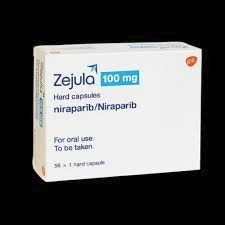
TM Owner GSK
Zejula 100mg Film-coated tablet (US/UK labels); EU also lists 100 mg capsule
Global Shipping : Reliable Global Distribution Network
Express Delivery : Priority Shipping for Every Order
Secure Payments : Trusted Payment Protection System
 Disclaimer

Secure Handling
24/7 Worldwide Support

Global Access
Worldwide Access to Health

Cold-Chain Expert
Excellence in Cold-Chain

Trusted Supply
Certified Medical Supply
Indications & Clinical Uses
- Zejula 100 mg (niraparib) is a PARP inhibitor used as maintenance treatment for adults with ovarian, fallopian tube or primary peritoneal cancer after a response to platinum-based chemotherapy.
- In the US the uses are first-line maintenance for advanced disease that is HRD-positive (BRCA mutation and/or genomic instability), and maintenance for recurrent disease with a germline BRCA mutation.
- The EU wording covers advanced high-grade cancer responding to first-line platinum chemotherapy and platinum-sensitive relapsed high-grade serous cancer.
- Formulation note: the sheet lists a capsule, but the current US and UK labels describe film-coated tablets only (100 mg, 200 mg and 300 mg in the US, bottles of 30), while the EU label lists both 100 mg hard capsules and tablets.
- Tablets and capsules are bioequivalent.
- The dose is set by the specialist (200 mg or 300 mg once daily, based on weight and platelet count for first-line use).
Side Effects
- Very common side effects in the US label include nausea (65%), low platelets or thrombocytopenia (60%), anaemia (56%), fatigue (55%), constipation (39%), muscle and bone pain (36%), abdominal pain (35%), vomiting (33%), low neutrophils (31%), decreased appetite (24%), insomnia (23%), headache (23%), breathlessness (22%) and rash (21%).
- Serious effects include myelodysplastic syndrome or acute myeloid leukaemia (3.3% in one trial), bone marrow suppression, high blood pressure including severe cases, and rarely posterior reversible encephalopathy syndrome (seizure, headache, confusion, vision changes).
- There is no boxed warning.
- Report bleeding, bruising, fever, severe headache or vision changes promptly.
Precautions & Warnings
- Blood counts must be checked weekly for the first month, monthly for the next 11 months, then periodically; treatment is stopped if MDS or AML is confirmed.
- Blood pressure and heart rate are checked at least weekly for the first 2 months, then monthly for the first year.
- Zejula can cause fetal harm: women who could become pregnant must use effective contraception during treatment and for 6 months after the last dose.
- In the US, do not breastfeed during treatment and for 1 month after the last dose; the EU label contraindicates breastfeeding.
- The EU label notes a moderate effect on driving or using machines because of tiredness, weakness or dizziness.
- Store at 20°C to 25°C.
Avoid Interactions
- The US label lists no clinically significant CYP enzyme interactions, but niraparib inhibits the transporters BCRP, MATE1 and MATE2K, so drugs handled by these transporters may reach higher levels.
- The EU label advises caution with drugs handled by CYP1A2 that have a narrow safety margin (for example clozapine and theophylline) and with BCRP or P-glycoprotein substrates (for example irinotecan, statins and metformin).
- No specific drugs are listed that lower Zejula's effectiveness in the labels reviewed.
- There are no food restrictions in the labels reviewed.
- Tell your healthcare provider about all prescription medicines, over-the-counter products and supplements before and during treatment.
References
Frequently Asked Questions
Zejula (niraparib) is a PARP inhibitor taken as maintenance treatment for ovarian, fallopian tube or primary peritoneal cancer after platinum-based chemotherapy has worked. It is used for first-line and recurrent disease, with tumour-testing requirements in the US. A cancer specialist chooses the dose.
Zejula (niraparib) is taken by mouth once daily. For first-line use the usual start is 200 mg, or 300 mg if you weigh 77 kg or more with platelets of 150,000/mcL or above; recurrent disease uses 300 mg. Your specialist adjusts the dose for side effects.
Common Zejula side effects include nausea (65%), low platelets (60%), anaemia (56%), fatigue, constipation and vomiting. Serious risks are bone marrow suppression, MDS or AML, high blood pressure and, rarely, PRES. Report bleeding, bruising, fever, severe headache or vision changes promptly.
Avoid pregnancy and breastfeeding with Zejula (niraparib). Use effective contraception during treatment and for 6 months after the last dose. Do not breastfeed during treatment and for 1 month after (US label). Tell your healthcare provider about all medicines, as it can affect drugs handled by BCRP and MATE transporters.
Zejula (niraparib) needs blood counts weekly for the first month, monthly for the next 11 months, then periodically. Blood pressure and heart rate are checked at least weekly for the first 2 months, then monthly for the first year. These checks catch low blood counts and high blood pressure early.
Zejula (niraparib) capsules and tablets are bioequivalent, so the milligram dose is the same. The current US and UK labels list film-coated tablets only (US: 100, 200 and 300 mg), while the EU label lists 100 mg capsules and tablets. Check which form your pharmacy supplies and follow your specialist's dose.

Trusted & Reliable – Your Partner in Global Distribution.
We provide comprehensive lines of pharmaceutical products to support all your healthcare distribution needs.


