

TM Owner Pfizer
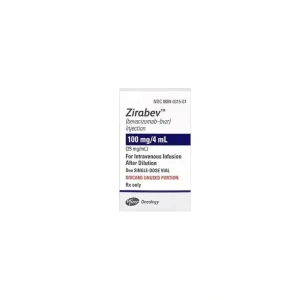
Zirabev 100mg/4ml Injection
Global Shipping : Reliable Global Distribution Network
Express Delivery : Priority Shipping for Every Order
Secure Payments : Trusted Payment Protection System
 Disclaimer

Secure Handling
24/7 Worldwide Support

Global Access
Worldwide Access to Health

Cold-Chain Expert
Excellence in Cold-Chain

Trusted Supply
Certified Medical Supply
Indications & Clinical Uses
- Zirabev 100 mg/4 mL (bevacizumab-bvzr, 25 mg/mL) is a biosimilar to the reference product Avastin (bevacizumab), a monoclonal antibody that blocks vascular endothelial growth factor (VEGF) to slow tumour blood vessel growth.
- It is given by a healthcare provider in hospital or clinic as an intravenous infusion, at 5 to 15 mg/kg every 2 to 3 weeks depending on the cancer.
- In the US it is approved for metastatic colorectal cancer (with chemotherapy), first-line non-squamous non-small cell lung cancer (with chemotherapy), recurrent glioblastoma, metastatic renal cell carcinoma, persistent, recurrent or metastatic cervical cancer, and epithelial ovarian, fallopian tube or primary peritoneal cancer in several settings.
- Zirabev is supplied as 100 mg/4 mL and 400 mg/16 mL single-dose vials, so the vial strength and the mg/kg dose should be checked carefully against the prescription.
Side Effects
- The most common side effects of Zirabev (each in more than 10% of patients) are nosebleeds (epistaxis), headache, high blood pressure, runny nose (rhinitis), protein in the urine (proteinuria), taste changes, dry skin, rectal bleeding, watery eyes, back pain and peeling skin (exfoliative dermatitis).
- Serious reactions include gastrointestinal perforation and fistula (0.3% to 3%), slow wound healing (about 15% in colorectal cancer), severe or fatal bleeding, arterial and venous blood clots such as heart attack and stroke, severe high blood pressure, posterior reversible encephalopathy syndrome (PRES), kidney injury with heavy proteinuria, congestive heart failure and infusion reactions.
- Ovarian failure occurred in 34% of premenopausal women versus 2% with chemotherapy alone.
- The current label has no boxed warning.
- Tell your care team about severe abdominal pain, coughing or vomiting blood, chest pain, severe headache, confusion or vision change.
Precautions & Warnings
- Zirabev is given only by a healthcare provider, and your care team will watch for high blood pressure and protein in the urine.
- Serious complications such as gastrointestinal perforation, serious bleeding, severe hypertension or PRES may require treatment to be stopped, and surgery must be planned carefully because of wound-healing problems.
- Embryo-fetal toxicity: it can cause fetal harm, so females who can become pregnant need effective contraception during treatment and for 6 months after the last dose; it may cause ovarian failure and affect fertility.
- Infusion reactions can include high blood pressure, wheezing, chest pain, rigors and sweating, and may need the infusion slowed or stopped.
- Tell your care team about heart disease, previous clots, bleeding problems and recent or planned surgery.
- Zirabev is stored refrigerated at 2°C to 8°C in its carton, protected from light, not frozen or shaken.
Avoid Interactions
- The label reports no clinically meaningful pharmacokinetic interaction between Zirabev (bevacizumab) and irinotecan, interferon alfa, carboplatin or paclitaxel.
- Medicines and factors that can increase risk: combining Zirabev with chemotherapy adds to side effects such as bleeding, high blood pressure and wound-healing problems, and anticoagulants or other medicines that affect bleeding or clotting should be reviewed with your care team.
- Medicines that reduce efficacy: none are identified in the label.
- Zirabev should not be replaced with a different bevacizumab product without your care team, because vial strengths and preparation instructions apply to each product.
- Tell your healthcare provider about all prescription, over-the-counter and herbal medicines and supplements you use, and about any planned surgery.
References
Frequently Asked Questions
Zirabev (bevacizumab-bvzr) is a biosimilar to Avastin that treats several cancers, including metastatic colorectal cancer, non-squamous lung cancer, recurrent glioblastoma, kidney cancer, cervical cancer and ovarian, fallopian tube or peritoneal cancer. A healthcare provider gives it by intravenous infusion, mostly together with chemotherapy.
Zirabev (bevacizumab-bvzr) is given by a healthcare provider as an intravenous infusion, usually every 2 or 3 weeks. The dose is 5 to 15 mg/kg, depending on the cancer and the chemotherapy it is combined with. Your care team decides how many treatments you need.
Common Zirabev (bevacizumab-bvzr) side effects include nosebleeds, headache, high blood pressure, runny nose, protein in the urine, taste changes and dry skin. Serious effects are bowel perforation, bleeding, blood clots and slow wound healing. Report severe abdominal pain, chest pain, severe headache or vomiting blood at once.
Avoid becoming pregnant during Zirabev (bevacizumab-bvzr) treatment and for 6 months after the last dose, as it can harm the fetus. Plan any surgery with your care team because Zirabev can slow wound healing. Tell them about blood thinners, heart disease and clotting problems.
A nurse gives Zirabev (bevacizumab-bvzr) through a drip in a vein at your clinic or hospital. Staff watch you for infusion reactions such as high blood pressure, wheezing, chest pain, rigors or sweating, and slow or stop the infusion if needed.
Zirabev (bevacizumab-bvzr) is an FDA-approved biosimilar to Avastin (bevacizumab), meaning it is highly similar with no clinically meaningful differences in safety or effectiveness. Your care team decides which bevacizumab product to use, and vial strengths and doses should be checked carefully against your prescription.

Trusted & Reliable – Your Partner in Global Distribution.
We provide comprehensive lines of pharmaceutical products to support all your healthcare distribution needs.


