

TM Owner Advanz Pharma
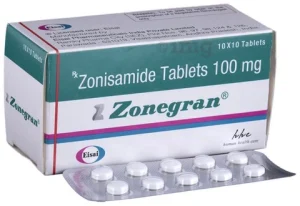
Zonegran 100mg Capsule
Global Shipping : Reliable Global Distribution Network
Express Delivery : Priority Shipping for Every Order
Secure Payments : Trusted Payment Protection System
 Disclaimer

Secure Handling
24/7 Worldwide Support

Global Access
Worldwide Access to Health

Cold-Chain Expert
Excellence in Cold-Chain

Trusted Supply
Certified Medical Supply
Indications & Clinical Uses
- Zonegran 100mg capsules contain zonisamide, a sulfonamide-type antiseizure (antiepileptic) medicine taken by mouth.
- In the US, Zonegran (Advanz Pharma) is approved as add-on (adjunctive) therapy for partial seizures in adults with epilepsy, and safety and efficacy in patients under 16 years have not been established.
- In the UK and EU, the product information (Zonegran, Mercury Pharmaceuticals/ADVANZ) is broader: monotherapy for partial seizures in newly diagnosed adults, and add-on therapy for adults, adolescents and children aged 6 years and over.
- It is a prescription medicine.
- Zonegran comes in different capsule strengths (25 mg and 100 mg in the US), so check the strength you have been prescribed, and do not confuse it with generic zonisamide products from other manufacturers.
Side Effects
- The most common side effects in the US label were sleepiness (17 in 100 people versus 7 with placebo), loss of appetite (13 versus 6), dizziness (13 versus 7), agitation or irritability (9 versus 4), unsteadiness (ataxia, 6 versus 1) and difficulty concentrating or memory problems (6 versus 2); weight loss is also common in the UK and EU information.
- Serious reactions to report at once: severe skin rash with blistering or peeling, including Stevens-Johnson syndrome (seven deaths from severe rash were reported in Japan in the first 11 years of marketing), fever with rash and swollen glands (DRESS), metabolic acidosis, kidney stones, blood disorders, acute eye pain or vision changes (acute myopia and angle-closure glaucoma), reduced sweating with fever in children, and suicidal thoughts (about 1 in 500 patients).
- The label has no boxed warning.
- Report any rash immediately.
Precautions & Warnings
- Zonegran is contraindicated in anyone with a hypersensitivity to sulfonamides or zonisamide.
- Stop the medicine and seek help at the first sign of a rash.
- Metabolic acidosis can occur at doses as low as 25 mg daily, so bicarbonate levels may be checked, and drink plenty of fluids to reduce kidney stone risk.
- Children face a higher risk of reduced sweating (oligohidrosis) and heat stroke, so keep them well hydrated and cool in hot weather.
- Watch for changes in mood, behaviour or suicidal thoughts.
- The drug is teratogenic in animal studies; in pregnancy use it only if the benefit justifies the risk, and UK and EU information requires effective contraception in women of childbearing potential.
- Because the half-life is about 63 hours, steady state takes up to two weeks; do not stop or change the dose without speaking to your prescriber.
- Zonegran may cause drowsiness, so take care driving.
Avoid Interactions
- Tell your healthcare provider about every medicine, herbal product and supplement you use.
- Medicines that increase the risk of effects: carbonic anhydrase inhibitors such as topiramate and acetazolamide, which raise the risk of metabolic acidosis and kidney stones; alcohol and other central nervous system depressants, which increase drowsiness and dizziness; and anticholinergic medicines in children, because of heat stroke risk.
- Medicines that reduce zonisamide levels: CYP3A4-inducing antiepileptics such as phenytoin and carbamazepine.
- Digoxin and other P-glycoprotein substrates carry a theoretical interaction risk in the US label.
- The UK information notes no significant CYP3A4 interactions.
- Ask your pharmacist before adding any new medicine.
References
Frequently Asked Questions
Zonegran (zonisamide) is an antiseizure capsule. In the US it is add-on treatment for partial seizures in adults. In the UK and EU it is also used alone in newly diagnosed adults, and as add-on in adolescents and children aged 6 and over.
Swallow Zonegran (zonisamide) capsules by mouth as prescribed. In US adults, the label starts at 100 mg daily and increases by 100 mg every 2 weeks, to a usual target of 200 to 400 mg daily. Your prescriber sets the dose for you.
Common Zonegran side effects are sleepiness, loss of appetite, dizziness, unsteadiness, agitation and poor concentration. Report a skin rash at once, as serious skin reactions can occur. Also report kidney stone pain, eye pain, vision changes, high fever without sweating or suicidal thoughts.
Avoid Zonegran (zonisamide) if you are allergic to sulfonamides. Avoid alcohol, which adds to drowsiness. Take care with topiramate and acetazolamide, which raise acidosis and kidney stone risk. Phenytoin and carbamazepine lower Zonegran levels. Do not stop it without speaking to your prescriber.
Zonegran (zonisamide) has a half-life of about 63 hours, so it takes up to two weeks to reach steady levels after a dose change. Doses are raised gradually, and your prescriber reviews your seizure control over this time. A change in dose may need up to two weeks before its full effect is seen.
Zonegran (zonisamide) was teratogenic in animal studies, so use it in pregnancy only if the benefit justifies the risk. UK and EU information requires effective contraception in women who could become pregnant. Talk to your healthcare provider before you plan a pregnancy.

Trusted & Reliable – Your Partner in Global Distribution.
We provide comprehensive lines of pharmaceutical products to support all your healthcare distribution needs.


