

TM Owner Merck & Co.
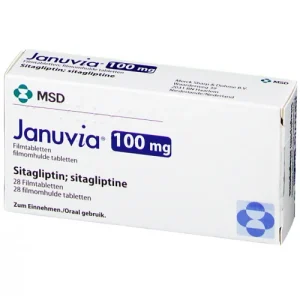
Januvia 100mg Tablet
Global Shipping : Reliable Global Distribution Network
Express Delivery : Priority Shipping for Every Order
Secure Payments : Trusted Payment Protection System
 Disclaimer

Secure Handling
24/7 Worldwide Support

Global Access
Worldwide Access to Health

Cold-Chain Expert
Excellence in Cold-Chain

Trusted Supply
Certified Medical Supply
Indications & Clinical Uses
- Januvia 100 mg film-coated tablets contain sitagliptin, a dipeptidyl peptidase-4 (DPP-4) inhibitor.
- It increases the incretin hormones released by the gut after eating, so the pancreas produces more insulin when blood sugar is high and the liver releases less glucagon.
- Januvia is indicated as an adjunct to diet and exercise to improve glycaemic control in adults with Type 2 diabetes mellitus, either alone or combined with metformin, a sulfonylurea, a thiazolidinedione or insulin.
- It is not for Type 1 diabetes and must never be used to treat diabetic ketoacidosis, and it has not been studied in people with a history of pancreatitis.
- The usual dose is one 100 mg tablet once daily, with or without food.
- Januvia is authorised for adults in both the United States (Merck Sharp & Dohme) and the European Union (Merck Sharp & Dohme B.V., Netherlands); 25 mg and 50 mg tablets exist for reduced kidney function.
Side Effects
- The side effects reported in at least 5% of people taking sitagliptin, and more often than with placebo, are upper respiratory tract infection, nasopharyngitis (a blocked or runny nose with sore throat) and headache.
- Low blood sugar (hypoglycaemia) is uncommon with Januvia alone but becomes much more likely when it is combined with insulin or a sulfonylurea; learn the warning signs of shakiness, sweating, hunger, a racing heart and confusion, and carry a fast-acting sugar.
- The Januvia label carries NO boxed warning.
- Stop the tablet and seek urgent medical help for severe, persistent stomach pain that may spread to the back, with or without vomiting, which can mean acute pancreatitis; for swelling of the face, lips or tongue, difficulty breathing, or a blistering or peeling rash, which can mean anaphylaxis, angioedema, bullous pemphigoid or Stevens-Johnson syndrome; and for severe, disabling joint pain.
Precautions & Warnings
- Januvia is contraindicated in anyone who has had a serious hypersensitivity reaction to sitagliptin, such as anaphylaxis or angioedema.
- Kidney function should be measured before starting and periodically afterwards, because the dose depends on renal function: 100 mg once daily when eGFR is 45 mL/min/1.73 m2 or above, 50 mg once daily when eGFR is 30 to 44, and 25 mg once daily when eGFR is below 30, including people with end-stage renal disease on dialysis.
- Post-marketing reports include worsening renal function and acute renal failure, sometimes requiring dialysis.
- Watch for new or worsening heart failure - breathlessness, swollen ankles or rapid weight gain - which has been seen with DPP-4 inhibitors.
- Januvia alone is unlikely to affect driving, but hypoglycaemia caused by a combined sulfonylurea or insulin can.
- Tell your healthcare provider if you are pregnant, planning pregnancy or breastfeeding.
Avoid Interactions
- Sitagliptin has few pharmacokinetic interactions: studies found no clinically meaningful effect with metformin, glyburide, simvastatin, rosiglitazone, digoxin, warfarin or oral contraceptives.
- The interaction that matters most is pharmacodynamic - combining Januvia with insulin or an insulin secretagogue such as gliclazide, glimepiride or glibenclamide substantially INCREASES the risk of low blood sugar, and the dose of the insulin or sulfonylurea usually has to be lowered when Januvia is added.
- Medicines that RAISE blood glucose and can reduce the benefit of Januvia include corticosteroids such as prednisolone, thiazide diuretics and some antipsychotics; do not stop them yourself, but expect closer glucose monitoring.
- Alcohol can cause unpredictable blood sugar swings, so drink only in moderation and with food.
- Tell your prescriber about every prescription medicine, over-the-counter product, herbal remedy and supplement you take, and about any change in kidney function.
References
Frequently Asked Questions
Januvia (sitagliptin) is a once-daily tablet used with diet and exercise to improve blood sugar control in adults with Type 2 diabetes. It can be used alone or with metformin, a sulfonylurea, a glitazone or insulin. It is not for Type 1 diabetes or diabetic ketoacidosis.
Take one Januvia (sitagliptin) 100 mg tablet once daily, with or without food, at roughly the same time each day. If your kidney function is reduced, your provider will lower the dose to 50 mg or 25 mg daily. Swallow the tablet whole with water.
The commonest side effects of Januvia (sitagliptin) are upper respiratory tract infection, a blocked or runny nose with sore throat, and headache. Get urgent help for severe stomach pain spreading to the back (pancreatitis), swelling of the face or tongue, a blistering rash, or severe joint pain.
Never take Januvia (sitagliptin) if you have had anaphylaxis or angioedema with it. Take care with insulin and sulfonylureas such as gliclazide, which raise the risk of low blood sugar when added to Januvia. Limit alcohol, and tell your provider about steroids or any new medicine.
Yes. Kidney function is checked before Januvia (sitagliptin) starts and periodically afterwards, because the dose depends on eGFR: 100 mg daily above 45, 50 mg at 30 to 44, and 25 mg below 30, including on dialysis. HbA1c is also monitored.
No. The Januvia (sitagliptin) label carries no boxed warning. It does carry warnings for acute pancreatitis, worsening kidney function, serious allergic reactions, bullous pemphigoid, heart failure and severe joint pain. Stop the tablet and seek urgent care for severe, persistent stomach pain reaching through to your back.

Trusted & Reliable – Your Partner in Global Distribution.
We provide comprehensive lines of pharmaceutical products to support all your healthcare distribution needs.


