

TM Owner Alexion / AstraZeneca
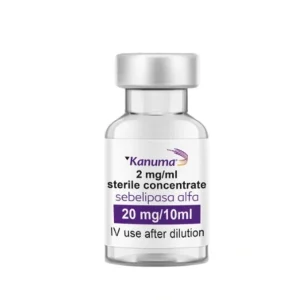
Kanuma 20mg/10mL Injection
Global Shipping : Reliable Global Distribution Network
Express Delivery : Priority Shipping for Every Order
Secure Payments : Trusted Payment Protection System
 Disclaimer

Secure Handling
24/7 Worldwide Support

Global Access
Worldwide Access to Health

Cold-Chain Expert
Excellence in Cold-Chain

Trusted Supply
Certified Medical Supply
Indications & Clinical Uses
- Kanuma 20 mg/10 mL is sebelipase alfa, a recombinant human lysosomal acid lipase given as an intravenous infusion in hospital or a specialist clinic.
- It is long-term enzyme replacement therapy for lysosomal acid lipase (LAL) deficiency, a rare inherited disorder in which cholesteryl esters and triglycerides build up in the liver, spleen and blood vessel walls.
- In the European Union it is approved for patients of all ages; the US label covers patients from 1 month of age, including infants with rapidly progressive disease presenting in the first six months of life and children and adults with the later-onset form.
- The usual dose is 1 mg/kg once every other week for children and adults, and 1 mg/kg once weekly for rapidly progressive infantile disease, which may be increased to 3 mg/kg.
- Kanuma is a concentrate that the pharmacy dilutes before infusion; patients never handle it.
Side Effects
- In infants the most common Kanuma side effects, affecting 30 in 100 or more, are diarrhoea, vomiting, fever, runny nose, anaemia, cough, cold symptoms and hives; in older children and adults the commonest, affecting 8 in 100 or more, are headache, fever, sore throat, cold symptoms, weakness, constipation and nausea.
- Kanuma carries a BOXED WARNING for hypersensitivity reactions including anaphylaxis, which has occurred both early in therapy and after long-term treatment, in roughly 3 in 100 patients.
- Warning signs during or after an infusion include chest discomfort, red eyes, swollen eyelids, difficulty breathing, wheeze, rash, hives, flushing, a racing heartbeat and faintness; tell the nurse immediately.
- LDL-cholesterol and triglycerides often rise in the first two to four weeks before settling by about week eight.
- Antibodies to sebelipase alfa can develop, most often in infants.
Precautions & Warnings
- Kanuma is produced in the egg whites of genetically engineered hens, so it must not be used in anyone who has had a life-threatening allergic reaction to eggs or egg products, or to any ingredient; egg allergy must be discussed before the first infusion.
- It is also contraindicated in patients who have had a life-threatening hypersensitivity reaction to sebelipase alfa that returned when treatment was restarted.
- Infusions are given only where resuscitation equipment and staff trained to manage anaphylaxis are immediately available, and you are observed during and after each infusion.
- A 1 mg/kg dose is infused over at least 2 hours, with longer times for higher doses or after a previous reaction.
- Pre-treatment with antihistamines, antipyretics or corticosteroids may be used if reactions have occurred.
- Vials are stored by the pharmacy refrigerated at 2°C to 8°C in the original carton to protect them from light, and are never shaken or frozen.
Avoid Interactions
- No formal drug interaction studies have been performed with Kanuma, and no medicines, foods or drinks are listed as interacting directly with sebelipase alfa.
- Because it is a protein, Kanuma must not be mixed with, or infused through the same line as, other medicinal products; the pharmacy dilutes it only in 0.9% sodium chloride and uses an in-line filter.
- Medicines that suppress the immune system could in theory alter antibody formation against sebelipase alfa, so tell your specialist if you take them.
- Antihistamines, paracetamol or corticosteroids may be given deliberately before an infusion to reduce reactions, and should be used only as your team directs.
- Lipid-lowering treatment such as a statin is often continued alongside Kanuma and is reviewed as cholesterol and triglyceride levels change in the first weeks.
- Tell your care team about every medicine, herbal product and supplement you use.
References
Frequently Asked Questions
Kanuma (sebelipase alfa) is enzyme replacement therapy for lysosomal acid lipase deficiency, a rare inherited disease in which fats build up in the liver, spleen and blood vessels. It replaces the missing enzyme. The EU approves it for all ages; the US label starts at 1 month.
Kanuma is given as an intravenous infusion, usually 1 mg/kg once every other week for children and adults. Infants with rapidly progressive disease receive 1 mg/kg weekly, which can be raised to 3 mg/kg. A 1 mg/kg infusion runs over at least 2 hours in a clinic or hospital.
Common Kanuma side effects in infants are diarrhoea, vomiting, fever, cough, anaemia and hives; in older patients headache, fever, sore throat and weakness. Its boxed warning covers hypersensitivity reactions including anaphylaxis. Tell staff at once about breathing difficulty, wheeze, rash, flushing or a racing heartbeat.
Kanuma (sebelipase alfa) is produced in the egg whites of genetically engineered chickens. It must not be given to anyone who has had a life-threatening allergic reaction to eggs or egg products. Tell your specialist about any egg allergy before your first infusion.
A Kanuma infusion is given through a drip over at least 2 hours, in a setting with resuscitation equipment and staff trained to treat anaphylaxis. You are watched during and after for signs of an allergic reaction. Antihistamines or steroids may be given beforehand if you have reacted previously.
Cholesterol and triglyceride levels are checked during Kanuma treatment; LDL-cholesterol and triglycerides often rise in the first two to four weeks before settling by about week eight. Antibodies to sebelipase alfa may also be measured, especially in infants, as they can reduce how well it works.

Trusted & Reliable – Your Partner in Global Distribution.
We provide comprehensive lines of pharmaceutical products to support all your healthcare distribution needs.


