

TM Owner Novartis
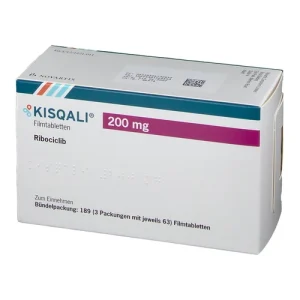
Kisqali Femara Regimen 200mg+2.5mg Tablet
Global Shipping : Reliable Global Distribution Network
Express Delivery : Priority Shipping for Every Order
Secure Payments : Trusted Payment Protection System
 Disclaimer

Secure Handling
24/7 Worldwide Support

Global Access
Worldwide Access to Health

Cold-Chain Expert
Excellence in Cold-Chain

Trusted Supply
Certified Medical Supply
Indications & Clinical Uses
- Kisqali Femara Regimen is not a separate medicine.
- It is the KISQALI FEMARA CO-PACK, one carton that supplies ribociclib (Kisqali) 200 mg film-coated tablets together with letrozole (Femara) 2.5 mg tablets, so this catalogue row describes a regimen rather than a distinct product.
- Ribociclib is a CDK4/6 inhibitor and letrozole is an aromatase inhibitor.
- The co-pack is approved for adults with hormone receptor (HR)-positive, HER2-negative advanced or metastatic breast cancer as initial endocrine-based therapy, and the US label also covers adjuvant treatment of HR-positive, HER2-negative stage II and III early breast cancer.
- In the European Union ribociclib (Kisqali) and letrozole (Femara) are authorised and dispensed as separate products rather than as one co-pack.
- The usual advanced-disease dose is ribociclib 600 mg, three 200 mg tablets once daily for 21 days of each 28-day cycle, with letrozole 2.5 mg every day of the cycle.
- Both are swallowed whole, with or without food, under cancer-specialist supervision.
Side Effects
- Very common effects come mainly from the ribociclib component: falls in white cells (leukocytes and neutrophils), low haemoglobin, low lymphocytes, low platelets, raised ALT and AST, infections, nausea, tiredness, diarrhoea, headache and hair thinning, each reported in at least one in five people.
- Letrozole adds hot flushes, joint and bone pain.
- There is no boxed warning on the co-pack label.
- Serious reactions to recognise are QT prolongation, which can cause fainting, palpitations or an irregular heartbeat; liver injury shown by yellowing of the eyes or skin, dark urine and right-sided abdominal pain; fever or sore throat suggesting a low neutrophil count; new or worsening cough and breathlessness, which may mean interstitial lung disease or pneumonitis; and severe cutaneous reactions including Stevens-Johnson syndrome and toxic epidermal necrolysis.
- Seek urgent medical help for a spreading rash with blistering, peeling skin or mouth and eye sores, and report fainting or fever the same day.
Precautions & Warnings
- Monitoring is mandatory.
- An ECG and blood electrolytes are checked before the first dose and again around day 14 of cycle 1, at the start of cycle 2, and after any dose change; low potassium, magnesium or calcium must be corrected before ribociclib is started.
- Full blood counts and liver function tests are taken before treatment, every two weeks during the first two cycles and then at the start of each subsequent four-cycle period.
- Ribociclib is not started or is permanently stopped for confirmed severe skin reactions or for interstitial lung disease.
- The combination can harm an unborn baby, so pregnancy must be excluded, effective contraception used during treatment and for at least three weeks after the last ribociclib dose, and breastfeeding avoided.
- Tablets must be swallowed whole and never chewed, crushed or split; a damaged or broken tablet should not be taken.
- Report fainting, palpitations, jaundice or fever without delay.
Avoid Interactions
- Effects and toxicity are increased by strong CYP3A inhibitors such as ketoconazole, itraconazole, clarithromycin, ritonavir and related protease inhibitors; avoid them, and if one is unavoidable the ribociclib dose is reduced.
- Other medicines that prolong the QT interval add to the cardiac risk and should be avoided, including antiarrhythmics such as amiodarone, sotalol and quinidine, some antipsychotics, methadone and certain antibiotics and antifungals.
- Efficacy is reduced by strong CYP3A inducers such as rifampicin, phenytoin, carbamazepine, phenobarbital and St John's wort, which lower ribociclib levels; an alternative medicine should be chosen.
- Ribociclib can also raise levels of drugs handled by CYP3A that have a narrow safety margin.
- Tell the prescriber and pharmacist about every prescription medicine, over-the-counter remedy, herbal product and supplement before and during treatment, and check before starting anything new.
References
Frequently Asked Questions
The Kisqali Femara Regimen is the Kisqali Femara Co-Pack, supplying ribociclib 200 mg tablets with letrozole 2.5 mg tablets. It treats hormone receptor-positive, HER2-negative advanced or metastatic breast cancer in adults as first endocrine-based therapy. The US ribociclib label also covers adjuvant treatment of stage II and III early breast cancer.
Ribociclib is taken as three 200 mg tablets once daily for 21 days of each 28-day cycle, then seven days off. Letrozole 2.5 mg is taken every day of the cycle, including the rest week. Swallow all tablets whole with or without food; never chew, crush or split them.
The commonest side effects of ribociclib with letrozole are low white cells and neutrophils, anaemia, raised liver enzymes, infections, nausea, tiredness, diarrhoea, headache and hair thinning. Get urgent help for fainting, palpitations, yellowing eyes, fever, new breathlessness, or a blistering rash with peeling skin or mouth sores.
Avoid strong CYP3A inhibitors such as ketoconazole, itraconazole, clarithromycin and ritonavir, which raise ribociclib levels and toxicity. Avoid strong CYP3A inducers like rifampicin, carbamazepine, phenytoin and St John's wort, which reduce its effect. Also avoid other QT-prolonging drugs, including amiodarone, sotalol and methadone.
An ECG and blood electrolytes are checked before the first ribociclib dose, around day 14 of cycle 1, at the start of cycle 2 and after dose changes, because ribociclib prolongs the QT interval. Full blood counts and liver function tests are done every two weeks for the first two cycles.
No. Ribociclib with letrozole can harm an unborn baby, so the Kisqali Femara Regimen must not be used in pregnancy. Pregnancy is excluded before starting, effective contraception is needed during treatment and for at least three weeks after the last ribociclib dose, and breastfeeding should be avoided.

Trusted & Reliable – Your Partner in Global Distribution.
We provide comprehensive lines of pharmaceutical products to support all your healthcare distribution needs.


