

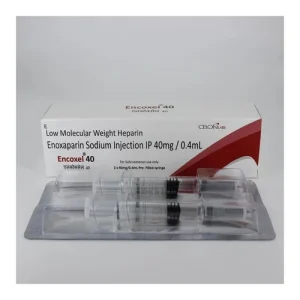
TM Owner Sanofi
Lovenox 40mg/0.4mL Injection
Global Shipping : Reliable Global Distribution Network
Express Delivery : Priority Shipping for Every Order
Secure Payments : Trusted Payment Protection System
 Disclaimer

Secure Handling
24/7 Worldwide Support

Global Access
Worldwide Access to Health

Cold-Chain Expert
Excellence in Cold-Chain

Trusted Supply
Certified Medical Supply
Indications & Clinical Uses
- Lovenox 40 mg/0.4 mL prefilled syringes contain enoxaparin sodium, a low molecular weight heparin (LMWH) anticoagulant given by SUBCUTANEOUS injection under the skin, and in some hospital settings intravenously.
- It is approved to prevent deep vein thrombosis (DVT) after abdominal surgery, hip replacement or knee replacement surgery, and in medical patients whose mobility is severely restricted by acute illness; to treat acute DVT with or without pulmonary embolism, both in hospital and at home; to prevent ischaemic complications of unstable angina and non-Q-wave heart attack, with aspirin; and to treat acute ST-elevation myocardial infarction.
- The 40 mg once-daily dose is a typical prevention dose; treatment doses are weight-based, at 1 mg/kg every 12 hours or 1.5 mg/kg once daily.
- Lovenox CANNOT be used interchangeably, unit for unit, with heparin or other low molecular weight heparins.
- It is started by a healthcare provider and may then be self-injected at home after training.
Side Effects
- Lovenox carries a BOXED WARNING on SPINAL AND EPIDURAL HAEMATOMA: patients anticoagulated with a low molecular weight heparin who receive spinal or epidural anaesthesia or undergo spinal puncture can develop a blood clot around the spinal cord, which may cause long-term or PERMANENT PARALYSIS.
- The risk is higher with indwelling epidural catheters, other medicines affecting clotting, traumatic or repeated punctures, and spinal deformity or previous spinal surgery.
- Frequent neurological checks are essential, and urgent treatment is needed for back pain, numbness, weakness in the legs or loss of bladder or bowel control.
- The most common side effects, each in more than 1% of patients, are bleeding, anaemia, low platelet counts, raised liver enzymes, bruising at the injection site, injection site pain, nausea, diarrhoea, fever, swelling, breathlessness and confusion.
- Seek urgent help for uncontrolled bleeding, black or bloody stools, coughing up blood, severe headache or a sudden skin rash with blistering.
Precautions & Warnings
- Lovenox is CONTRAINDICATED in active major bleeding, in anyone who has had heparin-induced thrombocytopenia (HIT) with positive antibodies within the past 100 days, and in people allergic to enoxaparin, heparin or pork products; the 300 mg/3 mL multiple-dose vial is additionally contraindicated in benzyl alcohol hypersensitivity.
- Platelet counts should be monitored, and kidney function checked, because the dose must be reduced when creatinine clearance falls below 30 mL/min.
- Lovenox is given by SUBCUTANEOUS injection into the fat of the abdomen, alternating left and right sides; it must NOT be given by intramuscular injection.
- Do not expel the air bubble from a prefilled syringe before injecting.
- The multiple-dose vial contains benzyl alcohol and should be avoided in pregnancy, in newborns and in infants.
- Pregnant women with mechanical prosthetic heart valves have an increased risk of clotting and need specialist care.
- Tell every healthcare provider, dentist and surgeon that you take Lovenox before any procedure.
Avoid Interactions
- Medicines that INCREASE the risk of bleeding with Lovenox should be stopped before starting it where possible, or used only with close clinical and laboratory monitoring.
- These include other anticoagulants such as warfarin, heparin, apixaban, rivaroxaban and dabigatran; antiplatelet medicines such as aspirin, clopidogrel, prasugrel, ticagrelor and dipyridamole; thrombolytic agents; glycoprotein IIb/IIIa inhibitors; non-steroidal anti-inflammatory drugs including ibuprofen, naproxen, ketorolac and salicylates; dextran; and systemic corticosteroids.
- Herbal products that thin the blood, such as ginkgo, garlic, ginger and high-dose fish oil, add to the same risk.
- The risk of spinal or epidural haematoma rises sharply when any of these are combined with neuraxial anaesthesia or spinal puncture.
- Do not mix Lovenox with other injections or infusions in the same syringe or line.
- Tell your healthcare provider about every medicine, vitamin, herbal product and supplement you take before any surgery, dental work, injection or spinal procedure.
References
Frequently Asked Questions
Lovenox (enoxaparin sodium) 40 mg/0.4 mL prefilled syringes prevent deep vein thrombosis after abdominal, hip or knee surgery and in medical patients with restricted mobility. Higher weight-based doses treat existing DVT and pulmonary embolism, unstable angina and ST-elevation heart attack.
Lovenox (enoxaparin sodium) is injected subcutaneously into the fat of the abdomen, alternating left and right sides, usually once or twice daily. Never inject it into a muscle. Do not expel the air bubble from the prefilled syringe before injecting, as this would remove part of the dose.
The main Lovenox (enoxaparin sodium) side effects are bleeding, bruising and pain at the injection site, anaemia, low platelets and raised liver enzymes. A boxed warning covers spinal and epidural haematoma, which can cause permanent paralysis. Get urgent help for uncontrolled bleeding or black stools.
Lovenox (enoxaparin sodium) carries a boxed warning for spinal or epidural haematoma in people having spinal or epidural anaesthesia or a spinal puncture. This blood clot around the spinal cord can cause long-term or permanent paralysis. Report back pain, leg numbness or weakness, or bladder problems immediately.
No. Lovenox (enoxaparin sodium) cannot be used interchangeably unit for unit with heparin or other low molecular weight heparins, because they differ in manufacturing, molecular weight, anti-Xa and anti-IIa activity, units and dosing. Switching products without a new prescribed dose risks clotting or serious bleeding.
Prefilled Lovenox (enoxaparin sodium) syringes are preservative-free, but the 300 mg/3 mL multiple-dose vial contains benzyl alcohol and should be avoided in pregnancy, newborns and infants. Pregnant women with mechanical heart valves face a higher clotting risk on Lovenox and need specialist supervision.

Trusted & Reliable – Your Partner in Global Distribution.
We provide comprehensive lines of pharmaceutical products to support all your healthcare distribution needs.


