

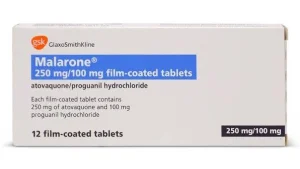
TM Owner GSK
Malarone 250mg/100mg (adult strength; paediatric 62.5mg/25mg is a separate product, see Malarone Paediatric) Tablet
Global Shipping : Reliable Global Distribution Network
Express Delivery : Priority Shipping for Every Order
Secure Payments : Trusted Payment Protection System
 Disclaimer

Secure Handling
24/7 Worldwide Support

Global Access
Worldwide Access to Health

Cold-Chain Expert
Excellence in Cold-Chain

Trusted Supply
Certified Medical Supply
Indications & Clinical Uses
- Malarone 250 mg/100 mg film-coated tablets contain atovaquone and proguanil hydrochloride, a combination antimalarial.
- This adult-strength tablet is used for the prevention of Plasmodium falciparum malaria in travellers to areas with chloroquine-resistant malaria, and for the treatment of acute, uncomplicated P. falciparum malaria; it is not effective for severe or cerebral malaria, which needs hospital treatment.
- Prophylaxis with this strength is for adults and adolescents weighing 40 kg or more; smaller children use the separate Malarone Paediatric 62.5 mg/25 mg tablets, which must not be confused with this adult strength since the doses are not interchangeable tablet-for-tablet.
- Malarone is taken at home, started one to two days before travel, continued daily during the trip, and for seven days after leaving the malarious area for prevention, or as a three-day course for treatment.
- The approved use is consistent between the US and UK/EU product information.
Side Effects
- The most common side effects of Malarone are gastrointestinal: abdominal pain, nausea, vomiting and diarrhoea, along with headache; when used for prevention, unusual dreams and mouth ulcers have also been reported.
- Malarone has no boxed warning.
- Rare but serious reactions include severe skin reactions and, very rarely, hallucinations or other psychiatric symptoms; stop the medicine and seek urgent care for a severe rash, blistering, swelling of the face or throat, or difficulty breathing.
- If vomiting or diarrhoea occurs, absorption may be reduced and protection against malaria cannot be relied on, so a repeat dose or an alternative antimalarial may be needed - check with a healthcare provider or pharmacist.
- Take Malarone with food or a milky drink, at the same time each day, to improve absorption and reduce stomach upset.
Precautions & Warnings
- Malarone must not be used for malaria prevention in people with severe kidney impairment (creatinine clearance below 30 mL/min) because of a higher risk of side effects from proguanil; it can still be used cautiously for treatment in this group if no suitable alternative exists.
- It is not recommended for prevention in people with severe kidney disease on dialysis.
- If vomiting occurs within an hour of a dose, or significant diarrhoea develops, the dose should be repeated, since incomplete absorption means malaria protection cannot be guaranteed.
- Malarone can be used in pregnancy and breastfeeding when other options are unsuitable and a healthcare provider judges the benefit outweighs the risk, but data are limited.
- It does not act against P. vivax or P. ovale liver-stage parasites, so additional treatment (for example primaquine) may be needed for those species.
- There are no specific driving restrictions, but stop and seek advice if dizziness occurs.
Avoid Interactions
- Rifampicin and rifabutin significantly reduce blood levels of atovaquone and should not be used together with Malarone.
- Tetracycline can also lower atovaquone levels, so parasite response should be monitored closely if this combination cannot be avoided.
- Metoclopramide reduces the absorption of atovaquone and should only be used if no other anti-sickness medicine is suitable; other antiemetics are preferred.
- Proguanil can increase the effect of warfarin and other coumarin anticoagulants, raising the risk of bleeding, so blood clotting should be monitored more closely when starting or stopping Malarone.
- Efavirenz and boosted HIV protease inhibitors can substantially lower atovaquone levels and reduce protection.
- Tell the prescriber or pharmacist about all other medicines, including anticoagulants, antibiotics and antiretrovirals, before starting Malarone.
References
Frequently Asked Questions
Malarone (atovaquone/proguanil) 250 mg/100 mg tablets prevent and treat Plasmodium falciparum malaria in adults and children weighing 40 kg or more. It's taken by travellers to areas with chloroquine-resistant malaria. It doesn't treat severe or cerebral malaria, which needs hospital care.
Take one Malarone tablet daily with food or a milky drink, starting 1-2 days before travel, continuing throughout your trip, and for 7 days after leaving the malaria area. For treatment, adults take 4 tablets once daily for 3 days.
Abdominal pain, nausea, vomiting, diarrhoea and headache are the most common side effects of Malarone. Vivid dreams can occur during prevention use. Malarone has no boxed warning, but seek urgent care for a severe rash or swelling of the face or throat.
Avoid rifampicin, rifabutin and tetracycline, which lower Malarone's antimalarial levels. Metoclopramide reduces absorption too; other anti-sickness medicines are preferred. Malarone can increase the effect of warfarin, raising bleeding risk. Tell your healthcare provider about every medicine you take.
If you vomit within an hour of taking Malarone, the dose may not be fully absorbed, so take a repeat dose. If vomiting continues, contact your healthcare provider, since your malaria protection may not be reliable and an alternative may be needed.
Malarone can be used in pregnancy and breastfeeding when a healthcare provider decides other antimalarials are unsuitable, since data are limited but it is not known to be strongly harmful. Always get individual advice before travelling to a malaria area while pregnant.

Trusted & Reliable – Your Partner in Global Distribution.
We provide comprehensive lines of pharmaceutical products to support all your healthcare distribution needs.


