

TM Owner Novartis
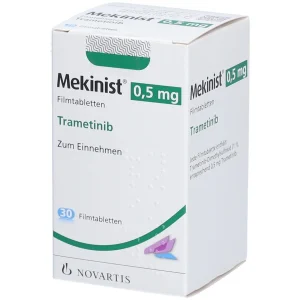
Mekinist 0.5mg Tablet
Global Shipping : Reliable Global Distribution Network
Express Delivery : Priority Shipping for Every Order
Secure Payments : Trusted Payment Protection System
 Disclaimer

Secure Handling
24/7 Worldwide Support

Global Access
Worldwide Access to Health

Cold-Chain Expert
Excellence in Cold-Chain

Trusted Supply
Certified Medical Supply
Indications & Clinical Uses
- Mekinist 0.5 mg tablets contain trametinib, a MEK inhibitor targeted cancer medicine.
- Mekinist can be used as a single agent (monotherapy) in adults with unresectable or metastatic melanoma carrying a BRAF V600E or V600K mutation who have not previously received a BRAF inhibitor.
- More often it is prescribed in combination with dabrafenib (Tafinlar), not as a single tablet alone, for BRAF-mutant metastatic melanoma, adjuvant treatment after melanoma surgery, metastatic non-small cell lung cancer, anaplastic thyroid cancer, and, in the EU, for adolescents 12 years and older with melanoma; the US label also permits the combination in children from 1 year of age for certain low-grade gliomas.
- Always confirm with the prescribing information whether a Mekinist tablet is intended for monotherapy or for combination use with dabrafenib, since the two regimens have different dosing and side-effect profiles.
Side Effects
- As a single agent, Mekinist commonly causes rash (affecting more than half of patients), diarrhea, and swelling of the arms or legs (lymphedema).
- When combined with dabrafenib, fever, nausea, chills, vomiting, and further rash are very common.
- Serious reactions to watch for include new skin or other cancers, unusual bleeding, reduced heart pumping function (cardiomyopathy), breathing problems suggesting lung inflammation, and visual changes such as blurred vision, which can signal retinal problems.
- There is no boxed warning on the current Mekinist label, but these warnings are highlighted in the prescribing information.
- Seek urgent medical attention for a persistent fever above 38°C when on combination therapy, sudden breathlessness, chest pain, or any new visual disturbance.
Precautions & Warnings
- Mekinist has no formal contraindications listed, but it requires baseline and periodic eye examinations, blood pressure checks, and heart function (ejection fraction) monitoring, particularly for signs of retinal vein occlusion, serous retinopathy, or cardiomyopathy.
- Mekinist can cause fetal harm; women of reproductive potential must use effective, non-hormonal contraception during treatment and for 4 months (16 weeks) after the last dose, and breastfeeding is not recommended during treatment.
- Tablets should be taken on an empty stomach, at least one hour before or two hours after a meal, as food reduces absorption.
- Liver function should be monitored, and treatment may need interruption or dose reduction for fever, interstitial lung disease, or severe skin reactions.
- Tell your healthcare provider before any vaccination or surgery while taking Mekinist.
Avoid Interactions
- Strong inhibitors of P-glycoprotein (P-gp), such as verapamil, cyclosporine, ritonavir, quinidine, and itraconazole, may increase trametinib levels and should be used cautiously, with closer monitoring for side effects.
- Trametinib itself can inhibit CYP2C8, potentially raising levels of drugs cleared by that pathway.
- When Mekinist is combined with dabrafenib, hormonal contraceptives may become less effective, so a barrier method of contraception is recommended in addition to, or instead of, hormonal birth control.
- Live vaccines should generally be avoided during treatment; discuss timing of any vaccination with your healthcare provider.
- Always tell your healthcare provider and pharmacist about every prescription medicine, over-the-counter product, herbal remedy, and supplement you take before starting or continuing Mekinist, since new interactions can be identified as the drug label is updated.
References
Frequently Asked Questions
Mekinist (trametinib) treats BRAF V600 mutation-positive melanoma, either alone or combined with dabrafenib (Tafinlar). The combination is also used for lung cancer, thyroid cancer, and, after surgery, to help prevent melanoma returning. Your tablet may be prescribed as a single agent or as part of a two-drug regimen.
Mekinist tablets are swallowed whole, once or twice daily depending on the regimen, on an empty stomach — at least one hour before or two hours after food. Take it at the same time each day and never crush or split the tablets unless told to.
Rash, diarrhea, and swelling of the limbs are common with Mekinist alone; fever, nausea, and chills are common with the dabrafenib combination. Serious risks include heart, lung, and eye problems, plus new skin cancers. Report vision changes or breathlessness urgently.
Avoid pregnancy — Mekinist can harm an unborn baby, so use non-hormonal contraception during treatment and for 4 months after stopping. If combined with dabrafenib, hormonal birth control may not work reliably. Tell your provider about verapamil, cyclosporine, and other P-glycoprotein-affecting medicines.
Yes. Your healthcare provider will check your heart function, blood pressure, eyes, and sometimes liver tests before and during treatment. Fever is closely monitored when Mekinist is combined with dabrafenib, since it can signal a reaction needing dose adjustment.
Mekinist combined with dabrafenib is approved in the US for children from 1 year of age with certain low-grade gliomas, and in the EU for adolescents 12 and older with melanoma. Mekinist alone (monotherapy) is approved only for adults.

Trusted & Reliable – Your Partner in Global Distribution.
We provide comprehensive lines of pharmaceutical products to support all your healthcare distribution needs.


