

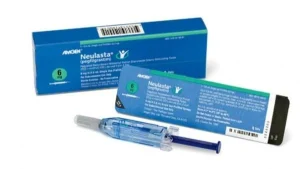
TM Owner Amgen
Neulasta 6mg Injection
Global Shipping : Reliable Global Distribution Network
Express Delivery : Priority Shipping for Every Order
Secure Payments : Trusted Payment Protection System
 Disclaimer

Secure Handling
24/7 Worldwide Support

Global Access
Worldwide Access to Health

Cold-Chain Expert
Excellence in Cold-Chain

Trusted Supply
Certified Medical Supply
Indications & Clinical Uses
- Neulasta 6 mg injection contains pegfilgrastim, a long-acting, pegylated form of granulocyte colony-stimulating factor (G-CSF) used to reduce the chance of infection linked to a low white blood cell count (febrile neutropenia) in adults and children with non-myeloid cancers receiving myelosuppressive chemotherapy that significantly lowers neutrophil counts.
- It is also approved to increase survival in adults and children acutely exposed to harmful doses of whole-body radiation.
- Neulasta is not recommended for chronic myeloid leukaemia or myelodysplastic syndromes.
- Unlike the related, shorter-acting medicine filgrastim (Neupogen), which is usually given daily, Neulasta's long-acting formulation means only one injection is needed per chemotherapy cycle, given at least 24 hours after chemotherapy finishes — the two products treat the same problem but are not interchangeable.
- Treatment is started and supervised by a cancer or blood-disorder specialist.
Side Effects
- The most common side effect of Neulasta, affecting more than 1 in 10 people, is bone pain, along with pain in the arms or legs; these usually respond to standard over-the-counter pain relief.
- Neulasta carries no boxed warning, but has serious warnings that need urgent attention: rupture of the spleen, causing left upper abdominal or shoulder-tip pain; acute respiratory distress syndrome, with fever, breathlessness and rapid breathing; and serious allergic reactions, including anaphylaxis, which can occur with the first or a later dose.
- Other reported effects include sickle cell crises in people with sickle cell disease, kidney inflammation, reduced platelet counts, bleeding into the lungs, blood vessel inflammation, and a small increased risk of a blood cancer in breast or lung cancer patients on certain chemotherapy regimens.
- Seek emergency care immediately for severe abdominal or shoulder pain, sudden breathlessness, or signs of a severe allergic reaction such as facial swelling.
Precautions & Warnings
- Do not use Neulasta if you have had a serious allergic reaction to pegfilgrastim or filgrastim.
- Neulasta should not be given in the period from 24 hours before to 24 hours after cytotoxic chemotherapy, because rapidly dividing white blood cells are sensitive to chemotherapy.
- It is not recommended in chronic myeloid leukaemia or myelodysplastic syndromes, since G-CSF can stimulate myeloid cell growth in these conditions.
- People with sickle cell disorders are monitored closely, as Neulasta can trigger a sickle cell crisis.
- Blood counts are checked regularly during treatment.
- Report sudden left-sided abdominal or shoulder pain, breathing difficulty, or unusual bleeding or bruising to your care team straight away.
- Neulasta is given only by, or under the supervision of, a healthcare professional; it is not for unsupervised home self-injection.
- Safety in pregnancy and breastfeeding is not fully established; discuss your chemotherapy plan and any pregnancy with your oncology team.
Avoid Interactions
- Tell your healthcare provider about all medicines you are taking before receiving Neulasta.
- No formal drug-interaction studies have been conducted, but because pegfilgrastim stimulates rapidly dividing white blood cells, it must not be given in the 24 hours before or after chemotherapy, as this can increase chemotherapy's toxic effect on the bone marrow.
- Combining Neulasta with other medicines that affect blood cell counts, such as other growth factors, should be avoided unless specifically directed by your oncology team.
- Live vaccines are generally avoided during chemotherapy and growth-factor support because of infection risk in an immunosuppressed patient; discuss vaccination timing with your care team.
- There is no known interaction with common pain relievers used for bone pain, but always confirm any new prescription, over-the-counter medicine or supplement with the team managing your cancer treatment before starting it.
References
Frequently Asked Questions
Neulasta (pegfilgrastim) lowers the risk of infection from a low white blood cell count after chemotherapy for cancer. It's also used after harmful radiation exposure. It's a long-acting version of the growth factor filgrastim (Neupogen), needing only one injection per chemotherapy cycle.
A healthcare professional injects Neulasta 6 mg under the skin once per chemotherapy cycle, given at least 24 hours after chemotherapy finishes and not within 24 hours before your next cycle. It's not usually self-injected the same day as treatment.
The most common side effect is bone pain, affecting more than 1 in 10 people. Serious but rare effects include spleen rupture, acute breathing problems and severe allergic reactions. Get emergency help for sudden abdominal or shoulder pain, or breathlessness.
Avoid Neulasta if you've had a serious allergic reaction to pegfilgrastim or filgrastim. It shouldn't be given in the 24 hours before or after chemotherapy. Tell your oncology team about all medicines, and discuss live vaccines before having them.
Contact your cancer care team if your Neulasta injection is delayed — do not give an extra dose yourself. They will confirm the correct timing relative to your chemotherapy cycle, since Neulasta must not be given within 24 hours of chemotherapy.
No. Neulasta (pegfilgrastim) is long-acting, needing one injection per chemotherapy cycle, while Neupogen (filgrastim) is short-acting and usually needs daily injections. Both raise white blood cell counts but are not interchangeable.

Trusted & Reliable – Your Partner in Global Distribution.
We provide comprehensive lines of pharmaceutical products to support all your healthcare distribution needs.


