

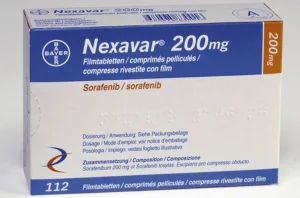
TM Owner Bayer
Nexavar 200mg Tablet
Global Shipping : Reliable Global Distribution Network
Express Delivery : Priority Shipping for Every Order
Secure Payments : Trusted Payment Protection System
 Disclaimer

Secure Handling
24/7 Worldwide Support

Global Access
Worldwide Access to Health

Cold-Chain Expert
Excellence in Cold-Chain

Trusted Supply
Certified Medical Supply
Indications & Clinical Uses
- Nexavar 200mg is a film-coated tablet containing sorafenib, a kinase inhibitor (targeted anticancer medicine), made by Bayer HealthCare Pharmaceuticals.
- Under the US label it is used to treat unresectable hepatocellular carcinoma (liver cancer), advanced renal cell carcinoma (kidney cancer), and locally recurrent or metastatic, progressive differentiated thyroid carcinoma that no longer responds to radioactive iodine treatment.
- The usual dose is 400 mg (two 200 mg tablets) twice daily, taken without food (at least 1 hour before or 2 hours after a meal).
- Safety and effectiveness have not been established in children.
- It is a prescription cancer medicine started and supervised by a specialist, and you take it yourself at home.
- This review is based on the US label; local indications can differ.
Side Effects
- The most common side effects (reported in 20% or more of patients) are diarrhea, fatigue, infection, hair loss (alopecia), hand-foot skin reaction (redness, pain or blistering of palms and soles, usually within the first six weeks), rash, weight loss, decreased appetite, nausea, stomach and abdominal pain, high blood pressure (hypertension) and bleeding (hemorrhage).
- Serious reactions to report straight away include chest pain or shortness of breath (heart ischemia or infarction), serious bleeding, severe or persistent high blood pressure, severe skin reactions including Stevens-Johnson syndrome or toxic epidermal necrolysis, gastrointestinal perforation, QT prolongation (irregular heartbeat, fainting) and drug-induced liver injury.
- The label carries no boxed warning.
- Your team may reduce or pause the dose if side effects are severe.
Precautions & Warnings
- Blood pressure is checked weekly during the first 6 weeks, then periodically.
- Liver function tests, ECG and electrolytes are monitored, and thyroid-stimulating hormone (TSH) is checked monthly in thyroid cancer patients.
- Nexavar can impair wound healing: withhold it for at least 10 days before elective surgery and wait at least 2 weeks after major surgery.
- It is contraindicated in patients with known severe hypersensitivity to sorafenib or any ingredient, and in combination with carboplatin and paclitaxel in squamous cell lung cancer.
- It can cause fetal harm: females who can become pregnant should have a pregnancy test and use effective contraception during treatment and for 6 months after the last dose, and males for 3 months.
- Do not breastfeed during treatment and for 2 weeks after the last dose.
- Store at 20°C to 25°C in a dry place.
Avoid Interactions
- Medicines that increase risk: warfarin (monitor INR and watch for bleeding) and other medicines known to prolong the QT/QTc interval, which should be avoided with Nexavar.
- Medicines that reduce sorafenib exposure: strong CYP3A4 inducers such as rifampin (lowers sorafenib exposure by about 37%), which should be avoided, and the antibiotic neomycin, which lowers exposure by about 54% and should be avoided.
- Take Nexavar on an empty stomach as directed.
- Tell your healthcare provider about all prescription, non-prescription and herbal medicines and supplements you use, since some may need to be stopped or adjusted.
References
Frequently Asked Questions
Nexavar (sorafenib) 200 mg tablets treat liver cancer (unresectable hepatocellular carcinoma), advanced kidney cancer (renal cell carcinoma) and progressive differentiated thyroid cancer that no longer responds to radioactive iodine. It is a targeted cancer medicine that a cancer specialist prescribes, and you take it yourself at home.
Take Nexavar (sorafenib) 400 mg, which is two 200 mg tablets, twice daily on an empty stomach: at least 1 hour before or 2 hours after a meal. Swallow it as prescribed. Your doctor may lower or pause the dose if side effects become severe.
Common Nexavar (sorafenib) side effects include diarrhea, fatigue, hair loss, hand-foot skin reaction, rash, weight loss, nausea, high blood pressure and bleeding. Report chest pain, serious bleeding, severe skin reactions, severe stomach pain or liver problems at once. The label has no boxed warning.
Avoid strong CYP3A4 inducers such as rifampin, the antibiotic neomycin, and QT-prolonging medicines with Nexavar (sorafenib). Monitor closely with warfarin because of bleeding risk. Do not use it with carboplatin and paclitaxel in squamous cell lung cancer. Do not take it with food.
If you miss a dose of Nexavar (sorafenib), skip it and take your next dose at the regular time. Do not take a double dose to make up for it. Continue taking it on an empty stomach, and tell your care team if you miss several doses.
No. Nexavar (sorafenib) can harm an unborn baby. Females who can become pregnant need effective contraception during treatment and for 6 months after the last dose, and males for 3 months. Do not breastfeed during treatment and for 2 weeks after the last dose.

Trusted & Reliable – Your Partner in Global Distribution.
We provide comprehensive lines of pharmaceutical products to support all your healthcare distribution needs.


