

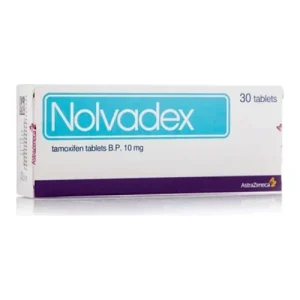
TM Owner AstraZeneca
Nolvadex 10mg Tablet
Global Shipping : Reliable Global Distribution Network
Express Delivery : Priority Shipping for Every Order
Secure Payments : Trusted Payment Protection System
 Disclaimer

Secure Handling
24/7 Worldwide Support

Global Access
Worldwide Access to Health

Cold-Chain Expert
Excellence in Cold-Chain

Trusted Supply
Certified Medical Supply
Indications & Clinical Uses
- Nolvadex 10 mg film-coated tablets contain tamoxifen citrate, an oestrogen-receptor modulator used in hormone-sensitive breast cancer.
- AstraZeneca discontinued the Nolvadex brand in the United States in 2006, a commercial decision to leave the tamoxifen market to generics rather than a safety withdrawal, so in the US only generic tamoxifen is now supplied; Nolvadex remains authorised and marketed by AstraZeneca UK Limited in the United Kingdom, where the current label covers Nolvadex 10 mg and the related Nolvadex D 20 mg tablet together.
- It is used to treat hormone-receptor-positive breast cancer in women and men, to reduce the risk of breast cancer developing in women at moderate or high risk, and, off-label in some markets, for anovulatory infertility.
- The standard breast cancer dose is 20 mg daily, usually taken as two 10 mg tablets or a single 20 mg Nolvadex D tablet; higher doses give no extra benefit.
- It is taken by mouth, at home, once daily.
Side Effects
- In the United States, tamoxifen (including the Nolvadex brand historically) carries a BOXED WARNING for serious, sometimes fatal events in women using it to reduce breast cancer risk or after ductal carcinoma in situ: uterine cancer, stroke and blood clots in the lungs (pulmonary embolism) all occur more often than with placebo.
- Very common side effects (affecting more than 1 in 10 people) include hot flushes, vaginal discharge or bleeding, and fluid retention causing leg swelling; nausea and fatigue are also common.
- Serious reactions needing urgent medical attention include unusual vaginal bleeding, calf pain or swelling, sudden breathlessness or chest pain, sudden visual disturbance, and signs of a severe skin reaction such as blistering or peeling skin (Stevens-Johnson syndrome has been reported).
- Report any of these to a healthcare provider immediately or seek emergency care.
Precautions & Warnings
- Nolvadex must not be used in pregnancy and is contraindicated with concurrent anastrozole; women who could become pregnant must use effective non-hormonal contraception during treatment and for at least 9 months afterwards, and breastfeeding is not recommended.
- Regular gynaecological review is advised because of the increased risk of endometrial changes, including hyperplasia, polyps, cancer and uterine sarcoma, and any abnormal vaginal bleeding should be reported promptly.
- Nolvadex increases the risk of blood clots (deep vein thrombosis, pulmonary embolism) and can prolong the QT interval on an ECG, so caution and monitoring are needed in people with heart rhythm problems or on other QT-prolonging drugs.
- Regular eye checks are recommended with long-term use because of a risk of cataracts and other visual changes, and liver function should be monitored, since rare liver abnormalities have occurred.
- Store below 30°C in the original container.
Avoid Interactions
- Nolvadex increases the effect of coumarin-type anticoagulants such as warfarin, raising bleeding risk, so anticoagulant dosing may need closer monitoring.
- Combining it with cytotoxic chemotherapy increases the risk of blood clots.
- Strong CYP2D6-inhibiting antidepressants, particularly paroxetine and fluoxetine, reduce levels of tamoxifen's active metabolite and may lower its effectiveness, so alternative antidepressants are often preferred if one is needed.
- Rifampicin markedly lowers tamoxifen blood levels, and aromatase inhibitors such as letrozole or anastrozole should not be combined with Nolvadex.
- Other drugs that prolong the QT interval add to that risk when taken together.
- Live vaccines and grapefruit have not been specifically flagged on the label, but as with any hormonal cancer treatment, tell your healthcare provider or pharmacist about every prescription, over-the-counter medicine, herbal product and supplement before starting or continuing Nolvadex.
References
Frequently Asked Questions
Nolvadex (tamoxifen citrate) treats hormone-receptor-positive breast cancer in women and men and can reduce breast cancer risk in women at higher risk. AstraZeneca discontinued the US brand in 2006 (generic-only there now), but Nolvadex 10 mg remains sold in the UK.
Nolvadex is a tablet taken by mouth, usually 20 mg once daily (two 10 mg tablets), with or without food. It is self-administered at home. Higher doses do not give extra benefit for breast cancer treatment, so do not take more than prescribed.
Very common effects include hot flushes, vaginal discharge or bleeding, and fluid retention. Nolvadex carries a boxed warning for uterine cancer, stroke and blood clots in the lungs in risk-reduction use. Report unusual bleeding, leg swelling, chest pain or sudden breathlessness urgently.
Avoid pregnancy and use non-hormonal contraception during treatment and for 9 months after stopping. Avoid combining Nolvadex with anastrozole, and tell your prescriber if you take warfarin, paroxetine or fluoxetine, since these interact with Nolvadex and change bleeding risk or effectiveness.
Take your missed Nolvadex dose as soon as you remember that day, but skip it if it is almost time for the next one — never take a double dose. Take doses at roughly the same time each day to keep blood levels steady; ask your pharmacist if unsure.
No. Nolvadex is contraindicated in pregnancy because tamoxifen can harm a developing baby. Women who could become pregnant must use effective non-hormonal contraception while taking it and for at least 9 months after the last dose, and should not breastfeed during treatment.

Trusted & Reliable – Your Partner in Global Distribution.
We provide comprehensive lines of pharmaceutical products to support all your healthcare distribution needs.


