

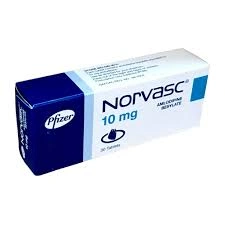
TM Owner Pfizer
Norvasc 10mg Tablet
Global Shipping : Reliable Global Distribution Network
Express Delivery : Priority Shipping for Every Order
Secure Payments : Trusted Payment Protection System
 Disclaimer

Secure Handling
24/7 Worldwide Support

Global Access
Worldwide Access to Health

Cold-Chain Expert
Excellence in Cold-Chain

Trusted Supply
Certified Medical Supply
Indications & Clinical Uses
- Norvasc 10 mg (amlodipine besylate), a dihydropyridine calcium-channel blocker, is approved to treat high blood pressure (hypertension) in adults and in children aged 6 years and older, lowering blood pressure and reducing the risk of stroke, heart attack and other cardiovascular events.
- It is also approved for coronary artery disease, including chronic stable angina, vasospastic (Prinzmetal's) angina, and angiographically documented coronary artery disease without heart failure or a reduced ejection fraction, where it can be used alone or combined with other blood-pressure or angina medicines such as beta-blockers or ACE inhibitors.
- Norvasc is taken by mouth, once daily, at any time of day, with or without food, and the dose, commonly 5 mg or 10 mg, is set by the prescriber and adjusted gradually, particularly in older adults or those with liver impairment.
Side Effects
- The most common side effects of Norvasc are swelling of the ankles, feet or hands (peripheral edema, more likely at the 10 mg dose), dizziness, flushing, palpitations, fatigue and nausea.
- There is no boxed warning on the current US label.
- Less common but important reactions include symptomatic low blood pressure, especially in people with severe narrowing of the aortic valve, and a paradoxical increase in chest pain or heart attack that can occur, rarely, after starting or increasing the dose, particularly in patients with severe obstructive coronary disease.
- Fast or irregular heartbeat and fainting have also been reported.
- Patients should seek urgent medical attention for chest pain that is new or worse, fainting, or severe swelling with breathlessness, and should tell their provider if ankle swelling becomes bothersome, since the dose can sometimes be adjusted.
Precautions & Warnings
- Norvasc is contraindicated in patients with a known allergy to amlodipine.
- It should be started at a lower dose and titrated slowly in people with significant liver impairment, since amlodipine is broken down by the liver and its effects can last longer, and low starting doses are also used in older adults.
- Caution is needed in severe aortic stenosis, since amlodipine's blood-pressure-lowering effect can occasionally trigger symptomatic hypotension.
- Blood pressure should be monitored, particularly after dose changes and when starting medicines that interact with amlodipine.
- Norvasc is not generally recommended in pregnancy unless no safer alternative is suitable, and a healthcare provider should be told promptly if pregnancy is suspected.
- There is no specific driving restriction, but dizziness can occur, especially when starting treatment, so patients should know how they respond before driving or operating machinery.
Avoid Interactions
- Strong CYP3A4 inhibitors, such as certain antifungal medicines (ketoconazole, itraconazole), some antibiotics (clarithromycin), and HIV protease inhibitors, can raise amlodipine blood levels and increase the risk of low blood pressure or swelling, so closer monitoring is needed if these are combined.
- When Norvasc is used with simvastatin, the simvastatin dose should be limited to 20 mg daily because amlodipine raises simvastatin levels and the risk of muscle toxicity.
- Amlodipine can raise blood levels of the immunosuppressants cyclosporine and tacrolimus, requiring level monitoring.
- Combining Norvasc with other blood-pressure-lowering medicines, including sildenafil-type drugs used for erectile dysfunction or pulmonary hypertension, can add to the blood-pressure-lowering effect.
- Grapefruit juice may modestly increase amlodipine levels and is best avoided or limited.
- Patients should tell their healthcare provider about all prescription, over-the-counter and herbal products before starting Norvasc.
References
Frequently Asked Questions
Norvasc (amlodipine) 10 mg is used to treat high blood pressure in adults and children aged 6 and over, and to treat angina (chest pain) caused by coronary artery disease, including exercise-related and Prinzmetal's angina. It lowers pressure and eases the heart's workload.
Norvasc is taken by mouth once a day, at roughly the same time each day, with or without food. Your prescriber sets the dose, often starting at 5 mg and adjusting up to 10 mg based on your blood pressure response.
The most common Norvasc side effects are swelling of the ankles or feet, flushing, dizziness, fatigue and palpitations. Norvasc has no boxed warning. Rarely, chest pain can worsen shortly after starting or increasing the dose; seek urgent care if this happens.
Avoid large amounts of grapefruit juice, which can raise amlodipine levels. Tell your provider if you take simvastatin, since the simvastatin dose must be limited to 20 mg daily with Norvasc, or ciclosporin, tacrolimus, or strong CYP3A4 inhibitors like ketoconazole.
If you miss a Norvasc dose, take it as soon as you remember that day, unless it is close to your next dose, in which case skip the missed one. Do not take a double dose to make up for it.
Yes. Norvasc is approved for children aged 6 and older with high blood pressure, using a lower starting dose, and it is commonly taken long-term for both blood pressure and angina, with periodic blood pressure checks by your healthcare provider.

Trusted & Reliable – Your Partner in Global Distribution.
We provide comprehensive lines of pharmaceutical products to support all your healthcare distribution needs.


