

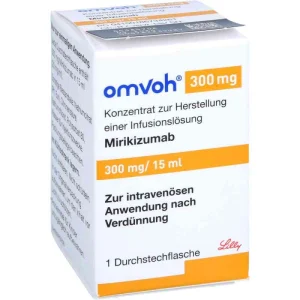
TM Owner Eli Lilly
Omvoh 300mg Injection
Global Shipping : Reliable Global Distribution Network
Express Delivery : Priority Shipping for Every Order
Secure Payments : Trusted Payment Protection System
 Disclaimer

Secure Handling
24/7 Worldwide Support

Global Access
Worldwide Access to Health

Cold-Chain Expert
Excellence in Cold-Chain

Trusted Supply
Certified Medical Supply
Indications & Clinical Uses
- Omvoh 300 mg is a formulation of mirikizumab, a monoclonal antibody that blocks interleukin-23 (IL-23), a protein involved in the inflammation that drives certain bowel diseases.
- In the US, Omvoh is approved for adults with moderately to severely active ulcerative colitis who have not responded well enough to, or cannot tolerate, other treatments, and it has subsequently also been approved for moderately to severely active Crohn's disease in adults in some markets - check with the prescriber which condition it is being used for.
- Treatment starts with intravenous infusions given in a hospital or infusion centre approximately every four weeks for the first three doses, after which patients typically switch to a smaller subcutaneous injection given every four weeks, which can often be self-administered once training has been given.
- Omvoh is not approved for children.
Side Effects
- The most commonly reported side effects of Omvoh are upper respiratory infections (such as colds), headache, joint pain (arthralgia), rash, and injection-site reactions once patients move onto the self-injected maintenance doses.
- Because Omvoh dampens part of the immune system, it can increase the risk of infections, so fever, persistent cough, or infection symptoms that do not improve should be reported promptly.
- Seek urgent medical attention for signs of a serious allergic reaction during or after an infusion or injection, such as facial or throat swelling, severe rash, dizziness, or difficulty breathing.
- Liver enzyme increases have also been reported and may need blood test monitoring.
- There is no boxed warning on the Omvoh label.
- Rotate self-injection sites between the abdomen, thigh, or upper arm to reduce local reactions.
Precautions & Warnings
- Before starting Omvoh, the healthcare provider will screen for tuberculosis and hepatitis B, since suppressing part of the immune system can allow a dormant infection to reactivate, and will ask about any current or recurring infections, which may need to clear up first.
- Live vaccines should be avoided during treatment, and it is recommended that vaccinations be brought up to date before starting.
- People with active, serious infections should not begin Omvoh until the infection is treated.
- There is limited experience with Omvoh in pregnancy and breastfeeding, so it should only be used if the expected benefit outweighs any possible risk, and this should be discussed with the prescriber.
- No specific driving restriction is listed, but patients who feel unwell after an infusion should avoid driving until they feel normal again.
Avoid Interactions
- Live vaccines (such as the shingles, yellow fever, or MMR vaccines) should not be given while using Omvoh, because the weakened or live organisms in the vaccine could cause an infection in someone with a suppressed immune response; inactivated vaccines are generally considered safe but should be discussed with the prescriber first.
- There are no major documented drug-metabolism interactions with common oral medicines, but combining Omvoh with other biologic therapies or strong immunosuppressants that also reduce immune function is generally avoided because it may raise the risk of serious infection without added benefit.
- Always tell the healthcare team about every prescription medicine, over-the-counter product, herbal remedy, and planned vaccination before an infusion or injection, so timing can be adjusted if needed.
References
Frequently Asked Questions
Omvoh (mirikizumab) treats moderately to severely active ulcerative colitis in adults, and in some markets it is also approved for Crohn's disease. It works by blocking interleukin-23, a protein that drives gut inflammation.
Treatment starts with three intravenous infusions about four weeks apart in a clinic. After that, most people switch to a subcutaneous injection every four weeks, which can often be self-given at home after training.
Common side effects include colds, headache, joint pain, rash, and injection-site reactions. Report fever, ongoing infection symptoms, or signs of a severe allergic reaction, such as facial swelling or trouble breathing, right away.
Avoid live vaccines while on Omvoh, since your immune response is partly suppressed. Tell your doctor about any current infection before starting, and mention all other medicines, especially other immune-suppressing drugs.
The first three doses are given as an intravenous infusion in a clinic, roughly every four weeks, while you are monitored for reactions. Afterwards, most patients move to a simpler subcutaneous injection instead of continuing infusions.
Omvoh is intended for long-term maintenance treatment in adults with ulcerative colitis or Crohn's disease as long as it continues to work and is tolerated. It is not currently approved for use in children.

Trusted & Reliable – Your Partner in Global Distribution.
We provide comprehensive lines of pharmaceutical products to support all your healthcare distribution needs.


