

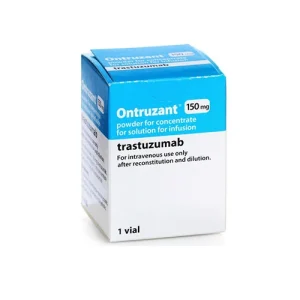
TM Owner Samsung Bioepis
Ontruzant 150mg Vial
Global Shipping : Reliable Global Distribution Network
Express Delivery : Priority Shipping for Every Order
Secure Payments : Trusted Payment Protection System
 Disclaimer

Secure Handling
24/7 Worldwide Support

Global Access
Worldwide Access to Health

Cold-Chain Expert
Excellence in Cold-Chain

Trusted Supply
Certified Medical Supply
Indications & Clinical Uses
- Ontruzant 150 mg is a brand of trastuzumab-dttb, a biosimilar of the reference biologic Herceptin, from a class of medicines called HER2-targeted monoclonal antibodies.
- It is approved for adults with HER2-overexpressing breast cancer, used after surgery (adjuvant) or for metastatic disease, usually combined with other chemotherapy, and for metastatic cancer of the stomach or gastroesophageal junction that overexpresses HER2 and has not previously been treated with a HER2-targeted medicine.
- A biosimilar is a biologic medicine shown to be highly similar to its reference product, with no clinically meaningful difference in safety or effectiveness; Ontruzant is developed and manufactured by Samsung Bioepis and marketed in the United States under licence by Organon.
- Ontruzant is given only in a hospital or specialist cancer unit by trained staff; it is never self-administered.
Side Effects
- Ontruzant, like all trastuzumab products, carries a boxed warning covering three risks: cardiomyopathy (weakening of the heart muscle that can lead to heart failure), highest when combined with anthracycline chemotherapy such as doxorubicin; infusion reactions and pulmonary toxicity, including severe hypersensitivity, interstitial lung disease and, rarely, fatal respiratory failure; and embryo-fetal toxicity, since exposure during pregnancy can cause low amniotic fluid, underdeveloped lungs and newborn death.
- Common side effects include headache, diarrhoea, nausea, chills, fever, rash, cough and low blood counts.
- Seek urgent help for chest pain, leg swelling, sudden weight gain, severe breathlessness, or any allergic reaction during or shortly after an infusion; report these to your cancer care team immediately.
Precautions & Warnings
- Left ventricular ejection fraction, a measure of the heart's pumping strength, is checked before starting Ontruzant and monitored regularly throughout treatment; treatment is usually paused or stopped if heart function drops significantly.
- Pregnancy must be ruled out before starting therapy in anyone who could become pregnant, and effective contraception is required during treatment and for 7 months after the last dose, because of the risk to an unborn baby.
- Use with caution if you have pre-existing lung or heart disease.
- Infusion reactions are more likely with the first dose, so it is given slowly under close observation; later infusions may be shorter if earlier ones were well tolerated.
- Ontruzant is for intravenous infusion only and must never be given as a rapid injection or bolus.
Avoid Interactions
- Combining Ontruzant with anthracycline chemotherapy drugs, such as doxorubicin or epirubicin, substantially raises the risk of heart damage, so these are generally avoided together, or used only with very close cardiac monitoring and a gap between treatments.
- Tell your healthcare provider about every other medicine and supplement you take, including any other cancer treatments, since combination regimens are planned to limit added toxicity.
- There is no clear evidence that Ontruzant interacts with common non-chemotherapy drugs through liver enzyme pathways, but any new medicine, including over-the-counter products, should be discussed with your cancer care team first.
- Live vaccines are generally avoided during active treatment because of possible effects on the immune system; ask your team about vaccination timing.
References
Frequently Asked Questions
Ontruzant (trastuzumab-dttb) is a biosimilar to Herceptin used for HER2-positive breast cancer, after surgery or for metastatic disease, and for HER2-positive metastatic stomach or gastroesophageal junction cancer in adults. It works by targeting the HER2 protein that drives these cancers.
Ontruzant is given as an intravenous infusion by a cancer care team, usually every one to three weeks depending on your regimen. The first infusion is given slowly with close monitoring; it is never a tablet or a dose you give yourself.
Headache, diarrhoea, nausea, chills and fever are common with Ontruzant. It carries a boxed warning for heart failure (cardiomyopathy), infusion reactions and lung toxicity. Report chest pain, swelling, severe breathlessness or an allergic reaction to your team immediately.
Avoid combining Ontruzant with anthracycline chemotherapy drugs like doxorubicin, since together they sharply increase heart damage risk. Tell your care team about every other medicine you take, and ask about vaccine timing, since live vaccines are usually avoided during treatment.
Ontruzant is a biosimilar - a highly similar version of the reference biologic Herceptin (trastuzumab), made by Samsung Bioepis. Regulators have found no clinically meaningful difference in safety or effectiveness between Ontruzant and Herceptin.
Because of its boxed warning for cardiomyopathy, your heart's pumping function (ejection fraction) is checked before starting Ontruzant and at regular intervals during treatment. Treatment may be paused or stopped if your heart function drops significantly.

Trusted & Reliable – Your Partner in Global Distribution.
We provide comprehensive lines of pharmaceutical products to support all your healthcare distribution needs.


