

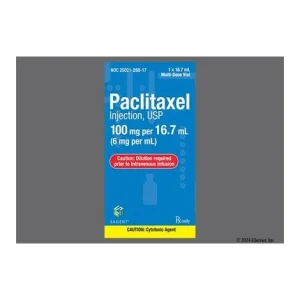
TM Owner Accord Healthcare
Onxol 100mg/16.7ml Vial
Global Shipping : Reliable Global Distribution Network
Express Delivery : Priority Shipping for Every Order
Secure Payments : Trusted Payment Protection System
 Disclaimer

Secure Handling
24/7 Worldwide Support

Global Access
Worldwide Access to Health

Cold-Chain Expert
Excellence in Cold-Chain

Trusted Supply
Certified Medical Supply
Indications & Clinical Uses
- Onxol was a US brand name for conventional (solvent-based) paclitaxel injection, 100 mg/16.7 mL (6 mg/mL), a taxane chemotherapy medicine dissolved in polyoxyl 35 castor oil (Cremophor/Kolliphor) and dehydrated alcohol.
- THE ONXOL BRAND NAME HAS BEEN DISCONTINUED IN THE UNITED STATES; FDA Federal Register records confirm this was a manufacturer marketing decision, not a withdrawal for safety or effectiveness reasons, and the identical conventional paclitaxel formulation continues to be supplied generically, including by Accord Healthcare, as 'Paclitaxel Injection.' This is a CRITICAL DISTINCTION from albumin-bound (nab) paclitaxel products such as Abraxane: the two formulations have different concentrations, premedication needs and dosing, and the label states they must never be substituted for one another.
- Conventional paclitaxel is approved for ovarian cancer, breast cancer, non-small cell lung cancer and AIDS-related Kaposi's sarcoma in adults, given only by intravenous infusion in a hospital or oncology clinic.
Side Effects
- Conventional paclitaxel (the Onxol formulation) carries a boxed warning for anaphylaxis and severe hypersensitivity reactions - including dangerously low blood pressure, breathing difficulty, swelling and hives - reported in 2 to 4% of patients even with premedication, and occasionally fatal; because of the Cremophor-based vehicle, all patients receive a corticosteroid, an antihistamine and an H2-blocker before every dose.
- Severe bone marrow suppression, especially low white blood cell counts, is also a boxed-warning risk and can lead to serious infection.
- Other very common effects include hair loss, numbness or tingling in the hands and feet, muscle and joint pain, and nausea.
- Seek urgent help for facial swelling, wheeze, chest tightness, fever, or signs of infection during or shortly after treatment, and report worsening numbness to your care team.
Precautions & Warnings
- This paclitaxel must not be given to anyone with a history of severe hypersensitivity to paclitaxel or polyoxyl 35 castor oil, or with a baseline neutrophil count below 1,500 cells/mm3 for solid tumours (below 1,000 for Kaposi's sarcoma).
- Dose reduction is needed with significant liver impairment, since the drug is cleared by the liver.
- Rare but serious heart conduction abnormalities have occurred, occasionally requiring a pacemaker, so cardiac monitoring is used in at-risk patients.
- It can harm an unborn baby and is not used in pregnancy; effective contraception is required during treatment.
- Because the vehicle can leach plasticiser from PVC equipment, non-PVC infusion sets are used.
- This medicine is for intravenous infusion only, given over 3 to 24 hours depending on the regimen, and must never be given as a rapid injection.
Avoid Interactions
- Conventional paclitaxel is broken down mainly by liver enzymes CYP2C8 and CYP3A4, so strong inhibitors of these enzymes - including ketoconazole, itraconazole, clarithromycin and ritonavir - can raise paclitaxel levels and the risk of severe side effects, while strong inducers such as rifampin and carbamazepine can reduce its effect; tell your healthcare provider about all medicines, including antifungals and antibiotics.
- Given with doxorubicin, paclitaxel can raise doxorubicin blood levels, so the order and timing of drugs in a chemotherapy regimen is carefully planned.
- Do not confuse this conventional paclitaxel with albumin-bound (nab) paclitaxel products such as Abraxane: the two are not interchangeable, have different premedication requirements, and substituting one for the other without specialist guidance could cause a serious dosing error.
References
Frequently Asked Questions
Onxol was a US brand of conventional paclitaxel, a chemotherapy drug used for ovarian cancer, breast cancer, non-small cell lung cancer and AIDS-related Kaposi's sarcoma. The Onxol brand name is now discontinued in the US, but the same paclitaxel formulation is still sold generically.
This paclitaxel is given as an intravenous infusion in a hospital or clinic, usually lasting 3 to 24 hours depending on the cancer being treated. You always receive steroid and antihistamine premedication first to reduce the risk of an allergic reaction.
Hair loss, numbness or tingling in the hands and feet, and joint or muscle pain are very common. This paclitaxel carries a boxed warning for severe allergic reactions and for dangerously low white blood cell counts, which raise infection risk.
Avoid strong CYP3A4/CYP2C8 inhibitors like ketoconazole and clarithromycin, which raise paclitaxel levels, and inducers like rifampin, which weaken it. Never confuse or substitute this conventional paclitaxel with albumin-bound (nab) paclitaxel products such as Abraxane.
No. Onxol/conventional paclitaxel is dissolved in a Cremophor-based solvent and needs steroid premedication, while Abraxane is albumin-bound (nab) paclitaxel with a different concentration and dosing. The label warns they must never be substituted for one another.
Blood counts are checked before each cycle to watch for severe low white cell counts, since this is common and can be dangerous. You are also monitored closely during every infusion for early signs of an allergic reaction.

Trusted & Reliable – Your Partner in Global Distribution.
We provide comprehensive lines of pharmaceutical products to support all your healthcare distribution needs.


