

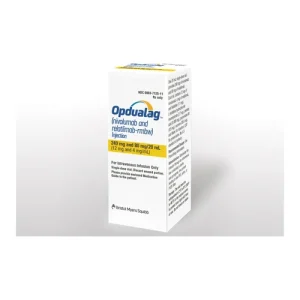
TM Owner Bristol Myers Squibb
Opdualag 240mg/80mg Vial
Global Shipping : Reliable Global Distribution Network
Express Delivery : Priority Shipping for Every Order
Secure Payments : Trusted Payment Protection System
 Disclaimer

Secure Handling
24/7 Worldwide Support

Global Access
Worldwide Access to Health

Cold-Chain Expert
Excellence in Cold-Chain

Trusted Supply
Certified Medical Supply
Indications & Clinical Uses
- Opdualag is a fixed-dose combination of nivolumab, a PD-1 checkpoint-inhibitor antibody, and relatlimab-rmbw, a LAG-3 checkpoint-inhibitor antibody, supplied together in one 240 mg/80 mg vial.
- It is approved in the United States for adult and paediatric patients 12 years of age or older weighing at least 40 kg with unresectable or metastatic melanoma.
- Opdualag is a first-in-class LAG-3 combination and is not approved for other tumour types; it is not used with additional checkpoint inhibitors such as ipilimumab.
- It is given only by intravenous infusion in a hospital or specialist oncology setting and must never be self-injected or given by any other route.
Side Effects
- The most common side effects of Opdualag, each affecting more than 1 in 5 people, are musculoskeletal pain (about 45%), fatigue (about 39%), rash (about 28%), itching (about 25%) and diarrhoea (about 24%).
- Opdualag can cause immune-mediated adverse reactions that may be severe or fatal and can involve almost any organ, including the lungs (pneumonitis), bowel (colitis), liver (hepatitis), kidneys (nephritis), hormone glands (thyroid, adrenal and pituitary disorders, diabetes), skin, nervous system and eyes.
- There is no boxed warning on the current Opdualag label, but these immune-related reactions are the main safety concern described in the warnings section.
- Tell the care team immediately about new cough or breathlessness, persistent diarrhoea or abdominal pain, yellowing of the skin or eyes, unusual tiredness, or vision changes, as prompt treatment with corticosteroids improves outcomes.
Precautions & Warnings
- Opdualag is given only as an intravenous infusion, over about 30 minutes, in a hospital or clinic - it must never be given by any other route and is not self-administered.
- Liver, kidney, thyroid and other hormone function are checked regularly during treatment to catch immune-related inflammation early.
- Opdualag can cause harm to an unborn baby, so females of reproductive potential should use effective contraception during treatment and for at least 5 months after the last dose, and breast-feeding is not recommended during this period.
- A history of autoimmune disease or organ transplant should be reviewed with the oncology team before starting, since Opdualag can trigger organ rejection or worsen autoimmune conditions, and complications including graft-versus-host disease have occurred with nivolumab used around allogeneic stem-cell transplantation.
- Live vaccines should be avoided during treatment.
Avoid Interactions
- Tell the oncology team about every other medicine, herbal product and supplement being used before and during Opdualag treatment.
- Corticosteroids or other immunosuppressants taken for reasons unrelated to a treatment side effect, before starting therapy, may reduce how well Opdualag works and are generally avoided unless clinically necessary; once an immune-mediated reaction develops, corticosteroids and sometimes other immunosuppressants are then used deliberately to treat it.
- Live attenuated vaccines should be avoided during treatment, as safety with concurrent use has not been established.
- There are no known food, alcohol or grapefruit interactions, since both components are antibodies rather than medicines broken down by liver enzymes.
- Opdualag must not be mixed with other medicines in the same infusion line.
References
Frequently Asked Questions
Opdualag combines nivolumab and relatlimab, two immunotherapy antibodies, to treat unresectable or metastatic melanoma in adults and children 12 and older weighing at least 40 kg. It is a first-in-class LAG-3 combination and is not approved for other cancers.
Opdualag is given as a single intravenous infusion over about 30 minutes in a hospital or cancer clinic, usually every 4 weeks. It is not injected at home and is not combined with other checkpoint inhibitors.
Very common Opdualag side effects include musculoskeletal pain, fatigue, rash, itching and diarrhoea. It can also cause serious immune-related inflammation of the lungs, bowel, liver, kidneys or hormone glands - report new breathlessness, abdominal pain or yellowing skin to your doctor right away.
Avoid live vaccines during Opdualag treatment, and tell your oncology team about every medicine you use. Starting steroids or other immune-suppressing drugs for unrelated reasons beforehand may reduce how well Opdualag works.
Each Opdualag infusion takes about 30 minutes through a vein, given in a hospital or clinic every 4 weeks. Blood tests checking liver, kidney and thyroid function are done regularly to catch immune-related side effects early.
Opdualag can harm an unborn baby, so effective contraception is needed during treatment and for at least 5 months after the last dose. Breast-feeding is not recommended during this time. It is approved from age 12.

Trusted & Reliable – Your Partner in Global Distribution.
We provide comprehensive lines of pharmaceutical products to support all your healthcare distribution needs.


