

TM Owner VIVUS
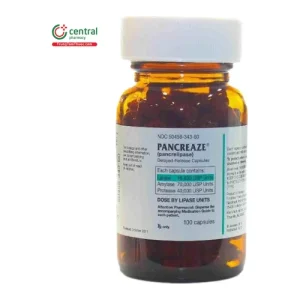
Pancreaze 10500 USP units Capsule
Global Shipping : Reliable Global Distribution Network
Express Delivery : Priority Shipping for Every Order
Secure Payments : Trusted Payment Protection System
 Disclaimer

Secure Handling
24/7 Worldwide Support

Global Access
Worldwide Access to Health

Cold-Chain Expert
Excellence in Cold-Chain

Trusted Supply
Certified Medical Supply
Indications & Clinical Uses
- Pancreaze (pancrelipase) delayed-release capsules are a pancreatic enzyme replacement therapy containing lipase, protease and amylase enzymes that help digest fats, proteins and carbohydrates.
- It is approved in the US for exocrine pancreatic insufficiency in adults and children, most commonly due to cystic fibrosis, chronic pancreatitis or pancreatic surgery.
- Capsules are supplied in several strengths, including the 10,500 USP lipase unit strength in this listing, so the exact dose is individualised to the patient's weight, diet and stool symptoms.
- Capsules are taken with every meal and snack; for people who cannot swallow capsules whole, the contents can be sprinkled on a small amount of acidic soft food, but must never be crushed or chewed, as this destroys the protective enteric coating and can irritate the mouth.
- It is self-administered at home under specialist (gastroenterology) guidance with periodic dose review.
Side Effects
- The most commonly reported side effects of Pancreaze are gastrointestinal: diarrhoea, vomiting, abdominal pain, nausea, constipation and gas.
- Serious allergic reactions, including anaphylaxis, have been reported and need urgent medical attention if you develop rash, swelling of the face or throat, or difficulty breathing.
- A rare but serious bowel condition called fibrosing colonopathy, which causes strictures of the large intestine, has been linked to very high pancreatic enzyme doses, particularly above 6,000 lipase units per kilogram per meal in young children with cystic fibrosis; report new or worsening abdominal pain, distension or changed bowel habit promptly.
- Because Pancreaze is made from pig pancreas, there is a theoretical risk of transmitting viral disease from the source animals.
- There is no boxed warning on the current label.
- Take every dose with food or fluid and swallow capsules whole; never chew or crush them.
Precautions & Warnings
- Do not exceed the pancreatic enzyme dose recommended by your healthcare provider, since very high doses raise the risk of fibrosing colonopathy and colonic strictures, especially in children.
- Oral or intestinal mucosal irritation can occur if the enteric-coated granules are chewed or held in the mouth, so swallow capsules whole or mix the granules only with a small amount of acidic soft food such as applesauce and swallow immediately without chewing.
- Uric acid levels can rise with pancreatic enzyme therapy, particularly in cystic fibrosis patients on high doses; monitoring may be advised.
- Pancreaze is derived from porcine pancreatic tissue, so discuss any history of pork allergy or hypersensitivity to pancreatic enzyme products with your healthcare provider before starting.
- There are no specific driving restrictions.
- Pregnancy and breastfeeding data are limited, so use should be discussed with a healthcare provider; treatment is generally continued in pregnancy when clinically needed for enzyme replacement.
Avoid Interactions
- There are no well-established drug-drug interaction studies for Pancreaze, but because it affects fat, protein and carbohydrate digestion, it can change the absorption of orally taken vitamins, particularly the fat-soluble vitamins A, D, E and K, so supplementation and monitoring may be needed in some patients.
- Do not mix Pancreaze granules into food or liquid that is not mildly acidic (pH 4.5 or below), such as milk, or hold the mixture in the mouth, as this can inactivate the enzymes or irritate the mucosa.
- There is no need to avoid alcohol or grapefruit specifically, but tell your healthcare provider and pharmacist about all other medicines, enzyme products and supplements you take so dosing can be adjusted if you are on multiple pancreatic enzyme products or planning surgery.
References
Frequently Asked Questions
Pancreaze (pancrelipase) replaces digestive enzymes in adults and children with exocrine pancreatic insufficiency, often caused by cystic fibrosis, chronic pancreatitis or pancreatic surgery. It supplies lipase, protease and amylase to help the body digest fats, proteins and carbohydrates from meals and snacks.
Pancreaze capsules are swallowed whole with every meal and snack, with enough liquid. If you can't swallow capsules, open them and sprinkle the granules on a small amount of acidic soft food like applesauce and swallow right away without chewing. Never crush or chew the granules.
Common Pancreaze side effects are diarrhoea, vomiting, stomach pain, nausea, constipation and gas. Rarely, very high doses have been linked to fibrosing colonopathy, a bowel-narrowing condition, mainly in children. Get urgent help for severe abdominal pain, new constipation, or signs of allergic reaction like rash or swelling.
Don't take more Pancreaze than prescribed, since very high doses raise the risk of fibrosing colonopathy, a serious bowel condition. Never chew or crush the capsules or mix the granules into non-acidic food or drink such as milk, since this can destroy the enzymes or irritate your mouth.
If you miss a Pancreaze dose, take it with your next meal or snack; don't take an extra dose to make up for a missed one. Because Pancreaze only works when taken with food, a dose missed without eating does not need to be replaced separately.
Yes, Pancreaze is approved for infants, children and adults with exocrine pancreatic insufficiency, including cystic fibrosis. Dosing is based on body weight, fat intake and symptoms, and is capped to avoid fibrosing colonopathy risk. A pediatric gastroenterologist or CF specialist should set and review the dose.

Trusted & Reliable – Your Partner in Global Distribution.
We provide comprehensive lines of pharmaceutical products to support all your healthcare distribution needs.


