

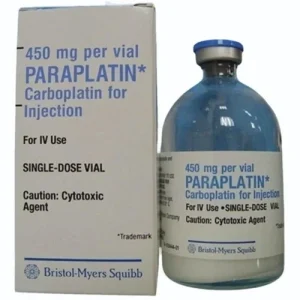
TM Owner Accord BioPharma Inc. (mfd. by Intas Pharmaceuticals Ltd, India)
Paraplatin 450mg/45ml Vial
Global Shipping : Reliable Global Distribution Network
Express Delivery : Priority Shipping for Every Order
Secure Payments : Trusted Payment Protection System
 Disclaimer

Secure Handling
24/7 Worldwide Support

Global Access
Worldwide Access to Health

Cold-Chain Expert
Excellence in Cold-Chain

Trusted Supply
Certified Medical Supply
Indications & Clinical Uses
- Paraplatin (carboplatin) 450 mg/45 mL injection is a platinum-based chemotherapy agent approved for the treatment of advanced ovarian carcinoma: as initial therapy in combination with other approved chemotherapy agents, typically cyclophosphamide, and as palliative treatment for patients whose disease has recurred after prior chemotherapy, including platinum-based regimens.
- The current active US label for the Paraplatin brand is held by Accord BioPharma Inc. (manufactured by Intas Pharmaceuticals, India), not Bristol-Myers Squibb, which originally developed and marketed the brand; Drugs.com separately notes the original BMS-branded Paraplatin as discontinued in the US, so brand availability should be checked before dispensing.
- Carboplatin is also widely used, as generic carboplatin, in other cancers such as lung, bladder and head and neck cancer, though these are not FDA-approved indications specifically for the Paraplatin brand.
- Paraplatin is given only by intravenous infusion in a hospital or oncology setting.
Side Effects
- BOXED WARNING: Paraplatin carries an FDA boxed warning that bone marrow suppression is dose-related and may be severe, leading to infection and/or bleeding, and that anaphylactic-like reactions to carboplatin can occur within minutes of administration, with symptoms such as facial swelling, wheezing, low blood pressure and rapid heartbeat.
- Very common reactions include neutropenia (about 96% of patients), nausea and vomiting (93%), anaemia (90%), thrombocytopenia (66%, severe in about a third) and hair loss (about half of patients); asthenia (weakness) is also common.
- Peripheral neuropathy risk is higher in patients over 65 and with prior cisplatin treatment.
- Kidney function and hearing can also be affected, particularly with prior platinum or aminoglycoside exposure.
- Report fever, unusual bruising or bleeding, signs of infection, or any allergic-type reaction (facial swelling, difficulty breathing, dizziness) to the treatment team immediately, including during the infusion itself, since anaphylactic-like reactions can occur while the infusion is running.
Precautions & Warnings
- Paraplatin should not be given to patients with severe bone marrow depression, significant bleeding, or a history of severe allergic reaction to carboplatin, cisplatin or other platinum compounds.
- Blood counts (neutrophils, platelets, haemoglobin) are checked before each cycle and monitored closely, since bone marrow suppression is the main dose-limiting toxicity; doses are reduced in patients with reduced kidney function, since carboplatin clearance depends on renal function and dosing is often calculated using a formula based on kidney function and target drug exposure.
- Anti-emetic premedication is recommended, as nausea and vomiting are very common.
- Carboplatin is Pregnancy Category D and can cause fetal harm; it should be avoided in pregnancy, and effective contraception is advised during treatment for people who could become pregnant or father a child.
- Do not use aluminium-containing needles, syringes or infusion sets to prepare or give carboplatin, as aluminium can inactivate the drug and reduce its effect.
- This is a hospital-administered infusion, not a self-injected medicine.
Avoid Interactions
- Combining Paraplatin with other drugs that suppress bone marrow function or cause kidney toxicity, such as other chemotherapy agents or nephrotoxic antibiotics, can increase the risk of severe blood count drops or kidney injury, so blood counts and kidney function are monitored closely during combination treatment.
- Aminoglycoside antibiotics and other ototoxic drugs given around the time of carboplatin can add to the risk of hearing loss or ringing in the ears (ototoxicity).
- Live vaccines should generally be avoided during and for a period after chemotherapy, since the immune response may be reduced.
- Paraplatin must never be prepared, diluted or administered using aluminium-containing needles or intravenous sets, as this inactivates the drug and can cause a loss of potency and a black precipitate to form.
- Tell the oncology team about every other medicine, supplement and recent vaccination before each treatment cycle.
References
Frequently Asked Questions
Paraplatin (carboplatin) is a platinum chemotherapy used to treat advanced ovarian cancer, either as initial treatment combined with other chemotherapy or alone for cancer that has come back after earlier treatment. It's given by a cancer specialist as part of a planned chemotherapy cycle.
Paraplatin is given only as an intravenous infusion in a hospital or cancer treatment centre, usually once every 4 weeks, with the dose calculated from your kidney function. Anti-nausea medicine is usually given beforehand, since nausea and vomiting are very common with treatment.
Paraplatin carries a boxed warning for severe bone marrow suppression, which can cause serious infection or bleeding, and for anaphylactic-like reactions that can occur within minutes of the infusion. Very common effects include low blood counts, nausea, vomiting, tiredness and hair loss. Report fever or unusual bleeding right away.
Avoid live vaccines during Paraplatin treatment, since your immune system is weakened. Other drugs that affect kidney function or hearing, such as certain antibiotics, can add to Paraplatin's risks and need close monitoring. Paraplatin must never be given through aluminium-containing needles or IV equipment, which inactivates the drug.
Before every Paraplatin cycle, your blood counts (white cells, platelets, haemoglobin) and kidney function are checked, since your dose is calculated from kidney function and bone marrow suppression is the main risk. Treatment may be delayed or the dose lowered if counts haven't recovered.
No. Paraplatin is Pregnancy Category D and can harm an unborn baby, so it should be avoided during pregnancy. Effective contraception is recommended during treatment for anyone who could become pregnant or father a child, and breastfeeding should be discussed with your oncology team.

Trusted & Reliable – Your Partner in Global Distribution.
We provide comprehensive lines of pharmaceutical products to support all your healthcare distribution needs.


