

TM Owner Servier
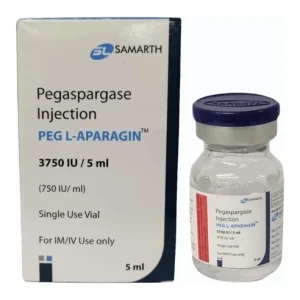
Pegaspargase Injection 3750 IU/5ml Vial
Global Shipping : Reliable Global Distribution Network
Express Delivery : Priority Shipping for Every Order
Secure Payments : Trusted Payment Protection System
 Disclaimer

Secure Handling
24/7 Worldwide Support

Global Access
Worldwide Access to Health

Cold-Chain Expert
Excellence in Cold-Chain

Trusted Supply
Certified Medical Supply
Indications & Clinical Uses
- No product is currently marketed under the proprietary brand name "Pegaspargase Injection" itself; this is the generic (INN-style) description of the active substance, pegaspargase, a pegylated form of L-asparaginase.
- The information here is taken from the approved US label for Oncaspar (pegaspargase), held by Servier Pharmaceuticals, which matches the manufacturer listed on this product's sheet.
- Oncaspar/pegaspargase is used as part of a multi-agent chemotherapy regimen for the first-line treatment of acute lymphoblastic leukaemia (ALL) in paediatric and adult patients, and for patients with ALL who have developed hypersensitivity to native (unmodified) forms of L-asparaginase.
- It reduces circulating asparagine, an amino acid leukaemia cells need to grow.
- This is a hospital/specialist-administered oncology medicine given by a cancer treatment team, never self-administered.
Side Effects
- Commonly reported reactions include allergic reactions (which can range from mild rash to anaphylaxis), elevated liver enzymes, raised bilirubin, high blood sugar (hyperglycaemia), abnormal blood clotting (coagulopathy), and inflammation of the pancreas (pancreatitis).
- There is no boxed warning on the current Oncaspar/pegaspargase label, though anaphylaxis and serious hypersensitivity reactions are highlighted as a major warning requiring close observation.
- Blood clots, including rare clots in the veins of the brain (sagittal sinus thrombosis), can occur and need urgent evaluation.
- Patients are watched for at least one hour after each dose in a setting equipped to manage a severe allergic reaction.
- Report severe abdominal pain (possible pancreatitis), unusual bleeding or bruising, sudden weakness, severe headache, or any swelling, rash, breathing difficulty or dizziness during or after an infusion immediately to the treatment team.
Precautions & Warnings
- Pegaspargase is contraindicated in patients with a history of serious hypersensitivity reactions to pegaspargase, serious thrombosis, pancreatitis, or serious haemorrhagic events during previous L-asparaginase therapy, and in severe hepatic impairment.
- Liver function, coagulation parameters (fibrinogen, PT/PTT) and blood glucose are monitored throughout treatment, and the drug is stopped if pancreatitis, serious thrombosis, or severe glucose intolerance develops; glucose intolerance can occasionally be irreversible.
- It is given by intramuscular injection (with volume limited per injection site) or by intravenous infusion over 1-2 hours, and resuscitation equipment must be available because of the anaphylaxis risk.
- Pregnancy should be avoided during treatment as pegaspargase can harm a developing fetus; effective contraception is advised for patients of reproductive potential, and breastfeeding is not recommended during treatment.
- Store refrigerated at 2°C to 8°C; do not use if the product has been frozen, exposed to room temperature for more than 48 hours, or vigorously shaken.
Avoid Interactions
- No formal drug interaction studies have been conducted with pegaspargase, but it is known to increase the risk of glucocorticoid-related toxicities, including bone damage (osteonecrosis), when corticosteroids such as dexamethasone or prednisone are given as part of the same chemotherapy regimen.
- Because pegaspargase affects clotting factors made by the liver, caution is needed with other drugs that affect bleeding risk, such as anticoagulants or antiplatelet agents, and blood clotting is monitored closely.
- Live vaccines should generally be avoided during and after chemotherapy because of reduced immune response and infection risk; this is managed by the treating oncology team.
- Tell the treatment team about all other chemotherapy agents, medicines and supplements being taken, since pegaspargase is always given as part of a combination regimen that must be carefully coordinated.
References
Frequently Asked Questions
Pegaspargase, marketed as Oncaspar, treats acute lymphoblastic leukaemia (ALL) as part of a combination chemotherapy plan. It is used first-line and also for patients who became allergic to older, unmodified asparaginase medicines.
A cancer care team gives pegaspargase, either as an intramuscular injection or as an intravenous infusion over 1 to 2 hours. It is given as part of a multi-drug chemotherapy cycle in a hospital or specialist clinic, not at home.
Allergic reactions, including anaphylaxis, are the main concern, so patients are watched for an hour after each dose. Other effects include high blood sugar, abnormal blood clotting, raised liver enzymes and pancreatitis, which causes severe abdominal pain needing urgent review.
Because pegaspargase can cause serious allergic reactions and affects blood clotting, it is avoided in patients with a history of severe reactions, blood clots or pancreatitis on prior asparaginase therapy. Steroids given alongside it raise the risk of bone damage (osteonecrosis).
Yes. Liver function, blood clotting factors and blood sugar are checked regularly during treatment, since pegaspargase can cause raised liver enzymes, coagulopathy and hyperglycaemia. Treatment is stopped if serious pancreatitis or clotting problems develop.
Pegaspargase can harm a developing baby, so pregnancy is avoided during treatment and effective contraception is recommended. Breastfeeding is also not recommended while receiving pegaspargase, so discuss family planning with the cancer care team before starting.

Trusted & Reliable – Your Partner in Global Distribution.
We provide comprehensive lines of pharmaceutical products to support all your healthcare distribution needs.


