

TM Owner Merck & Co.
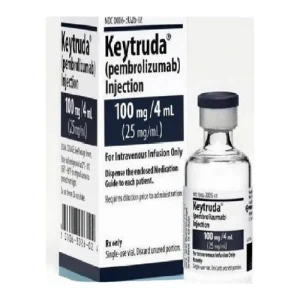
Pembrolizumab IV 100mg/4ml Vial
Global Shipping : Reliable Global Distribution Network
Express Delivery : Priority Shipping for Every Order
Secure Payments : Trusted Payment Protection System
 Disclaimer

Secure Handling
24/7 Worldwide Support

Global Access
Worldwide Access to Health

Cold-Chain Expert
Excellence in Cold-Chain

Trusted Supply
Certified Medical Supply
Indications & Clinical Uses
- Pembrolizumab 100 mg/4 mL, marketed as Keytruda by Merck & Co. (through its subsidiary Merck Sharp & Dohme), is a monoclonal antibody that blocks PD-1, a checkpoint protein that helps some cancers hide from the immune system.
- Keytruda has US approvals across many cancer types, either alone or combined with chemotherapy, targeted therapy or radiotherapy, including melanoma, non-small cell lung cancer, head and neck cancer, classical Hodgkin lymphoma, urothelial (bladder) cancer, and certain gastric, cervical, renal, endometrial, breast and other solid tumours, as well as microsatellite instability-high or mismatch-repair-deficient cancers regardless of tumour site.
- Exact eligible indications, biomarker requirements and combination partners vary by cancer type and stage, so use follows the precise label wording for that cancer.
- Keytruda is given only in a hospital or specialist cancer clinic, by intravenous infusion, and is not self-administered.
- No pembrolizumab biosimilar is currently approved.
Side Effects
- Keytruda commonly causes fatigue, musculoskeletal pain, decreased appetite, itching, diarrhoea, nausea, rash and fever; frequency varies with the cancer type and any combination therapy used.
- Keytruda has no boxed warning, but because it works through the immune system, it can cause immune-mediated reactions affecting almost any organ: lung inflammation (pneumonitis, cough, breathlessness), bowel inflammation (colitis, diarrhoea, blood in stool), liver inflammation (jaundice, dark urine), hormone gland problems (adrenal, thyroid or pituitary dysfunction, new diabetes), kidney inflammation (reduced urine, swelling), skin reactions, and rarer effects on the heart, nervous system, eyes, pancreas or muscles.
- Infusion reactions can also occur.
- These reactions can appear weeks to months after starting or stopping treatment and can become severe or life-threatening if untreated.
- Report any new symptom promptly, and seek urgent care for breathing difficulty, severe diarrhoea, yellowing skin or eyes, or unusual weakness.
Precautions & Warnings
- Keytruda must be given by intravenous infusion in a hospital or clinic setting under specialist supervision; it is never self-injected.
- There is no formal contraindication on the label, but treatment is withheld or permanently stopped for severe immune-mediated reactions, and corticosteroids are used to manage them.
- Keytruda can cause fetal harm, so effective contraception is required during treatment and for at least 4 months after the last dose; it should not be used in pregnancy, and breastfeeding is not recommended during and for 4 months after treatment.
- Before starting, patients are assessed for existing autoimmune disease, prior organ transplant and infections, as these increase the risk of complications.
- Liver, kidney, thyroid and blood glucose tests are monitored throughout treatment.
- Combining Keytruda with certain stem-cell transplants has been linked to graft-versus-host disease and should be discussed with the treating specialist.
Avoid Interactions
- Keytruda should not usually be combined with other medicines that suppress the immune system, such as long-term corticosteroids or other immunosuppressants, unless needed to manage a side effect, because this can reduce its effectiveness.
- Live vaccines should be avoided during treatment, as the combined effect with an active immune response is not established.
- Combining Keytruda with thalidomide plus dexamethasone for multiple myeloma is not recommended outside clinical trials.
- There are no established pharmacokinetic drug-drug interactions requiring dose adjustment, but tell your healthcare provider about every prescription medicine, over-the-counter product, herbal remedy and supplement you take, and about any prior or planned organ or stem-cell transplant, autoimmune condition or vaccination, before starting Keytruda, since these affect suitability and monitoring.
References
Frequently Asked Questions
Pembrolizumab, sold as Keytruda, is an immunotherapy that helps the immune system attack cancer cells. It treats many cancers, including melanoma, lung, head and neck, bladder and Hodgkin lymphoma, either alone or with chemotherapy. Your oncologist selects it based on your specific cancer type and biomarker results.
Pembrolizumab is given as an intravenous infusion in a hospital or cancer clinic, usually every 3 or 6 weeks depending on your treatment plan. You cannot inject it yourself. Each infusion typically takes about 30 minutes, and you'll be monitored during and afterward.
Common effects include tiredness, joint or muscle pain, itching, diarrhoea, nausea and rash. Because it works through the immune system, pembrolizumab can also cause inflammation of the lungs, bowel, liver, hormone glands or kidneys. Report new cough, severe diarrhoea, yellowing skin, or unusual weakness urgently.
Avoid live vaccines and other medicines that suppress the immune system unless your care team says otherwise, as they can reduce effectiveness. Tell your healthcare provider about all medicines, supplements, prior organ or stem-cell transplants and autoimmune conditions before starting pembrolizumab treatment.
You receive pembrolizumab through a vein over about 30 minutes in a clinic or hospital infusion unit. Staff monitor you for infusion reactions such as fever, chills or breathing changes. Blood tests checking liver, kidney, thyroid and blood sugar are done regularly throughout treatment.
No. Pembrolizumab can harm an unborn baby, so effective contraception is needed during treatment and for at least 4 months afterward. Breastfeeding is not recommended during treatment and for 4 months after the last dose. Discuss family planning with your oncologist before starting.

Trusted & Reliable – Your Partner in Global Distribution.
We provide comprehensive lines of pharmaceutical products to support all your healthcare distribution needs.


