

TM Owner Novartis
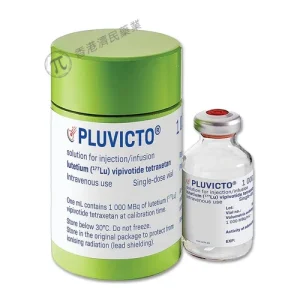
Pluvicto 1000mbq/ml Vial
Global Shipping : Reliable Global Distribution Network
Express Delivery : Priority Shipping for Every Order
Secure Payments : Trusted Payment Protection System
 Disclaimer

Secure Handling
24/7 Worldwide Support

Global Access
Worldwide Access to Health

Cold-Chain Expert
Excellence in Cold-Chain

Trusted Supply
Certified Medical Supply
Indications & Clinical Uses
- Pluvicto (lutetium Lu 177 vipivotide tetraxetan) is a radioligand therapy given by intravenous infusion by trained staff; it is a hospital or specialist treatment and is not taken at home.
- Each single-dose vial contains 1,000 MBq/mL (27 mCi/mL) at calibration, holding 7.4 GBq (200 mCi) plus or minus 10%.
- The US label lists two uses in adults with PSMA-positive prostate cancer: in combination with an androgen receptor pathway inhibitor for metastatic androgen pathway modulation-naive or -sensitive disease, and in patients previously treated with an androgen receptor pathway inhibitor and who are either appropriate for delaying taxane chemotherapy or have already had it.
- Patients are selected by PSMA PET imaging (for example with LOCAMETZ, a separate imaging agent).
- The dose is 7.4 GBq every 6 weeks, up to 6 doses or until progression or unacceptable toxicity.
- This summary is based on the US label.
Side Effects
- The most common side effects (20% or more of patients) are decreased lymphocytes (86%), decreased hemoglobin (68%), fatigue (51%), dry mouth (46%), decreased neutrophils (35%), nausea (35%) and decreased platelets (33%).
- Serious effects include bone marrow suppression (grade 3 to 4 low hemoglobin in 7% to 15%, low platelets in 3% to 9%, pancytopenia in 1.1%, and fatal bone marrow failure in 0.2% to 1.8%), kidney toxicity (grade 3 to 4 acute kidney injury in 1.3% to 3.4%), and other serious reactions in 20% to 37% including bleeding, sepsis and urinary tract infections.
- Pluvicto has no boxed warning on the US label.
- Report fever, bleeding, bruising, unusual tiredness or reduced urination to your treating team promptly.
Precautions & Warnings
- Pluvicto exposes the body to radiation, and the exposure is cumulative, so treatment is planned and monitored by a specialist team who handle it with waterproof gloves and radiation shielding.
- Blood counts and kidney function need monitoring because of bone marrow suppression and kidney toxicity.
- It can cause fetal harm; men with female partners of reproductive potential should use effective contraception during treatment and for 14 weeks after the last dose.
- It may also cause temporary or permanent infertility.
- There are no data on whether it passes into breast milk or its effects on the breastfed child.
- Patients must be PSMA-positive on PET imaging before treatment.
- Follow the radiation-safety instructions your treating team gives you.
- Vials are stored below 30°C, must not be frozen and are kept in lead-shielded packaging; the shelf life is 120 hours from calibration.
Avoid Interactions
- Laboratory data show vipivotide tetraxetan is not a substrate of cytochrome P450 enzymes, did not induce CYP1A2, 2B6 or 3A4 and did not inhibit CYP1A2, 2B6, 2C8, 2C9, 2C19, 2D6 or 3A in vitro, and is not a substrate of the transporters BCRP, P-gp, MATE1, MATE2-K, OAT1, OAT3 or OCT2.
- The label sections retrieved therefore list no specific drugs to avoid.
- Pluvicto is given in combination with an androgen receptor pathway inhibitor in the earlier-stage indication, as directed by your specialist.
- Because it is given only in a clinical setting, tell your oncology and nuclear medicine teams about every prescription medicine, non-prescription product and supplement you use.
References
Frequently Asked Questions
Pluvicto (lutetium Lu 177 vipivotide tetraxetan) treats adults with PSMA-positive metastatic prostate cancer. It is used with an androgen receptor pathway inhibitor in earlier disease, or after that treatment when delaying or following taxane chemotherapy. A PSMA PET scan confirms you are suitable.
Pluvicto (lutetium Lu 177 vipivotide tetraxetan) is given by intravenous infusion by trained staff. The dose is 7.4 GBq (200 mCi) every 6 weeks, for up to 6 doses or until the disease progresses or side effects become unacceptable. It is not taken at home.
Very common Pluvicto side effects include low lymphocytes (86%), low hemoglobin (68%), fatigue (51%), dry mouth (46%), nausea (35%) and low platelets (33%). Serious effects are bone marrow suppression and kidney toxicity. Report fever, bleeding, bruising or reduced urination straight away.
Before Pluvicto (lutetium Lu 177 vipivotide tetraxetan), you need a PSMA PET scan to confirm your cancer is PSMA-positive. During treatment your blood counts and kidney function are monitored by your care team, because bone marrow suppression and kidney toxicity can occur. Report any fever or bleeding.
Yes. Pluvicto (lutetium Lu 177 vipivotide tetraxetan) is radioactive, and staff handle it with waterproof gloves and shielding. Radiation exposure is cumulative, so treatment is limited to up to 6 doses. Follow the radiation-safety instructions your treating team gives you, and ask them any questions.
Yes. Pluvicto can cause fetal harm and may cause temporary or permanent infertility. Men with female partners of reproductive potential should use effective contraception during treatment and for 14 weeks after the last dose. Discuss fertility options with your healthcare provider.

Trusted & Reliable – Your Partner in Global Distribution.
We provide comprehensive lines of pharmaceutical products to support all your healthcare distribution needs.


