

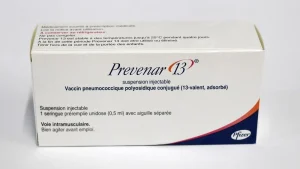
TM Owner Pfizer
Prevnar 13 0.5mL Injection
Global Shipping : Reliable Global Distribution Network
Express Delivery : Priority Shipping for Every Order
Secure Payments : Trusted Payment Protection System
 Disclaimer

Secure Handling
24/7 Worldwide Support

Global Access
Worldwide Access to Health

Cold-Chain Expert
Excellence in Cold-Chain

Trusted Supply
Certified Medical Supply
Indications & Clinical Uses
- Prevnar 13 0.5 mL (pneumococcal 13-valent conjugate vaccine, Pfizer/Wyeth) is an injectable vaccine for active immunization against invasive disease, and in adults pneumonia, caused by 13 serotypes of Streptococcus pneumoniae (1, 3, 4, 5, 6A, 6B, 7F, 9V, 14, 18C, 19A, 19F, 23F).
- It is approved for infants from 6 weeks of age through a four-dose series, for children and adolescents 6 through 17 years as a single dose, and for adults 18 years and older; in young children it also helps prevent pneumococcal middle-ear infection (otitis media) caused by the vaccine serotypes.
- Prevnar 13 is given only by a healthcare provider, by intramuscular injection, and is not for self-administration.
- It is not interchangeable with the newer, broader-coverage Prevnar 20, which protects against seven additional serotypes not in Prevnar 13 - always confirm which brand a patient previously received before giving a further dose.
Side Effects
- In infants and toddlers receiving the four-dose series, irritability (more than 7 in 10 doses), injection-site tenderness (more than half), decreased appetite and sleep disturbance (more than 4 in 10) are very common; fever and injection-site redness or swelling occur less often.
- In children 5 to 17 years, injection-site tenderness affects more than 8 in 10, with irritability and decreased appetite also common.
- In adults, injection-site pain (more than half), fatigue, headache and muscle pain (more than 2 in 10) are the most frequent reactions; vomiting, fever, chills and rash occur less commonly.
- Prevnar 13 carries no boxed warning.
- Seek urgent medical help for facial or throat swelling, difficulty breathing, wheezing, or a fast heartbeat after vaccination, which can signal a severe allergic reaction.
Precautions & Warnings
- Prevnar 13 must not be given to anyone with a severe allergic reaction to a previous dose, to any vaccine component, or to any diphtheria toxoid-containing vaccine.
- Epinephrine and other treatment for anaphylaxis must be available whenever it is given.
- People with weakened immunity, including HIV infection, chemotherapy, chronic renal failure or immunosuppressive therapy, may have a reduced antibody response and should still be vaccinated on schedule where recommended.
- Apnoea has been observed following intramuscular vaccination in some infants born prematurely, so monitoring for 48-72 hours is advised in this group.
- Vaccination should generally be deferred during moderate or severe acute illness.
- Prevnar 13 is a preventive vaccine only and is not a treatment for an existing pneumococcal infection.
Avoid Interactions
- Prevnar 13 may be given at the same visit as other routine childhood or adult vaccines, including influenza vaccine, provided different injection sites and separate syringes are used.
- Immunosuppressive therapies (including chemotherapy and long-term corticosteroids) and conditions that weaken the immune system can reduce the vaccine's effectiveness; where possible, timing of vaccination around such treatment should be discussed with the prescriber.
- In children who have previously received pneumococcal polysaccharide vaccine (PPSV23), at least 8 weeks should pass before Prevnar 13 is given.
- There are no specific food or alcohol interactions.
- Always tell the healthcare provider about all other vaccines, medicines and health conditions before this vaccine is given.
References
Frequently Asked Questions
Prevnar 13 (pneumococcal 13-valent conjugate vaccine) protects against invasive disease and, in adults, pneumonia caused by 13 strains of Streptococcus pneumoniae. It is used in infants from 6 weeks old, in children and adolescents, and in adults 18 years and older.
A healthcare provider gives Prevnar 13 as an intramuscular injection, never self-administered at home. Infants receive a four-dose series at 2, 4, 6 and 12-15 months of age, while older children and adults usually need only a single dose. Dosing schedules can vary if doses are delayed, so ask the provider to confirm timing.
Very common effects include injection-site pain, tiredness, headache and muscle aches in adults, and irritability, drowsiness and reduced appetite in infants. Get urgent medical help for facial swelling, breathing trouble or a fast heartbeat, which can mean a severe allergic reaction.
Avoid Prevnar 13 if there has been a severe allergic reaction to it, any of its ingredients, or any diphtheria-toxoid-containing vaccine. Tell the provider about immunosuppressive treatment, chemotherapy or significant illness, since these can lower how well the vaccine protects.
Infants normally need four doses, given at 2, 4, 6 and 12-15 months of age, to complete the full course. Children who start the schedule late may need a different, catch-up number of doses, so ask the provider to confirm the exact plan.
No. Prevnar 13 covers 13 pneumococcal serotypes; Prevnar 20 covers those same 13 plus seven more. The two vaccines are not interchangeable, so always confirm which one a patient previously received before giving any further dose. Checking the vaccination record before any booster avoids mixing an incomplete or wrong schedule.

Trusted & Reliable – Your Partner in Global Distribution.
We provide comprehensive lines of pharmaceutical products to support all your healthcare distribution needs.


