

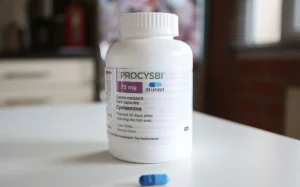
TM Owner Horizon Therapeutics
Procysbi 25mg Capsule
Global Shipping : Reliable Global Distribution Network
Express Delivery : Priority Shipping for Every Order
Secure Payments : Trusted Payment Protection System
 Disclaimer

Secure Handling
24/7 Worldwide Support

Global Access
Worldwide Access to Health

Cold-Chain Expert
Excellence in Cold-Chain

Trusted Supply
Certified Medical Supply
Indications & Clinical Uses
- Procysbi 25 mg delayed-release capsules contain cysteamine bitartrate (mercaptamine bitartrate), a cystine-depleting agent, and are indicated for the treatment of nephropathic cystinosis, a rare inherited metabolic disorder in which cystine accumulates in the body's cells and damages organs including the kidneys.
- Procysbi is approved in the US for adults and children aged 1 year and older; the 25 mg and 75 mg capsule strengths, and separate 75 mg and 300 mg delayed-release oral granule packets, allow dosing across this age range.
- Unlike the original immediate-release cysteamine capsule (Cystagon), Procysbi's delayed-release formulation is designed to be taken every 12 hours instead of every 6 hours.
- It is a specialist-prescribed, lifelong therapy managed by a healthcare provider experienced in metabolic disease, with regular monitoring of white blood cell count and cystine levels.
Side Effects
- The most commonly reported reactions include vomiting, nausea, abdominal pain, unpleasant breath and skin odour (a known effect of cysteamine), diarrhoea, fatigue, rash and headache; in young, previously untreated children, gastroenteritis, decreased appetite and electrolyte imbalance are also common.
- Procysbi does not carry a boxed warning on its current US label.
- Serious reactions to watch for include an Ehlers-Danlos-like syndrome affecting skin and bones, severe skin reactions such as erythema multiforme or toxic epidermal necrolysis, gastrointestinal ulcers or bleeding, fibrosing colonopathy with bowel narrowing, and central nervous system effects such as seizures, lethargy or depression.
- Seek urgent medical attention for severe abdominal pain, black or bloody stools, a spreading rash with blistering, seizures, or persistent severe headache with visual changes, which can signal benign intracranial hypertension.
Precautions & Warnings
- Procysbi is contraindicated in patients with a serious hypersensitivity reaction, including anaphylaxis, to penicillamine or cysteamine.
- Before and during treatment, white blood cell count should be monitored, since leukopenia has been reported, along with periodic monitoring for skin and bone abnormalities, gastrointestinal symptoms, and signs of raised pressure in the skull such as persistent headache, vision changes or vomiting without an obvious cause.
- Capsules must be swallowed whole or opened and sprinkled on food without chewing the beads, since chewing or crushing destroys the delayed-release coating; oral granules must not be chewed either.
- Take on an empty stomach where possible, since food affects absorption.
- Use in pregnancy and breastfeeding should be discussed with your healthcare provider, weighing the risks of uncontrolled cystinosis against limited human safety data.
- Doses must not be stopped abruptly without medical advice, since cystine can rapidly re-accumulate.
Avoid Interactions
- Medicines that raise stomach (gastric) pH, such as antacids containing bicarbonate or carbonate, may alter how cysteamine is released from the delayed-release beads in Procysbi, so timing relative to these products should be discussed with your healthcare provider; proton pump inhibitors such as omeprazole did not significantly change Procysbi's pharmacokinetics in studies.
- Alcohol should be avoided, as it may increase the rate of cysteamine release and alter the drug's absorption pattern.
- Procysbi is generally considered compatible with electrolyte replacement therapy, vitamin D and thyroid hormone replacement, which many cystinosis patients also need, but you should still tell your healthcare provider about every medicine and supplement you take.
- Because Procysbi must be taken exactly 12 hours apart and largely on an empty stomach, discuss the timing of any other regularly scheduled medicines with your care team to avoid missed or mistimed doses.
References
Frequently Asked Questions
Procysbi (cysteamine bitartrate) treats nephropathic cystinosis, a rare inherited disease in which cystine builds up in the body's cells and damages the kidneys and other organs over time. It is approved for adults and children aged 1 year and older.
Procysbi delayed-release capsules or granules are taken by mouth every 12 hours, roughly on an empty stomach for the best effect. Swallow capsules whole, or open them and sprinkle the beads on soft food without chewing or crushing them at all.
Common Procysbi side effects include nausea, vomiting, abdominal pain, unpleasant breath and body odour, diarrhoea, fatigue and headache. More serious reactions can include severe skin rashes, bowel narrowing, seizures or high pressure in the skull, which need urgent medical review and attention.
Avoid alcohol, since it can speed up cysteamine release and alter how Procysbi is absorbed. Do not chew or crush the capsules or granules, and check with your provider before taking antacids, since these can change how the delayed-release coating works.
Your healthcare provider checks white blood cell counts regularly, since low counts can occur, along with periodic checks for skin, bone and gastrointestinal problems and for signs of raised pressure in the skull, such as persistent headache or vision changes.
Do not stop or skip Procysbi doses without medical advice, since cystine can build back up quickly and damage organs again within a short time. If you miss a dose, contact your healthcare provider or pharmacist for guidance on your specific dosing schedule.

Trusted & Reliable – Your Partner in Global Distribution.
We provide comprehensive lines of pharmaceutical products to support all your healthcare distribution needs.


